X‑Ray Inspection for BGA: Acceptable Voiding Percentage and Criteria
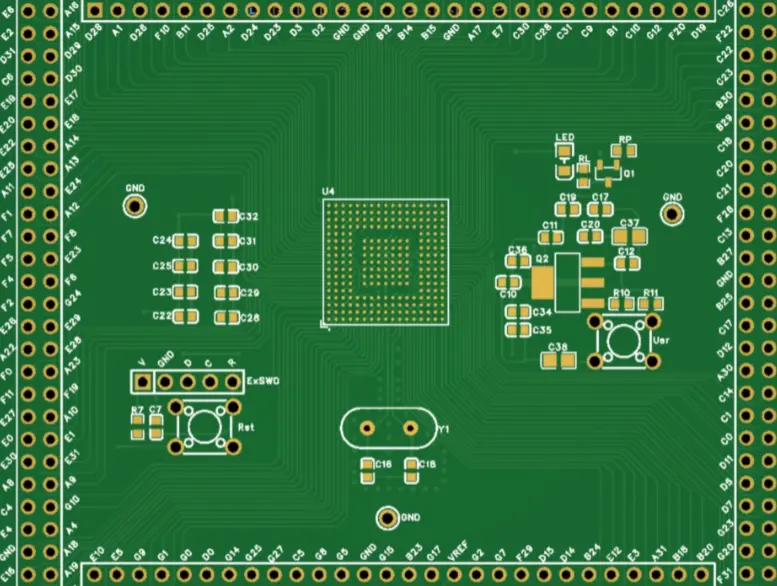
In the intricate world of modern electronics, the Ball Grid Array (BGA) has become a cornerstone for high‑density component packaging. Hidden beneath these components, however, lies a potential point of failure: voids within the solder joints. Since these connections are concealed from visual inspection, X‑ray inspection has emerged as the non‑destructive technique of choice for quality assurance. This definitive guide explores the critical question: what is the acceptable voiding percentage for BGA solder joints, and what criteria should you use to ensure long‑term reliability?
Why BGA Voiding is a Critical Concern
Voids are essentially pockets of gas trapped within a solidified solder joint. They occur during the reflow soldering process as flux volatiles or moisture from the solder paste cannot fully escape before the solder solidifies. While some voiding is inevitable, excessive voids can lead to:
-
Reduced Thermal Conductivity: Voids impede the transfer of heat away from the component, which can lead to overheating and premature failure, especially in power‑hungry devices.
-
Compromised Mechanical Strength: A void acts as a physical discontinuity, creating a stress concentration point. Under thermal cycling or mechanical shock, cracks can initiate and propagate from these voids, leading to joint failure.
-
Increased Electrical Resistance: While a single small void may not significantly affect resistance, a large void or a high density of voids can increase the electrical path, potentially impacting signal integrity in high‑frequency applications.
The Industry Standard: IPC‑7093 and Acceptable Void Percentages
The most widely recognized and cited standard for BGA acceptance is IPC‑7093, "Design and Assembly Process Implementation for BGAs." This standard provides the foundational framework for evaluating voiding, moving away from a single universal limit to a more nuanced, criteria‑based approach.
The key takeaway from IPC‑7093 is that there is no single "acceptable" void percentage that applies to every scenario. Instead, acceptability depends on the location and size of the void(s).
Here is the breakdown of the IPC‑7093 criteria:
1. The General Voiding Criterion: <25% of the Solder Joint Area
For most standard, non‑critical BGA components, the IPC standard suggests that a void is generally acceptable if it occupies less than 25% of the projected X‑ray area of the individual solder joint. This is often the default parameter set in Automated X‑Ray Inspection (AXI) systems.
Important Note: This 25% is measured per ball, not for the entire BGA component. A single ball with 30% voiding would be a reject, even if the average voiding across the entire component is only 5%.
2. The Critical Location Criteria: Voids at the Interface
A void that is significantly smaller than 25% can still be a reject if it is in a critical location. IPC‑7093 highlights that voids located at the interface between the solder ball and the PCB pad or the component pad are far more detrimental than voids in the center of the joint.
3. The "One Large Void" vs. "Multiple Small Voids" Consideration
The distribution of voids matters. A single large void (e.g., 20% of the joint area) is typically more concerning than several smaller voids that sum to the same total area. The large void creates a more significant stress concentrator and a more substantial barrier to heat flow.
Beyond the Standard: When to Be Stricter
While IPC‑7093 provides an excellent baseline, certain applications demand more stringent criteria. A void percentage deemed acceptable for a consumer television may be completely unacceptable for the following:
-
Automotive Electronics (especially under‑hood): Must withstand extreme thermal cycling and vibration. Many automotive manufacturers impose internal standards of <20% or even <15%.
-
Aerospace and Defense: The demand for absolute reliability in harsh environments often leads to the strictest criteria, sometimes as low as <10% or 5% for critical components.
-
High‑Power/RF Components: For components like processors, GPUs, or RF power amplifiers, effective heat dissipation is paramount. Voiding criteria here are tightly controlled to ensure thermal performance, often <15%.
-
Medical Implants and Life‑Support Systems: Failure is not an option. Voiding standards are exceptionally strict to guarantee a lifetime of reliable operation.
Using X‑Ray Inspection to Measure and Analyze Voiding
Modern 2D and 3D X‑ray (AXI) systems are indispensable for this task. They provide:
-
Quantitative Analysis: Automated software calculates the void percentage for every single solder ball on the BGA, providing a detailed color‑coded map of the results.
-
Location Identification: High‑resolution imaging allows operators to pinpoint the exact location of a void, determining if it is at a critical interface.
-
Process Feedback: By analyzing voiding patterns across a board, manufacturers can diagnose issues in their solder paste printing, reflow profile, or material handling.
Root Causes of Excessive Voiding and How to Mitigate It
If your X‑ray inspection reveals unacceptable void levels, investigate these common root causes:
-
Reflow Profile: An insufficient soak (preheat) time or a too‑rapid ramp‑to‑peak can prevent volatiles from fully escaping. Optimizing the reflow oven profile is often the most effective solution.
-
Solder Paste: Old, oxidized, or improperly stored solder paste can contain excess moisture. Using a fresh paste with a lower voiding formulation can yield significant improvements.
-
PCB and Component Moisture: Absorbed moisture in the PCB laminate or the BGA component itself can outgas during reflow. Proper storage and baking according to moisture sensitivity level (MSL) protocols are essential.
-
Pad Design and Solder Mask: Poorly designed pads or misaligned solder mask can trap gasses, contributing to void formation.
Conclusion: A Criteria‑Based Approach is Key
Evaluating BGA voiding is not about finding a single magic number. It requires a sophisticated, criteria‑based approach grounded in the IPC‑7093 standard.
The golden rule: Always prioritize the location of the void over its absolute size. A 10% void at the interface is often more dangerous than a 20% void in the center.
By leveraging the power of X‑ray inspection and understanding the nuanced criteria for acceptance, electronics manufacturers can make informed decisions, optimize their processes, and ultimately ensure the superior quality and long‑term reliability of their products.