Electronic Manufacturing Services (EMS) Industry in 2026
Key Takeaways
-
Technical strength: 40-layer HDI PCB production, 01005 component mounting, AI visual inspection (99.9% accuracy), with core processes reaching the leading level in the industry.
-
Customer endorsement: Huawei-certified core supplier, fully following Huawei's stringent standards, with order delivery qualification rate of 99.99% and complaint rate below 0.01%.
-
Customization capabilities: Specialize in 5G, automotive electronics, medical equipment and other fields, and can quickly respond to the compliance and technical needs of different industries.
-
Supply chain resilience: Dual supplier + strategic inventory mechanism, AI alternative material database, with 48-hour rapid response to supply risks.
-
Green manufacturing: Full-cycle low-carbon system, continuous reduction of carbon footprint, meeting global environmental protection and ESG requirements.
-
Service guarantee: 7×24-hour response, on-site technical support, 3-year warranty, with full-life cycle service coverage.
1. Macroeconomic Landscape and Core Value of the EMS Industry in 2026
Electronic Manufacturing Services (EMS) is a core product of the specialized division of labor in the global electronic industry chain, covering end-to-end outsourcing services such as electronic product design, engineering development, raw material procurement, production and manufacturing, testing, logistics, and after-sales service. As the "manufacturing cornerstone" of the electronic industry, EMS not only helps OEMs reduce production costs and focus on core businesses, but also has become a key force driving industry innovation by virtue of its technological iteration and supply chain integration capabilities.
In terms of market size, the global EMS market size reached 4.25384 trillion yuan in 2025, and is expected to increase to 4.52777 trillion yuan in 2026, with a year-on-year growth rate of approximately 6.4% . As the world's largest electronic manufacturing base, China's market size exceeded 2.2 trillion yuan in 2025, accounting for nearly 50% of the global total. The world's top 5 EMS enterprises (Foxconn Precision, Jabil, Flex, etc.) have all laid out core production bases in China. The industry competition presents a pattern of "head monopoly + small and medium-sized market segmentation" : leading enterprises focus on large-batch standardized consumer electronics production, while small and medium-sized manufacturers represented by PCBMO, relying on cooperative experience with leading enterprises such as Huawei, specialize in small and medium-batch, highly customized fields, and form technical barriers in niche scenarios such as automotive electronics 800V high-voltage platforms and medical AI equipment.
Driven by both technological changes and market demand in 2026, the EMS industry is ushering in three major transformations:
-
Upgrading from "scale manufacturing" to "precision services".
-
Extending from "single production" to "end-to-end solutions".
-
Breaking through from "compliance meeting" to "green innovation".
The practices of PCBMO and other Huawei partners are becoming typical benchmarks for the industry's transformation.
2. Core EMS Service Capabilities and Practical Cases of PCBMO
(1) End-to-End Full-Process Solutions
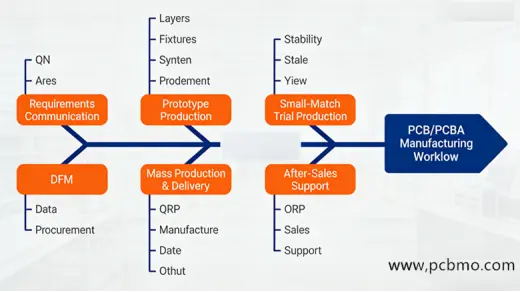
Based on the stringent requirements of core customers such as Huawei, PCBMO has built a full-process service system covering "demand communication → DFM analysis → prototype production → small-batch trial production → mass production delivery → after-sales maintenance" , with clear and controllable delivery cycles for each link:
-
Prototype production: Delivered in as fast as 3 days.
-
Small-batch trial production: Completed in 7 days.
-
Large-batch orders: Delivered within 15 days.
-
Emergency orders: Responded to within 24 hours.
Case Study: Huawei's 5G Base Station PCB&PCBA Service
The entire process strictly follows the TL 9000 communication industry standard:
-
In the demand phase, joint DFM analysis is carried out with Huawei's R&D team to avoid potential problems such as signal interference and insufficient heat dissipation in advance.
-
In the prototype phase, high-precision HDI technology is adopted to produce samples, and 100,000 hours of trouble-free testing is completed with Huawei.
-
In the mass production phase, through the AI-driven production scheduling system, stable output of 50,000 PCB boards per day is realized, and the delivery qualification rate has maintained above 99.99% for three consecutive years.
(2) Professional Design Services and Technical Optimization
PCBMO's design services are centered on "AI empowerment + customer collaboration" , and are deeply adapted to the technical needs of different industries:
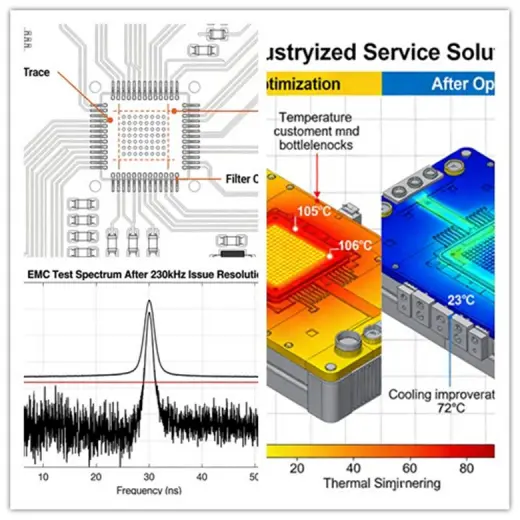
1.AI-based PCB layout optimization: Aiming at the signal integrity requirements of Huawei's 5G base station PCB, adopts arbitrary layer interconnect HDI technology, reduces the line width/line spacing to 3mil/3mil, and optimizes the layout through EMC simulation, reducing the base station signal interference by 20% .
2.Collaborative Pre-research: Participates in Huawei's pre-research project of "next-generation automotive PCB" jointly, and develops flexible rigid-flex combined PCB to meet the lightweight and anti-vibration needs of autonomous driving sensors. Prototype verification completed, mass production expected in 2027.
3.Miniaturization for Medical AI: Aiming at the miniaturization needs of medical AI diagnostic equipment, adopts miniaturized component selection and high-density packaging design, reduces the PCB area by 30% under the same function, while ensuring biocompatibility and clinical reliability.
As a Huawei partner, PCBMO's design services strictly follow Huawei's 46 procurement network security baselines, with full-process compliance from material security, design security to data security. All design documents are transmitted in an encrypted manner to avoid the risk of intellectual property leakage.
(3) Advanced Manufacturing Capabilities and Quality Control
Core Process Strength
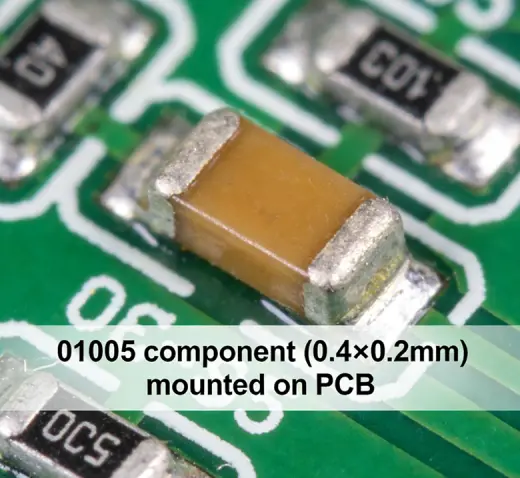
Possess high-end process capabilities such as 40-layer HDI PCB production, 01005 ultra-small component mounting, and ceramic substrate low-temperature welding, which can meet the precision manufacturing needs of multiple fields such as 5G communications, automotive electronics, and medical equipment. For Huawei's automotive radar products, adopt the IATF 16949 certified production system, with dual-station backup for key processes to ensure the ASIL-B level functional safety requirements.
Integration of AI and Automation
-
1.Build a digital twin model of Huawei's automotive PCB production line, which can simulate the impact of different batches of materials on production yield and predict process bottlenecks in advance.
-
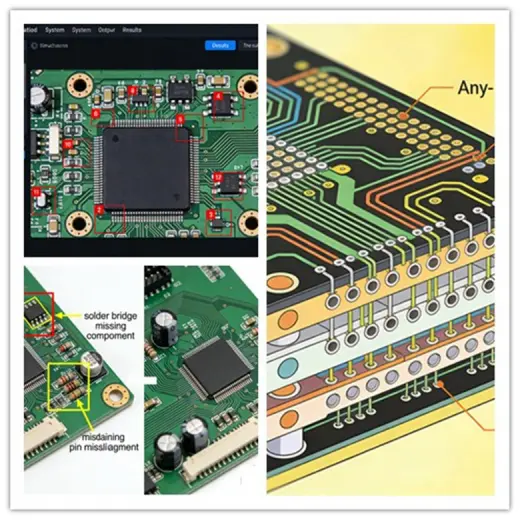
2.Adopt the AI-based AOI visual inspection system, with the defect detection accuracy rate reaching 99.9% and the false positive rate reduced to 0.1% , which is 3 times more efficient than traditional inspection equipment.
-
3.Realize predictive maintenance by analyzing the vibration and temperature data of SMT equipment through AI, reducing the equipment downtime from 8 hours per month to 2 hours.
Three-Level Quality Inspection System
Establish a full-process quality inspection mechanism of "IQC incoming material inspection → IPQC in-process inspection → FQC full-function inspection" :
1.Introduce 3D X-ray inspection equipment (with a resolution of 1μm) to realize visual inspection of internal defects of packaged components such as BGA and CSP.
2.Implement "one-item-one-code" traceability management for all products, and the raw material batches, production equipment and testing data can be traced throughout the process.
3.In 2026, the quality complaint rate for Huawei's orders will be controlled below 0.01% .
(4) Industry Customized Service Solutions
PCBMO has created differentiated EMS solutions for the compliance requirements and core needs of different industries, with specific parameters as follows:
Application Field
|
Compliance Standards
|
Core Processes
|
Delivery Cycle
|
Reliability Requirements
|
Customization Highlights
|
Huawei 5G Base Station
|
ISO 9001/TL 9000
|
HDI PCB + SMT Assembly
|
15 days
|
100,000 hours trouble-free operation
|
20% reduction in signal interference, supporting high-frequency and high-speed transmission
|
Huawei Automotive Radar
|
IATF 16949/ISO 26262
|
Ceramic Substrate + Low-Temperature Molding
|
20 days
|
Stable operation at -40°C ~ 125°C
|
Low-temperature soldering ensures reliability, meeting ASIL-B functional safety
|
Medical AI Diagnostic Equipment
|
ISO 13485/FDA 21 CFR 820
|
Biocompatible Packaging + 3D X-ray Inspection
|
25 days
|
100% full inspection + clinical validation
|
Miniaturized design, biocompatible packaging, meeting damp heat cycle testing
|
Huawei Automotive BMS
|
IATF 16949/ISO 26262 ASIL-D
|
Thick Copper PCB + EMC Optimization
|
22 days
|
No failure in 1,000 vibration tests
|
3oz thick copper improves current carrying capacity, EMC radiation meets GB/T 18655
|
Case Study: Huawei's Automotive 800V High-Voltage BMS
Aiming at the high heat dissipation and anti-interference needs of the high-voltage platform:
-
1.Adopts 3oz thick copper PCB to improve the current carrying capacity, and optimizes the heat dissipation path through FMEA analysis.
-
2.For the EMC radiation problem of the 800V platform DC/DC module, replaces the high magnetic permeability nanocrystalline core inductor to reduce magnetic leakage, and configures a π-type filter on the high-voltage side.
-
3.The radiation value in the 150kHz-30MHz frequency band meets the GB/T 18655 Class 5 standard requirements, successfully solving the over-standard problem in the 230kHz frequency band.
(5) Supply Chain Management and Risk Response
Relying on the long-term cooperation with Huawei, PCBMO has built a "stable, efficient and anti-risk" supply chain system:
-
Dual Supplier + Strategic Inventory: Jointly reserve 60 days of key components (such as automotive-grade MCU, high-voltage connectors) with Huawei, and establish an AI-driven alternative material database, which can find pin-compatible alternative solutions within 48 hours. In 2025, successfully responded to 3 chip supply shortage crises.
-
Joint Procurement: Participates in Huawei's "joint procurement" plan, negotiates prices with upstream copper foil and resin suppliers together with Huawei, and reduced raw material costs by 8% in 2025. Shares Huawei's 6-month order forecast data, increasing equipment utilization from 75% to 90% .
-
Three-Level Supplier Supervision: Conducts carbon footprint audits and social responsibility audits on upstream suppliers with reference to Huawei standards, requiring core raw material suppliers to pass ISO 14001 environmental certification and SA8000 social responsibility certification to ensure full-link compliance.
In response to the geopolitical risks brought by the global supply chain restructuring in 2026, PCBMO plans to follow Huawei's "global localization" strategy, establish production bases in Mexico and Southeast Asia in 2027, covering the North American and European markets, reducing the delivery cycle of regional orders from 45 days to 15 days, and avoiding the impact of trade barriers.
(6) Green Manufacturing and Sustainable Development
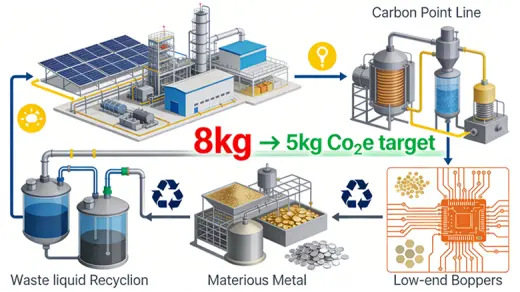
Guided by Huawei's goal of "operational carbon neutrality by 2030" , PCBMO has built a full-cycle green manufacturing system from the production end, supply chain end and recycling end:
-
Production End: Adopt solar-powered PCB etching production line, reduce energy consumption by 35% . The recovery rate of etching waste liquid reaches 90% , reducing carbon emissions by 4,000 tons annually. Introduce lead-free welding technology and environmentally friendly cleaning agents to achieve "zero heavy metal emissions" .
-
Supply Chain End: Jointly conduct carbon footprint audits on upstream suppliers with Huawei, realize 100% traceability of core raw materials in 2026, and give priority to purchasing green materials such as recycled copper and environmentally friendly resin.
-
Recycling End: Provide precious metal extraction services for Huawei's retired base station PCB, with the recovery rate of gold and silver exceeding 99% . Recycled copper is used for low-end PCB substrates, forming a circular economy closed loop of "production → use → recycling → regeneration" .
-
Long-term Goals: Achieve 100% renewable energy supply by the end of 2026, and reduce the carbon footprint per unit PCB product from the current 8kg CO₂e to 5kg CO₂e by 2028 to meet the requirements of the EU Carbon Border Adjustment Mechanism (CBAM) .
(7) After-Sales Service and Technical Support
PCBMO has established a "7×24-hour rapid response" after-sales service system, and provides exclusive service teams for core customers such as Huawei:
-
Provide a product warranty service of up to 3 years, with free repair and replacement services during the warranty period, and the response time does not exceed 4 hours.
-
Deploy technical engineers to be stationed at Huawei's production bases to solve PCB&PCBA adaptation problems in the production process in real time, with the on-site problem solving rate reaching 95% in 2025.
-
Establish a product full-life cycle database to provide Huawei with product operation and maintenance data analysis support to help it optimize product design and user experience.
-
For special fields such as medical equipment, provide clinical verification technical support to cooperate with customers to complete the audit and certification of regulatory agencies such as the FDA and NMPA.
3. Development Trends and Prospects of the EMS Industry in 2026
(1) Technological Development Trends
-
In-depth integration of AI and digital twin: In the next 3 years, the EMS industry will fully build an "end-to-end digital twin platform" to realize full-process virtual simulation from PCB design, production to operation and maintenance. PCBMO plans to reduce the number of physical prototype iterations of Huawei's automotive PCB from 3 to 1 through this technology, shorten the R&D cycle by 40% , and reduce trial production costs at the same time.
-
Upgrading of green manufacturing: After 2027, the EU Carbon Border Adjustment Mechanism (CBAM) will cover the electronic manufacturing industry, and green factories will transform from "compliance items" to "competitive items". Renewable energy use, carbon footprint disclosure, and circular economy models will become the core competitiveness of EMS enterprises.
-
Breakthrough in high-voltage and high-frequency technologies: With the popularization of automotive 800V high-voltage platforms and 5G-A communication technologies, EMS will focus on core technologies such as high-voltage and large current carrying, high-frequency signal transmission, and EMC radiation control. Technologies such as nanocrystalline cores, SiC devices, and high-density shielding will be widely used.
-
Strengthening of network security system: With reference to Huawei's 46 procurement network security baselines, the EMS industry will establish a full-process security system covering design, production, logistics and after-sales. Material security testing, vulnerability management and emergency response will become core indicators for supplier certification.
(2) Market and Cooperation Trends
-
Layout of nearshore manufacturing networks: To respond to OEMs' "global localization" strategy, EMS enterprises will accelerate the layout of production bases in North America, Europe and Southeast Asia, build a "regional supply network" to shorten delivery cycles and avoid trade barriers.
-
Deepening of symbiotic cooperation: The cooperation between EMS and OEMs will upgrade from "simple OEM" to "technical collaborative R&D" . The cooperative model of joint pre-research and shared intellectual property rights like PCBMO and Huawei will become the mainstream, jointly promoting the iteration of product technology.
-
Focus on niche markets: Industry competition will be further segmented, and EMS enterprises will specialize in specific fields to form technical barriers. High-compliance and high-value-added fields such as automotive electronics and medical devices will become the core track for small and medium-sized enterprises.
-
ESG value co-creation: EMS will become an important support for OEMs' ESG strategies. Through green manufacturing, supply chain social responsibility management and circular economy practices, it will help customers enhance brand value and obtain green orders.
4. Frequently Asked Questions (FAQ)
Q1: How can PCBMO meet the ISO 26262 ASIL-D requirements of Huawei's automotive PCB in 2026?
A: Guaranteed through three core measures:
-
Production System: Adopt the IATF 16949 certified production system, with dual-station backup for key processes (welding, testing) to ensure the stability of the production process.
-
Failure Mode Library: Implement "failure mode library" management, collect more than 120 historical failure cases of Huawei's automotive PCB, and avoid risks in advance in the design stage.
-
100% Functional Testing: Conduct 100% functional testing on each batch of products, including -40℃ ~ 125℃ temperature cycle testing and 1,000 vibration tests. The core indicators meet the ASIL-D level reliability requirements, and the EMC radiation meets the GB/T 18655 Class 5 standard.
Q2: What are the core evaluation dimensions for Huawei when selecting EMS suppliers?
A: Follow the "three-dimensional evaluation model" : technical strength (40%), quality system (30%), social responsibility (30%). Specifically including:
-
Technical capabilities: Whether it has core processes in niche fields, such as high-voltage PCB manufacturing, EMC optimization, etc.
-
Quality control: Whether a full-process traceability system is established, as well as yield and complaint rate indicators.
-
Supply chain resilience: Dual supplier layout and strategic inventory reserve capacity.
-
ESG performance: Green manufacturing level, carbon footprint data, social responsibility certification.
-
Network security: Whether it meets the requirements of Huawei's 46 procurement network security baselines.
Q3: How can PCBMO's green manufacturing capabilities meet the requirements of Huawei and the international market?
A: Core compliance through three types of indicators:
-
Carbon footprint control: The current carbon emission per unit PCB product is 8kg CO₂e, which will be reduced to 7kg CO₂e in 2026.
-
Resource utilization rate: The recovery rate of etching waste liquid is 90% , the reuse rate of water resources is 70% , and the utilization rate of recycled materials is 30% .
-
Compliance certification: Hold ISO 14001 environmental management system and ISO 50001 energy management system certification, pass Huawei's green supplier certification for three consecutive years, and meet the EU RoHS, REACH and other environmental protection standards.
PCBMO Introduction
Huawei-certified core PCB&PCBA supplier, with full-system certifications including ISO 9001, IATF 16949, and ISO 13485. Won the title of Huawei "Excellent Partner" in 2025, and specializes in high-end EMS fields such as 5G communications, automotive electronics, and medical devices.
Author: David (Senior Analyst in the EMS Industry, with 15 years of practical experience, having led cooperative projects between PCBMO and enterprises such as Huawei and ZTE)