ENIG vs. OSP for BGA Assembly: A Comprehensive Guide to PCB Surface Finishes
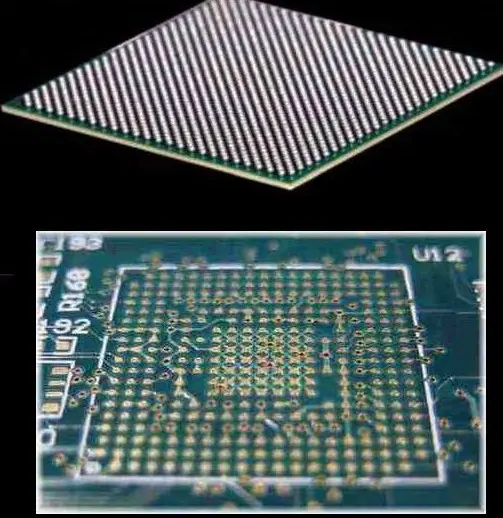
In the intricate world of PCB fabrication, the choice of surface finish is far from a mere afterthought. It is a critical determinant of solderability, reliability, and ultimately, the performance of the final assembled board. Nowhere is this choice more crucial than for the pads destined for Ball Grid Array (BGA) components. BGAs, with their high pin counts and hidden solder joints, demand a surface finish that ensures robust connections and long-term stability. The debate often narrows down to two leading contenders: Electroless Nickel Immersion Gold (ENIG) and Organic Solderability Preservative (OSP) . This comprehensive comparison will dissect these two finishes to guide you toward the optimal choice for your PCB fabrication quality goals.
Understanding the Fundamentals: ENIG and OSP
Before diving into the comparison, it's essential to understand what each finish entails.
What is ENIG (Electroless Nickel Immersion Gold)?
ENIG is a two-layer metallic finish. A thick layer of nickel is chemically deposited onto the copper pad, followed by a thin layer of gold. The nickel acts as a diffusion barrier, protecting the underlying copper, while the thin gold layer provides excellent oxidation resistance and a solderable surface.
Key Characteristics:
-
Multi-layer: Nickel barrier with a gold surface.
-
Surface: Flat, planar, and hard.
-
Shelf Life: Long (12 months or more).
-
Finish: Excellent for contact surfaces (e.g., gold fingers).
What is OSP (Organic Solderability Preservative)?
OSP is a thin, organic, water-based film that selectively bonds to the copper pads. It acts as a protective layer, preventing oxidation until the board is heated during soldering. At soldering temperatures, the film dissipates, allowing the molten solder to bond directly with the fresh, clean copper underneath.
Key Characteristics:
-
Single-layer: Thin organic coating on copper.
-
Surface: Virtually unchanged from bare copper.
-
Shelf Life: Short (typically 6-12 months).
-
Finish: Invisible coating, not suitable for contact switches.
Head-to-Head Comparison for BGA Applications
When evaluating for BGA assembly, several factors come to the forefront.
1. Solder Joint Reliability and Strength
This is the most critical factor for BGA integrity.
-
ENIG: The solder joint forms between the solder ball and the nickel layer, creating a Nickel-Tin (Ni-Sn) intermetallic compound (IMC). This IMC is strong and generally reliable. However, ENIG is susceptible to a specific failure mode known as "Black Pad Syndrome." This is a brittle fracture within the nickel-phosphorus layer caused by excessive corrosion during the immersion gold process, leading to catastrophic joint failure. Modern processes have significantly reduced its occurrence, but the risk remains a consideration.
-
OSP: The solder bonds directly to the copper, forming a strong Copper-Tin (Cu-Sn) intermetallic compound. This connection is known for its excellent ductility and mechanical shock resistance, making OSP joints very robust and less prone to brittle fracture. For applications with thermal cycling or mechanical stress, OSP often holds an advantage.
Winner for Reliability: OSP (with a well-controlled process), due to the superior ductility of the Cu-Sn bond and the absence of Black Pad risk.
2. Planarity and Coplanarity
BGA components require exceptionally flat surfaces to ensure all solder balls make contact simultaneously during reflow.
-
ENIG: Offers excellent surface planarity. The electroless deposition process creates a very flat and uniform surface, which is ideal for the fine pitches of modern BGAs. This guarantees consistent solder paste printing and reliable ball attachment.
-
OSP: Being a molecular-level film, OSP does not alter the topography of the copper pad. While this is generally good, any inherent non-uniformity in the copper will be preserved. For standard designs, this is sufficient, but for the most demanding ultra-fine-pitch BGAs, ENIG's guaranteed flatness is superior.
Winner for Planarity: ENIG, especially for ultra-fine-pitch BGAs.
3. Shelf Life and Handling
-
ENIG: With its inert gold surface, ENIG has a long shelf life and is highly resistant to contamination from fingerprints and multiple handling cycles. This makes it suitable for complex assemblies or boards that may be stored for extended periods.
-
OSP: The organic coating is delicate. It can be degraded by fingerprints, moisture, and multiple reflow cycles. OSP boards have a shorter shelf life and must be handled with greater care to avoid damaging the protective layer before soldering.
Winner for Handling and Shelf Life: ENIG.
4. Rework and Multiple Reflows
-
ENIG: The robust nickel-gold surface can withstand multiple reflow cycles and rework processes without significant degradation, as the gold protects the nickel from oxidation.
-
OSP: With each heat cycle, the OSP layer degrades. After the first reflow, the copper is exposed and can oxidize, making subsequent rework more challenging and potentially requiring flux with higher activity.
Winner for Reworkability: ENIG.
5. Cost
-
ENIG: A more complex and chemical-intensive process makes ENIG significantly more expensive than OSP. The cost of gold, while using a thin layer, also contributes to the higher price.
-
OSP: The application process for OSP is simple and uses low-cost chemicals, making it one of the most economical surface finishes available.
Winner for Cost: OSP, by a significant margin.
The Verdict: Which One Should You Choose for Your BGA?
The choice between ENIG and OSP is not about which is universally "better," but which is more suitable for your specific application.
Choose ENIG (Electroless Nickel Immersion Gold) if:
-
Your design uses ultra-fine-pitch BGAs where absolute planarity is critical.
-
You require a long shelf life or anticipate multiple handling cycles.
-
You expect the board to undergo multiple reflows or extensive rework.
-
Your application involves gold fingers or other contact surfaces on the same board.
-
Budget is less of a primary constraint.
Choose OSP (Organic Solderability Preservative) if:
-
Cost-effectiveness is a major driver for your project.
-
You prioritize excellent solder joint ductility and resistance to thermal mechanical fatigue.
-
You have a controlled, high-volume assembly process with limited handling and a short time-to-solder.
-
You want to avoid the risk, however small, of Black Pad Syndrome.
The Modern Trend: A Hybrid Approach
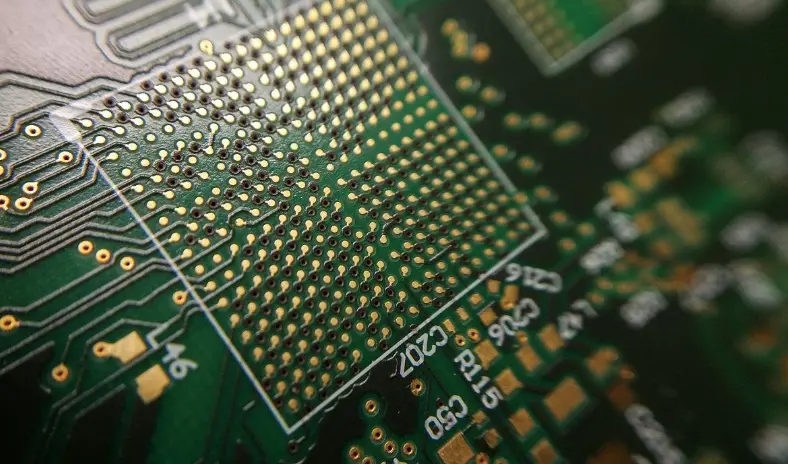
For complex boards, a hybrid approach is sometimes used. Critical BGA components might be placed on ENIG-finished pads for their flatness and reworkability, while other components on the same board use OSP to keep overall costs down. Discuss this possibility with your PCB fabricator.
Conclusion
Both ENIG and OSP are capable, high-quality finishes for BGA assembly. ENIG offers superior flatness, durability, and ease of use at a higher cost. OSP provides outstanding solder joint reliability and significant cost savings but demands stricter process control.
Ultimately, the best path to superior PCB fabrication quality is a collaborative one. Engage with your PCB fabricator and contract manufacturer early in the design process. They can provide valuable insights based on their specific capabilities and help you select the perfect surface finish to ensure the success and longevity of your BGA-based products. By making an informed choice, you lay the foundation for a reliable, high-performance electronic assembly.