PCB vs. PCBA: Which One Defines Your Product’s Ultimate Reliability?
For any electronics designer or OEM, product reliability is the cornerstone of your brand's reputation. It's what separates market leaders from the rest. At the heart of every electronic device lies its printed circuit board, but a critical question often arises: is the final product's reliability more dependent on the quality of the bare PCB or the precision of the PCBA process?
This isn't just an academic debate; the answer shapes your manufacturing strategy and ultimately, your product's success. Let's dissect the roles of both to find a definitive answer.
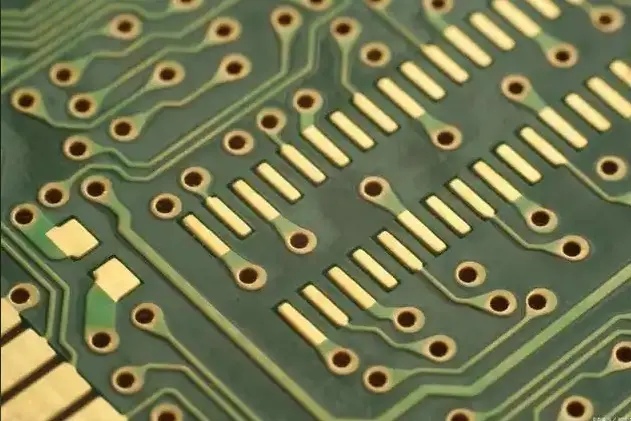
The Foundation: Unpacking the Role of PCB Quality
Think of the PCB (Printed Circuit Board) as the immutable foundation of a building. It's the complex laminate that physically supports and electrically connects all components. A flaw in this foundation is often irreversible and catastrophic.
Here's how PCB quality directly governs reliability:
-
Material Integrity: The substrate material (FR‑4, Rogers, Polyimide) must be chosen for its thermal performance, dielectric properties, and mechanical strength. Inferior materials can lead to:
-
Delamination: Layers separate under heat or stress.
-
CAF Formation: Conductive Anodic Filaments can grow, causing short circuits.
-
Poor Thermal Management: Leading to overheating and premature failure.
-
Signal Integrity and Power Delivery: This is engineered during fabrication. The precision of trace widths, spacing, and via integrity ensures clean signal transmission and stable power. Imperfections here cause:
-
Signal Attenuation & Crosstalk: Data errors and erratic behavior.
-
Impedance Mismatches: In high‑speed designs, this can render a product non‑functional.
-
Solderability and Surface Finish: The surface finish (ENIG, HASL, OSP) protects the copper pads and ensures a reliable surface for soldering. A poor finish results in:
-
Poor Wetting: Solder doesn't flow correctly, creating weak joints.
-
Oxidation: Pads oxidize before assembly, leading to non‑stick defects.
In short, the PCB sets the absolute ceiling for reliability. Even a perfect assembly cannot overcome a fundamentally flawed board.
The Execution: The Critical Role of the PCBA Process
If the PCB is the foundation, the PCBA (Printed Circuit Board Assembly) process is the meticulous construction. It's where your design becomes a functional reality through component placement and soldering.
The PCBA process is the active agent of reliability, impacting it through:
-
Solder Joint Integrity: This is the most common point of failure. Each solder joint is a mechanical bond and an electrical connection. Process flaws cause:
-
Cold Solder Joints: Cracked, high‑resistance connections that fail under thermal cycling or vibration.
-
Tombstoning: A component lifts on one end, creating an open circuit.
-
Solder Bridges: Unintended shorts between closely spaced pins.
-
Precision and Handling: Modern pick‑and‑place machines and Automated Optical Inspection (AOI) are non‑negotiable. Misplaced, missing, or damaged components during assembly directly lead to dead boards. Electrostatic Discharge (ESD) can also damage sensitive components, causing latent failures that appear later in the field.
-
Thermal Profiling in Reflow Soldering: The reflow oven profile is a precise recipe. Incorrect temperatures can:
-
Thermal Shock: Crack components or the PCB itself.
-
Incomplete Reflow: Create weak, grainy solder joints.
-
Overheating: Damage both components and the PCB laminate.
Therefore, the PCBA process realizes the potential for reliability that the PCB provides. A single bad solder joint can doom an otherwise perfect board.
The Ultimate Verdict: It's Not a Competition
So, which has a greater impact? The reality is that this is a false dichotomy. PCB Quality and the PCBA Process are inextricably linked in a symbiotic relationship.
A perfect PCB is worthless if assembled poorly. A master‑level assembly cannot fix a bad PCB.
However, if we must assess their influence, consider this framework:
While the PCB sets the stage, the PCBA process involves more variables and active steps where things can go wrong. In many failure analyses, the root cause is traced back to the assembly process, particularly solder joints. Yet, that failure might have been triggered by a PCB issue like a poor surface finish.
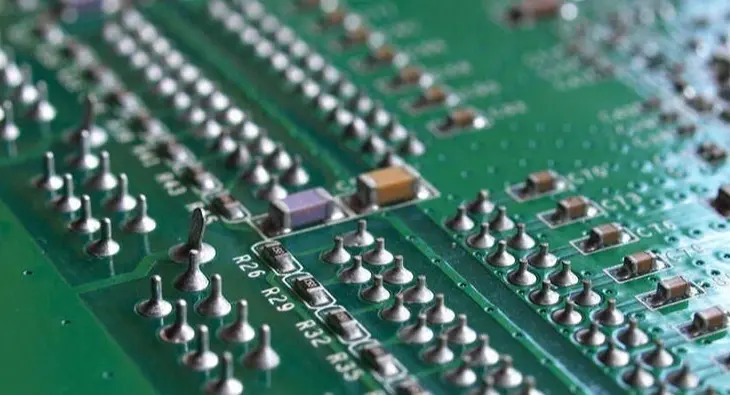
The Winning Strategy: Unify PCB and PCBA with a Single Partner
The most critical decision you make isn't choosing between PCB or PCBA—it's choosing a manufacturing partner that excels at both. Partnering with an integrated manufacturer offering end‑to‑end services is the ultimate key to reliability.
Benefits of an Integrated PCB and PCBA Provider:
-
Unified Accountability: One partner manages the entire chain, eliminating finger‑pointing and ensuring seamless quality control from raw board to finished assembly.
-
Optimized Design for Manufacturing (DFM): Their fabrication and assembly engineers work together from the start, advising on design tweaks that enhance both PCB yield and assembly success.
-
Process Harmony: The assembly line is calibrated for the specific surface finishes and materials used by their own fabrication house, eliminating compatibility issues.
Conclusion: Stop Choosing, Start Integrating
Stop asking whether PCB quality or the PCBA process is more critical. The question itself is a trap. The most reliable products are born from a holistic approach where world‑class fabrication and state‑of‑the‑art assembly are under one roof.
By selecting a partner that masters this integrated approach, you secure a seamless, accountable, and optimized path to a product that isn't just functional, but is fundamentally reliable.