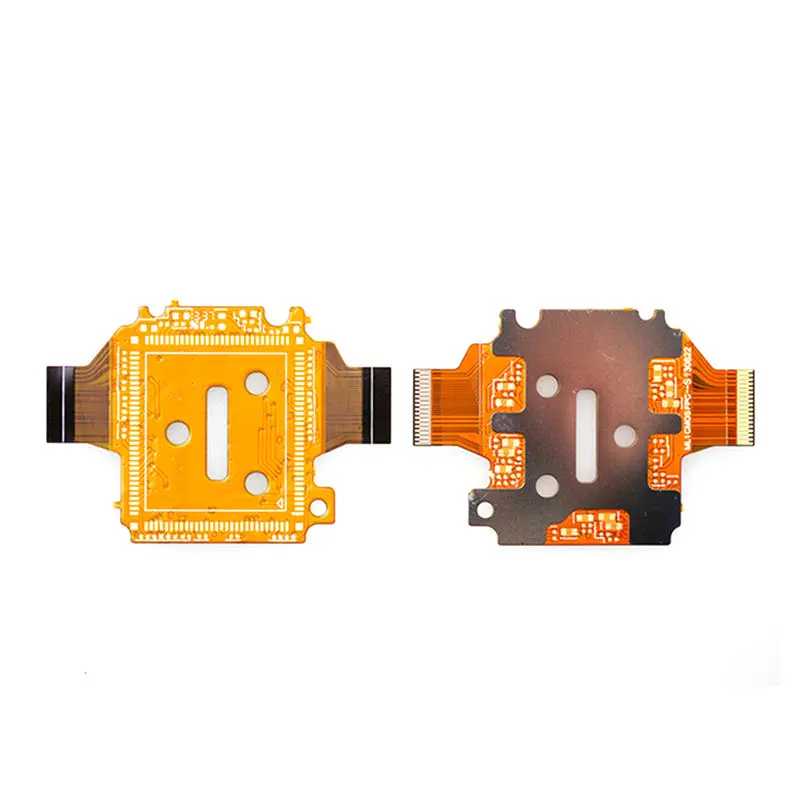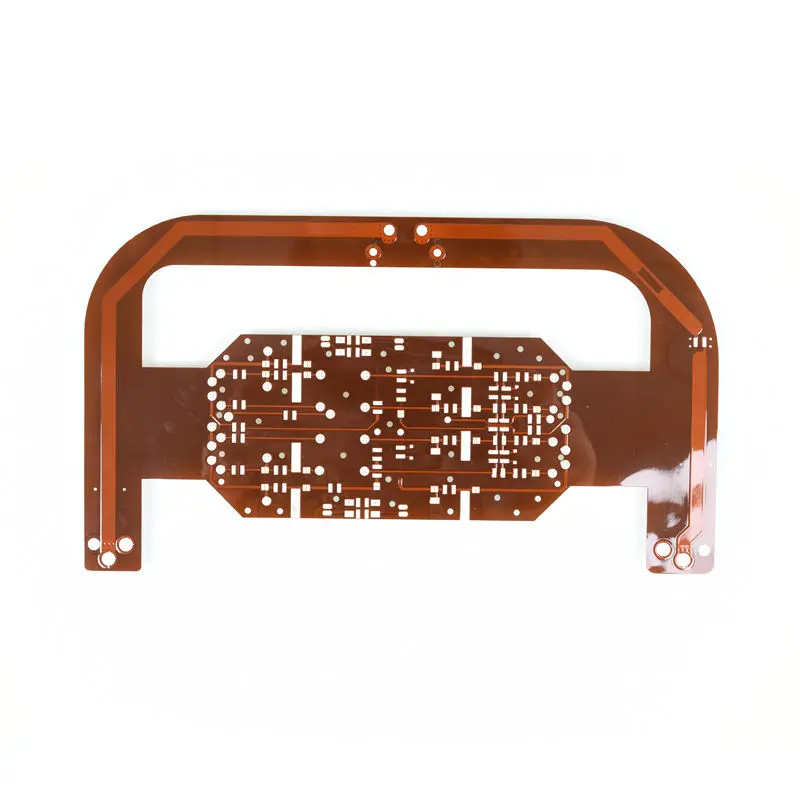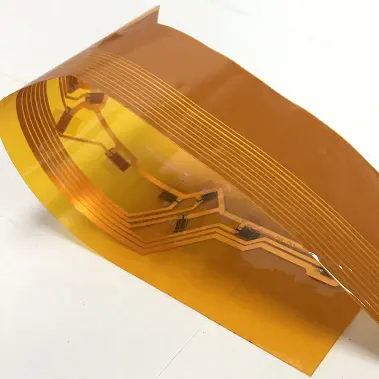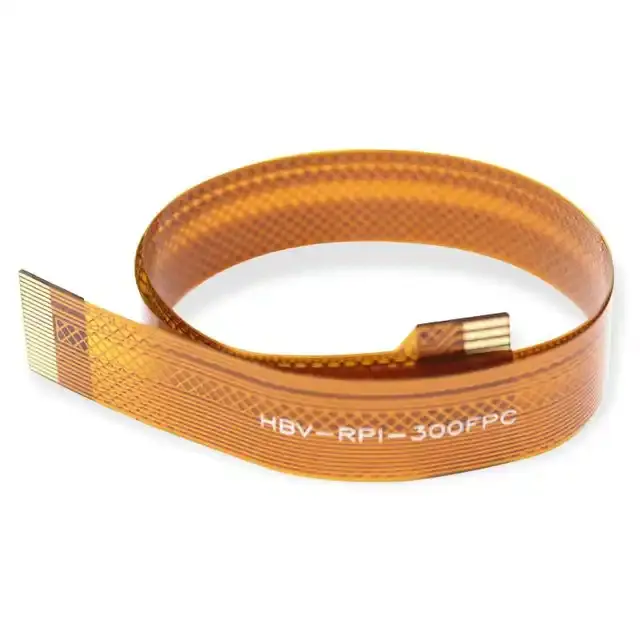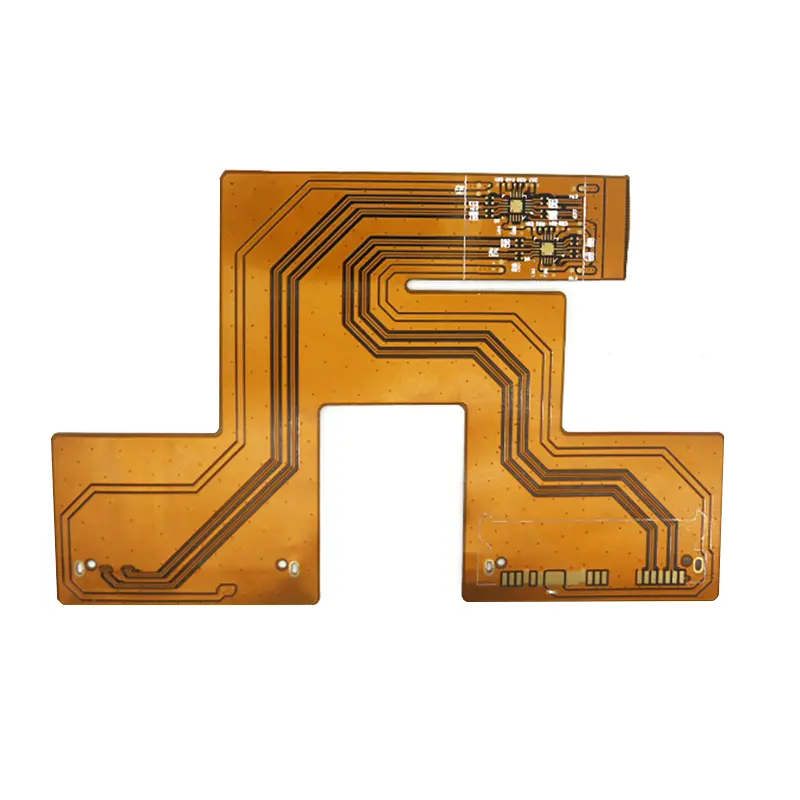
Coverlay materials similarly require biocompatible formulations, with adhesion systems that maintain integrity through sterilization cycles and prolonged use in challenging environments. The trend toward thinner, more flexible medical devices has increased demand for ultra-thin coverlay materials that maintain dielectric strength while offering maximum flexibility.
|
Process Parameter
|
Medical-Grade Requirement |
Rationale |
| Line Width/Space |
≤ 50μm (±10% tolerance) |
Enables high-density integration for medical device miniaturization |
| Etch Control |
Minimal undercut, near-vertical sidewalls |
Maintains designed current capacity and impedance; ensures signal integrity |
| Registration Accuracy |
Layer-to-layer alignment ≤ ±25μm |
Guarantees reliability of multilayer interconnects; prevents misalignment-induced electrical failures |
Via Formation and Plating
Interlayer connections represent potential failure points in FPCs, making via reliability a critical concern for medical applications. Laser-drilled microvias have become standard for high-density medical FPCs, offering precise diameter control and minimal heat-affected zones.
Plating quality directly impacts via reliability. Medical FPCs require uniform copper deposition with minimal variation in barrel thickness. Typical specifications call for an average copper thickness of 15-25μm in via barrels, with excellent throwing power to ensure complete coverage in high-aspect-ratio vias.
Coverlay Application and Lamination
The application of coverlay represents another critical process step where medical requirements exceed commercial standards. Registration accuracy between coverlay openings and underlying pads must be tightly controlled (typically ±50μm) to prevent solder wicking or insufficient opening coverage.
Void-free lamination is essential for medical FPCs, as entrapped air can lead to delamination during thermal cycling or sterilization. Vacuum lamination processes have become standard for medical-grade FPCs, ensuring complete adhesion between layers without voids or bubbles.
Surface Finish Selection for Medical Applications
Surface finish selection involves balancing solderability, shelf life, biocompatibility, and application-specific requirements.
Electroless Nickel Immersion Gold (ENIG) remains popular for medical FPCs due to its flat surface, excellent solderability, and compatibility with fine-pitch components. For applications requiring repeated mating cycles, such as connectors in reusable medical devices, hard gold plating over nickel provides superior wear resistance.
Recent years have seen increased adoption of immersion silver and immersion tin finishes for specific medical applications, particularly where cost sensitivity is a factor without compromising reliability requirements. All finishes must use certified biocompatible materials for devices with patient contact.
Cleaning and Contamination Control
Ionic contamination presents a significant reliability risk for medical electronics, potentially leading to electrochemical migration and short circuits in high-impedance circuits common to medical sensors. Medical FPC manufacturing requires stringent cleaning processes to achieve ultra-low ionic contamination levels, typically below 0.2 μg/cm² NaCl equivalent.
Cleanroom manufacturing environments (typically Class 10,000 or better) are standard for medical FPC production to minimize particulate contamination that could compromise reliability or biocompatibility.
Testing and Quality Assurance
Medical FPCs undergo comprehensive testing that exceeds standard commercial requirements. Electrical testing typically includes 100% continuity and isolation testing, with many manufacturers implementing high-potential testing (typically 500V AC or higher) to verify dielectric strength.
Impedance control is critical for medical FPCs carrying high-speed signals, such as those in imaging systems. Controlled impedance testing ensures signal integrity, with typical tolerances of ±10% for single-ended impedances.
Medical-grade FPC manufacturing represents the pinnacle of flexible circuit technology, demanding exceptional materials, precise process control, and rigorous quality systems. The unique requirements of healthcare applications—including biocompatibility, reliability through sterilization, and long-term performance in challenging environments—necessitate specialized expertise and uncompromising quality standards.
As medical devices continue to evolve toward greater functionality in smaller form factors, FPC manufacturers must continuously advance their capabilities while maintaining the rigorous standards that ensure patient safety and device reliability. Success in this demanding field requires a partnership approach between device manufacturers and FPC suppliers, with shared commitment to quality and innovation.