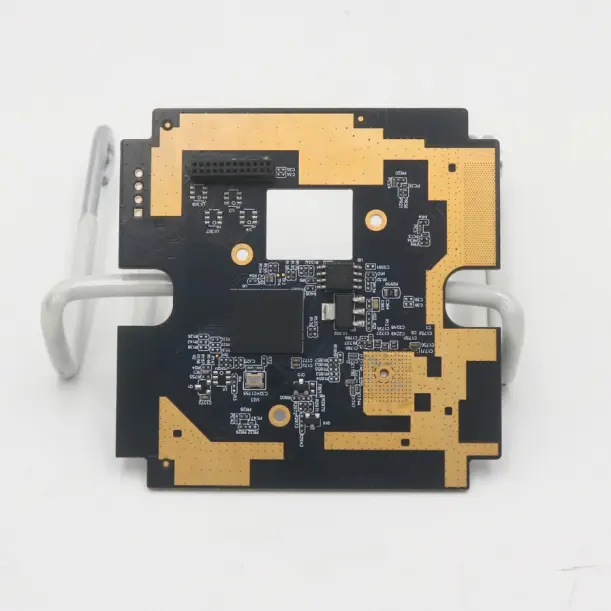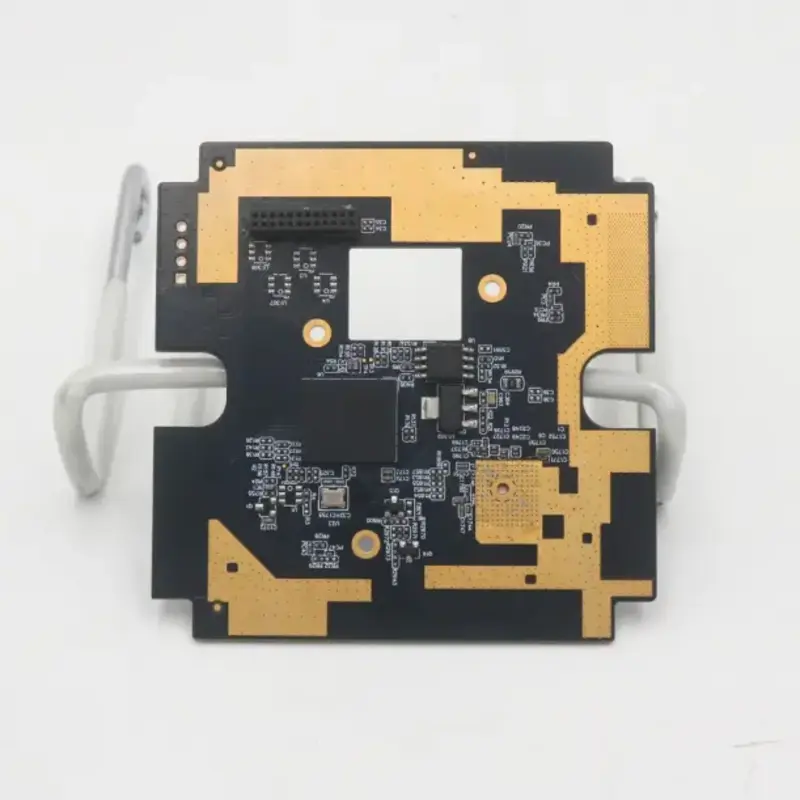


Copper Core PCB Manufacturing: Technical Specifications for High-Performance AI Servers
The exponential growth of artificial intelligence (AI) and machine learning applications has created unprecedented demands on server infrastructure, particularly regarding thermal management. Copper Core Printed Circuit Boards (PCBs) have emerged as a critical enabling technology for next-generation AI servers, offering superior thermal performance compared to traditional FR-4 or aluminum-based alternatives. This technical analysis examines the manufacturing specifications and design considerations for copper-based metal core PCBs optimized for AI server applications.
Material Selection: The Case for Copper
Copper core PCBs utilize oxygen-free high-conductivity (OFHC) copper, typically alloy C11000, as their base material. This selection is driven by copper's exceptional thermal conductivity (approximately 400 W/m·K), which is nearly double that of aluminum. This property makes copper ideal for managing the extreme heat fluxes generated by AI processors, GPUs, and high-current voltage regulators in server applications.
The thickness of the copper baseplate typically ranges from 1.5mm to 3.0mm for standard applications, with options up to 6.0mm for extreme cooling requirements. This substantial thermal mass provides mechanical rigidity while efficiently spreading heat away from critical components. Manufacturing tolerances for copper baseplate thickness typically maintain ±0.10mm for standard applications, with tighter ±0.05mm tolerances available for precision interfaces with thermal solutions.
Dielectric Layer Considerations
The dielectric layer in copper core PCBs represents the critical interface between the circuit layer and the metal base. For AI server applications, dielectric materials with thermal conductivity ratings ≥3.0 W/(m·K) are standard, with premium options reaching ≥8.0 W/(m·K) using ceramic-filled epoxy or polyimide formulations.
Dielectric thickness typically ranges from 75μm to 150μm, representing a balance between thermal performance and electrical isolation. Thinner dielectrics improve thermal transfer but require careful consideration of dielectric strength, which must exceed 4.0 kV DC for a 100μm layer to meet safety standards such as UL 60950-1.
The thermal resistance of the dielectric layer should be maintained below 0.5 °C·in²/W to minimize the temperature gradient between components and the cooling solution. This parameter directly impacts the overall thermal performance of the assembly.
Circuit Layer Specifications
The dielectric layer in copper core PCBs represents the critical interface between the circuit layer and the metal base. For AI server applications, dielectric materials with thermal conductivity ratings ≥3.0 W/(m·K) are standard, with premium options reaching ≥8.0 W/(m·K) using ceramic-filled epoxy or polyimide formulations.
Dielectric thickness typically ranges from 75μm to 150μm, representing a balance between thermal performance and electrical isolation. Thinner dielectrics improve thermal transfer but require careful consideration of dielectric strength, which must exceed 4.0 kV DC for a 100μm layer to meet safety standards such as UL 60950-1.
The thermal resistance of the dielectric layer should be maintained below 0.5 °C·in²/W to minimize the temperature gradient between components and the cooling solution. This parameter directly impacts the overall thermal performance of the assembly.
Circuit Layer Specifications
Copper foil thickness varies based on application requirements within AI servers. Inner layers typically utilize 1oz (35μm) or 2oz (70μm) copper, while external layers may employ 2oz to 10oz (70μm to 350μm+) copper for high-current power delivery and additional thermal spreading.
The manufacturing capabilities for copper core PCBs typically support minimum trace widths and spaces of 100μm/100μm (4mil/4mil) for standard applications, with advanced processes achieving 75μm/75μm (3mil/3mil). The inherent rigidity of the copper core presents challenges for fine-line circuitry compared to traditional FR-4 materials.
Surface Finish and Processing
For AI server applications, surface finish selection prioritizes reliability and compatibility with high-density components. Electroplated Nickel-Gold (ENIG) and Electrolytic Nickel/Gold (Hard Gold) are recommended for their flatness, wear resistance, and suitability for press-fit connectors. Alternative options include ENEPIG and Immersion Silver, while lead-free HASL is unsuitable due to thermal expansion mismatches.
The maximum panel size for manufacturing typically measures 450mm × 600mm, though this varies by fabrication equipment. The overall board thickness tolerance is generally ±10% of total thickness, reflecting the challenges of multi-layer lamination with a metal core.
Via Implementation and Drilling
"Standard single-sided copper core PCBs utilize Non-Plated Through Holes (NPTH) exclusively, as the dielectric layer does not support metallization like conventional PCB materials. For applications requiring layer interconnection, specialized constructions such as Direct Bonded Copper (DBC) or Insulated Metal Substrate (IMS) with pre-formed substrates are necessary.
The minimum drill size for NPTH typically ranges from 0.8mm to 1.0mm, with smaller holes challenging due to copper's ductility and potential for burring. Deburring represents a critical process step in copper core PCB manufacturing."
Outline Fabrication and Scoring
CNC routing serves as the standard method for outline fabrication of copper core PCBs. V-scoring is generally not recommended due to the ductile nature of copper, which leads to imperfect cuts and accelerated tool wear. The mechanical properties of copper necessitate specialized tooling and processing parameters throughout manufacturing.
Application-Specific Considerations for AI Servers
Thermal Cycling Reliability
AI servers experience significant thermal cycling from power-on/off sequences and varying computational loads. Copper core PCBs must withstand thousands of cycles without delamination, requiring careful attention to the coefficient of thermal expansion (CTE) matching between layers.
Flatness Requirements
Effective thermal interface with heatsinks and cold plates demands exceptional board flatness. Post-lamination leveling may be necessary to achieve the precise flatness required for optimal thermal contact in high-performance computing applications.
Advanced Constructions
For the most demanding AI accelerator modules, multilayer IMS or copper-core constructions with DBC substrates provide enhanced capabilities. These advanced configurations support complex, controlled-impedance circuitry while maintaining superior thermal conductivity for extreme heat fluxes.
Manufacturing and Design Collaboration
The specialized nature of copper core PCB manufacturing necessitates early collaboration between design engineers and fabrication partners. A comprehensive Design for Manufacturability (DFM) review is essential to address material selection, layer stackup, thermal management strategy, and manufacturing capabilities specific to copper-based technologies.
"Copper core PCBs represent a critical enabling technology for AI server applications where thermal management directly impacts performance and reliability. The manufacturing parameters outlined provide a framework for developing optimized thermal solutions for high-performance computing environments. As AI workloads continue to intensify, advances in copper core PCB technology will play an increasingly important role in server design and performance optimization.
Successful implementation requires careful consideration of material properties, manufacturing capabilities, and application-specific requirements, with close collaboration between design and manufacturing partners throughout the development process."
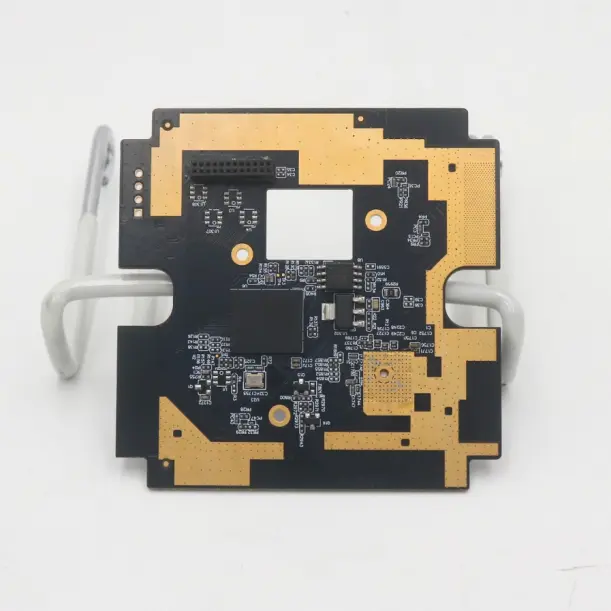
Technical Specification: Copper-Based Metal Core PCB for AI Server Applications
Parameter Category:Thickness
Specification:1.5 mm - 3.0 mm (common), up to 6.0 mm for extreme cooling
Technical Justification:Provides substantial thermal mass and mechanical rigidity. Thickness is chosen based on thermal simulation results.
Data Sheet
|
Parameter Category |
Specification |
Technical Justification |
|
Material Type |
OFHC Copper (Alloy C11000) |
Maximizes thermal spreading and heat dissipation. |
|
Thickness |
1.5 mm - 3.0 mm (common), up to 6.0 mm for extreme cooling |
Provides substantial thermal mass and mechanical rigidity. Thickness is chosen based on thermal simulation results. |
|
Thickness Tolerance |
±0.10 mm (standard), ±0.05 mm (tight tolerance) |
Ensures flatness and compatibility with mounting interfaces and thermal solutions (e.g., cold plates). |
|
Dielectric Layer (Insulating) |
|
|
|
Thermal Conductivity |
High: ≥ 3.0 W/(m·K). Very High: ≥ 8.0 W/(m·K) available. |
The single most critical parameter for minimizing the thermal barrier between the hot components and the cooling base. AI servers demand the highest grades. |
|
Thickness |
75 µm (3 mil) - 150 µm (6 mil) |
A thinner dielectric improves thermal performance but reduces electrical isolation strength. A balance must be struck. |
|
Dielectric Strength (Breakdown Voltage) |
≥ 4.0 kV DC (for a 100µm layer) |
Critical for safety and reliability in high-power server PSUs and motor drives. Must meet industry safety standards (e.g., UL 60950-1). |
|
Thermal Resistance |
< 0.5 °C-in²/W (lower is better) |
A direct measure of the dielectric's efficiency in transferring heat. Must be minimized. |
|
Circuit Layer |
|
|
|
Copper Foil Thickness |
Inner Layers (for multilayer): 1 oz (35 µm) / 2 oz (70 µm). External Layers: 2 oz (70 µm) - 10 oz (350 µm+) common for high-current paths. |
Thicker copper carries higher currents and provides better lateral heat spreading on the circuit layer itself. |
|
Min. Trace Width/Space |
Standard Capability: 100 µm / 100 µm (4 mil / 4 mil). Advanced Capability: 75 µm / 75 µm (3 mil / 3 mil). |
High-density server components require fine lines for routing. The rigidity of the copper core makes this more challenging than standard FR-4. |
|
Overall Board |
|
|
|
Max. Panel Size |
450 mm x 600 mm (standard tooling). Subject to manufacturer's equipment. |
Determines the economical layout for production. Larger AI server boards may be panelized. |
|
Board Thickness Tolerance |
±10% of total thickness (standard), ±5% (tight tolerance) |
A wider tolerance is typical due to the multi-layer lamination process. |
|
Surface Finish |
Recommended: Electroplated Nickel-Gold (ENIG) or Electrolytic Nickel/Gold (Hard Gold). Alternatives: ENEPIG, Immersion Silver. |
ENIG/Hard Gold provide a flat, wear-resistant, and reliable surface for high-reliability components and press-fit connectors. Lead-free HASL is NOT suitable due to the high thermal stress. |
|
Via & Drilling |
|
|
|
Via Implementation |
Non-Plated Through Holes (NPTH) only for standard single-sided MCPCBs. |
The dielectric layer is not designed for metallization like a standard PCB dielectric. For interlayer connections, specialized constructions like DBC (Direct Bonded Copper) or IMS (Insulated Metal Substrate) with pre-formed substrates must be used. |
|
Drilling (for NPTH) |
Minimum drill size: 0.8 - 1.0 mm. |
Smaller holes are difficult due to copper's ductility, leading to burrs. Deburring is a critical process step. |
|
Outline & Routing |
|
|
|
Outline Fabrication |
CNC routing. |
Standard process for creating the board shape and cutouts. |
|
Scoring (V-Cut) |
Generally not recommended. |
The ductile copper core is difficult to score cleanly and causes significant tool wear. CNC routing is the preferred method. |