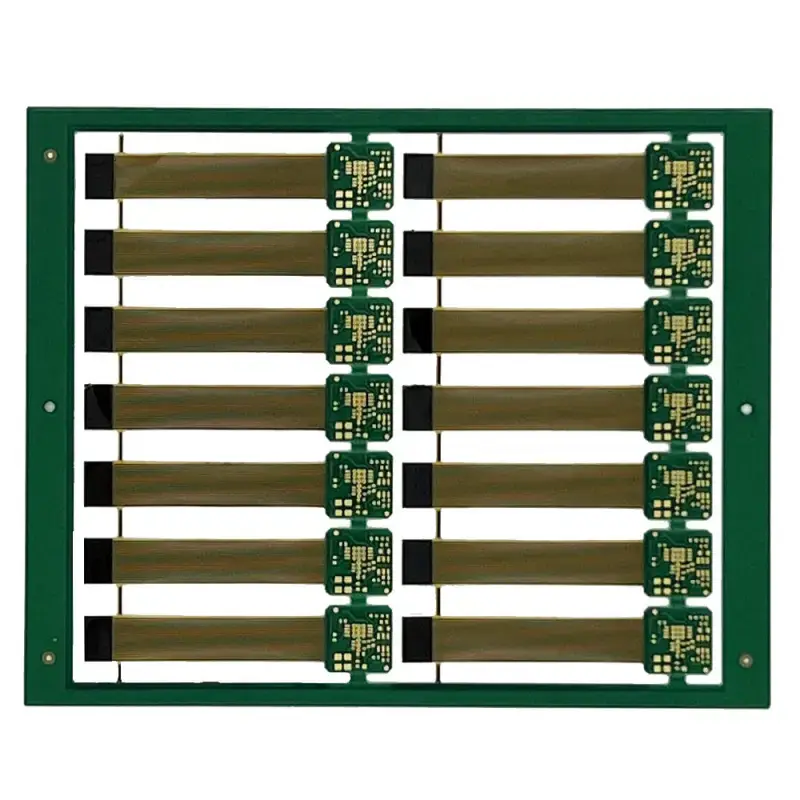
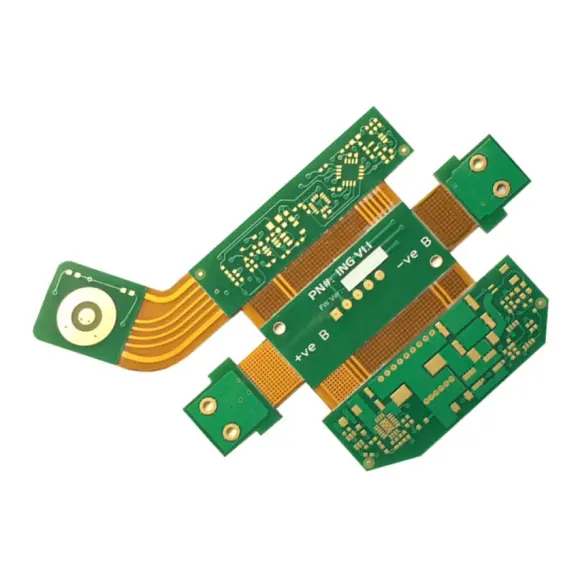
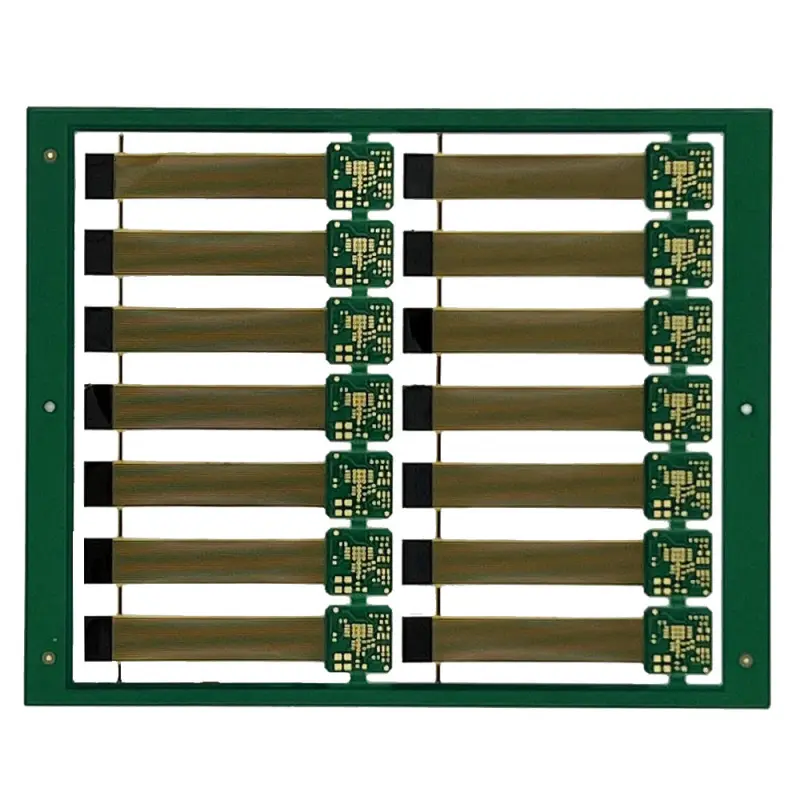
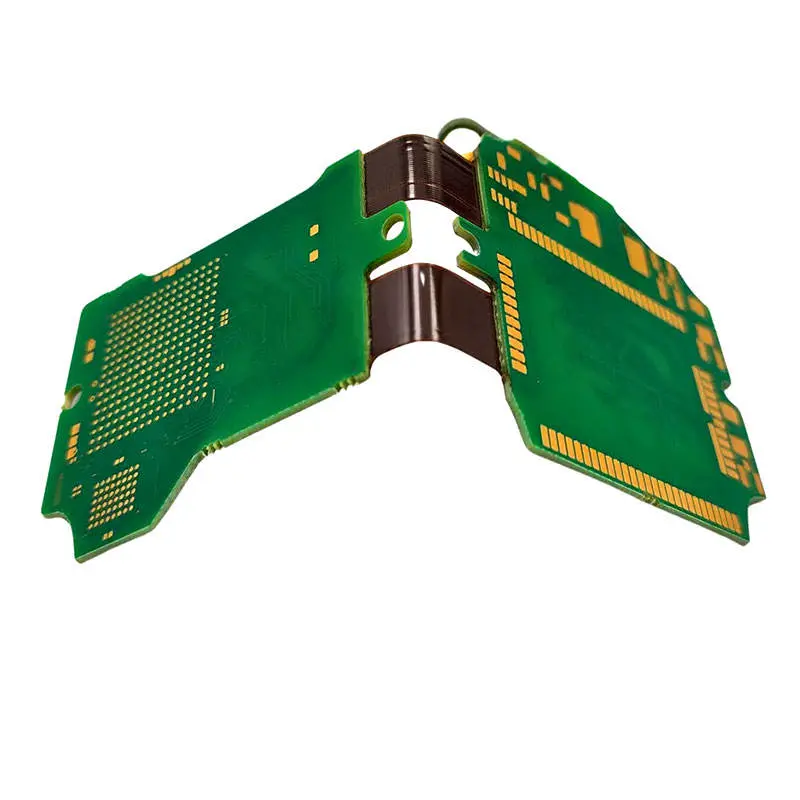
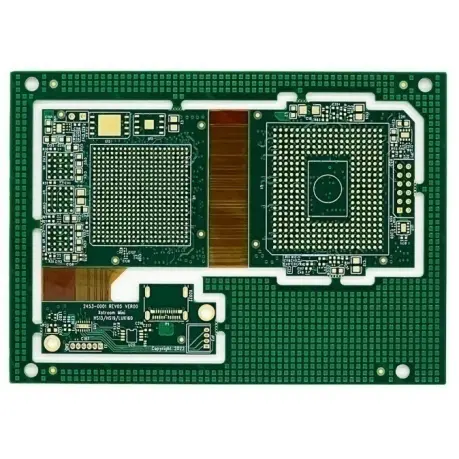
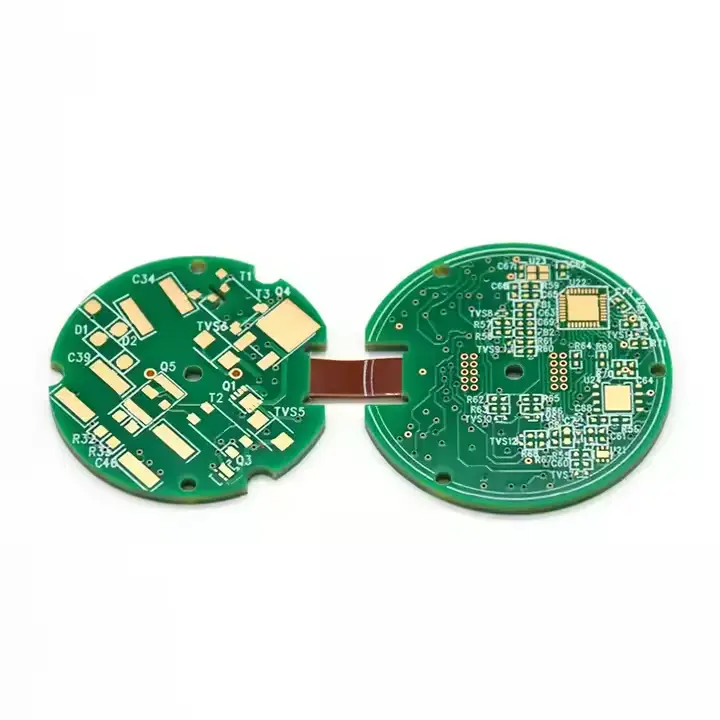
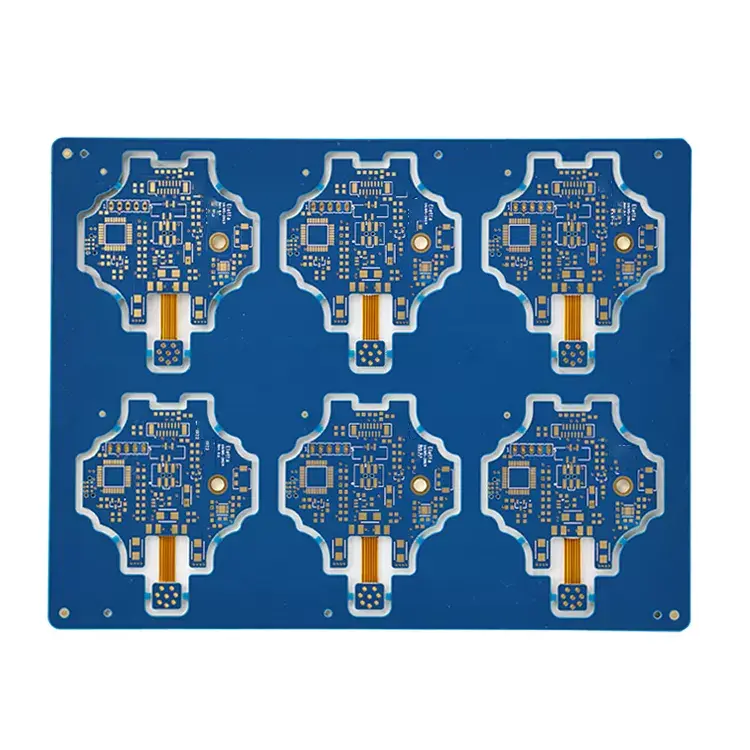
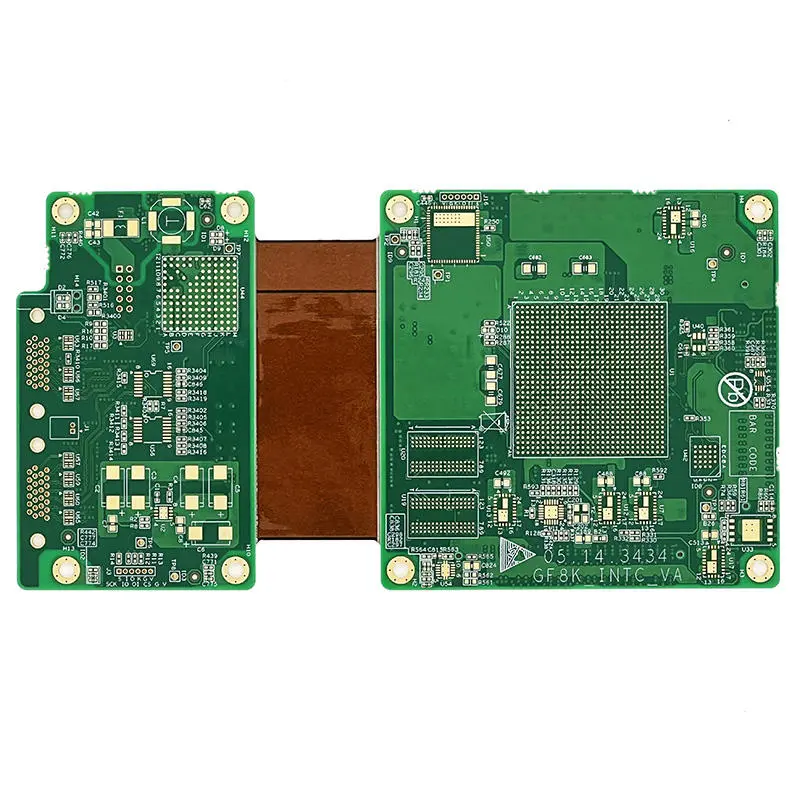
The evolution of modern electronics demands packaging solutions that offer superior reliability, space savings, and high-speed performance. Module Rigid-Flex Circuit Boards represent a critical advancement in this field, combining the stability of traditional rigid PCBs with the flexibility of dynamic circuits. This article details the manufacturing technology and key specifications of a standard high-density Module Rigid-Flex board.
Core Material Composition and Layer Build-Up
The foundation of this board's reliability lies in its hybrid material system. The rigid sections are constructed from high-performance FR4 laminate, providing mechanical strength and structural integrity. These are seamlessly integrated with flexible areas composed of Polyimide (PI), a material renowned for its excellent thermal stability, flexibility, and dielectric properties. This FR4+PI combination ensures the board can withstand repeated bending cycles while maintaining circuit integrity in the rigid zones.
The layer construction is specified as FR4 4L + FLEX 2L. This indicates a sophisticated build-up of four conductive layers within the rigid sections and two layers within the flexible portion. Manufacturing such a structure requires precise alignment and lamination processes to ensure a reliable connection between the rigid and flexible substrates without delamination.
Precision Control: Thickness and Circuit Density
A critical aspect of the manufacturing process is the control of finished thickness. The rigid board section is engineered to a precise 0.55mm, while the flexible polyimide core is an ultra-thin 0.15mm. This differential thickness is crucial for ensuring the board fits into compact modules and bends correctly without stressing the components mounted on the rigid areas.
Each layer features a 1-ounce (1OZ) copper thickness, balancing current-carrying capacity with the need for fine-line etching. The manufacturing process achieves a minimum trace and space width of 4mil/4mil, demonstrating capabilities for high-density interconnect (HDI) designs. This level of precision is essential for routing complex signals in advanced module applications.
Surface Finish and Solder Mask
The board employs Immersion Gold (ENIG) as the surface treatment. ENIG provides a flat, coplanar surface ideal for soldering fine-pitch components, offers excellent oxidation resistance, and ensures reliable contact for gold-on-gold connections frequently found in connector interfaces.
The solder mask is available in standard Green or White, with white often being specified for applications requiring high contrast for optical sensors or LED lighting. The solder mask application is precisely controlled to expose contact fingers and pads while protecting the intricate 4/4mil circuitry.
Application in Module Integration
This specific configuration of Rigid-Flex PCB is designed for Module Integration. Its primary application is in creating compact, highly reliable sub-assemblies or modules—such as camera modules, sensor arrays, or RF units—where the board must fold into a specific three-dimensional shape, reducing the need for connectors and cables, thereby enhancing overall reliability and reducing the module's footprint.
In conclusion, the manufacturing technology for this Module Rigid-Flex Board exemplifies the precision engineering required for next-generation electronic devices. By leveraging a robust FR4+PI material set, controlled layer build-up, and high-density fabrication techniques, it delivers a solution that meets the stringent demands of size, performance, and reliability in advanced electronic modules.
Material Composition: FR4 + PI
Layer Build-up: FR4 4L + FLEX 2L
Finished Thickness: 0.15mm + 0.55mm
Copper Thickness (per layer): 1/1/1/1/1/1 OZ
Solder Mask Color: Green / White
Surface Finish: Immersion Gold (ENIG)
Minimum Trace/Space: 4mil/4mil
Application: Module Integration