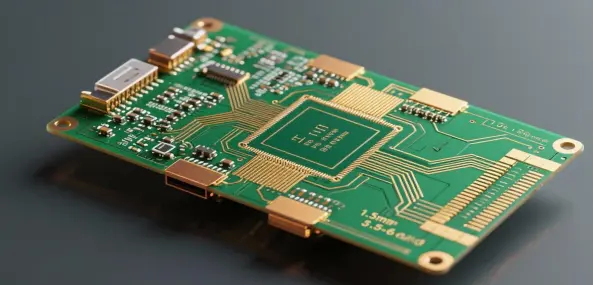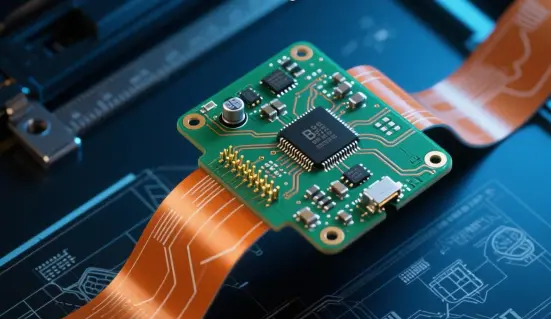
In the realm of high-quality electronics manufacturing, precise specifications and rigorous testing protocols are paramount. This technical overview details a standard offering for a robust, six-layer printed circuit board (PCB) assembly, highlighting key construction, material, and testing parameters that ensure reliability and performance.PCB Stack-up and Construction: Enhanced Signal IntegrityThe foundation of this assembly is a 6-layer PCB stack-up. This multilayer construction is engineered to provide superior signal integrity and power distribution for complex circuits. It effectively minimizes electromagnetic interference (EMI) by dedicating internal layers to solid power and ground planes, while the outer layers are optimized for component placement and signal routing. This structure is ideal for advanced applications requiring high-speed data processing and stable operation.Surface Finish: Immersion Gold (ENIG) for Optimal PerformanceThe board features an Immersion Gold (ENIG) surface finish. ENIG is selected for its exceptional flatness, which is critical for the reliable soldering of fine-pitch components and BGAs (Ball Grid Arrays). The process deposits a thin layer of gold over a nickel barrier, providing excellent oxidation resistance and long-term shelf life. A critical specification here is the gold thickness of 2 microinches. This controlled thickness ensures a reliable, robust contact surface without the risk of "black pad" syndrome, which can occur with thicker gold deposits, thereby guaranteeing strong solder joints.Visual and Solder Mask Specification: Red Solder MaskA red solder mask is specified for this build. Beyond aesthetics, the high-contrast red coloration provides excellent visibility for automated optical inspection (AOI) processes, aiding in the rapid identification of soldering defects or bridging during production.Comprehensive Testing and Quality AssuranceQuality assurance is integral to the manufacturing flow.
It encompasses a multi-stage testing regime:
1. PCB Electrical Testing: This initial test, included as standard, verifies the integrity of the bare PCB. It checks for opens and shorts to ensure the board's circuitry matches the design netlist before component assembly.