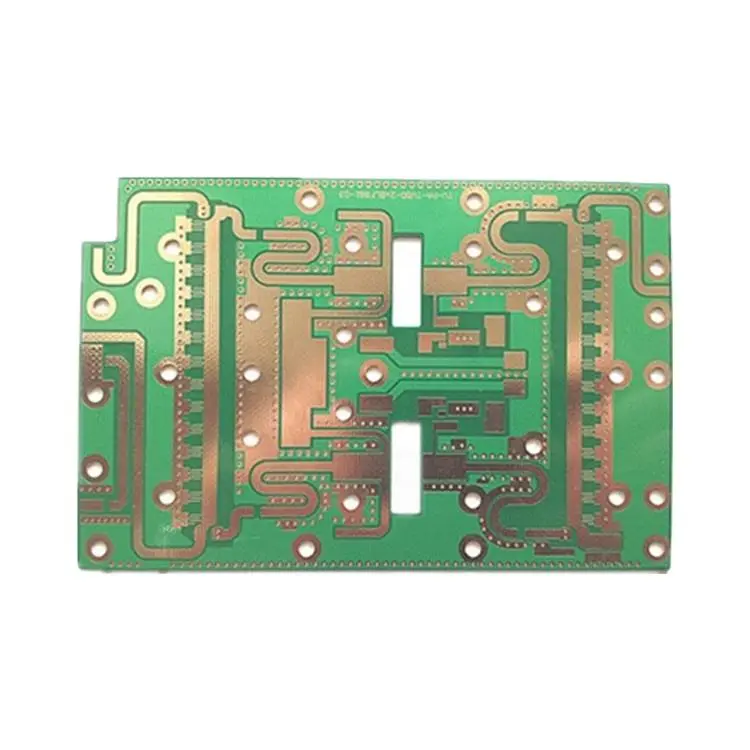
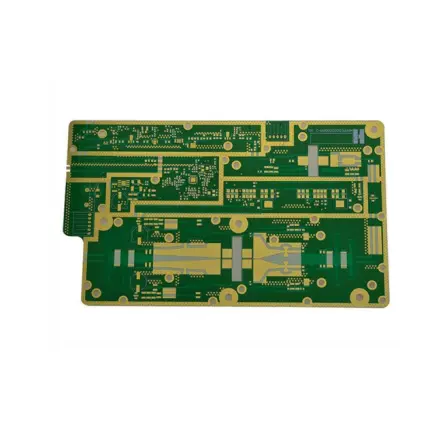
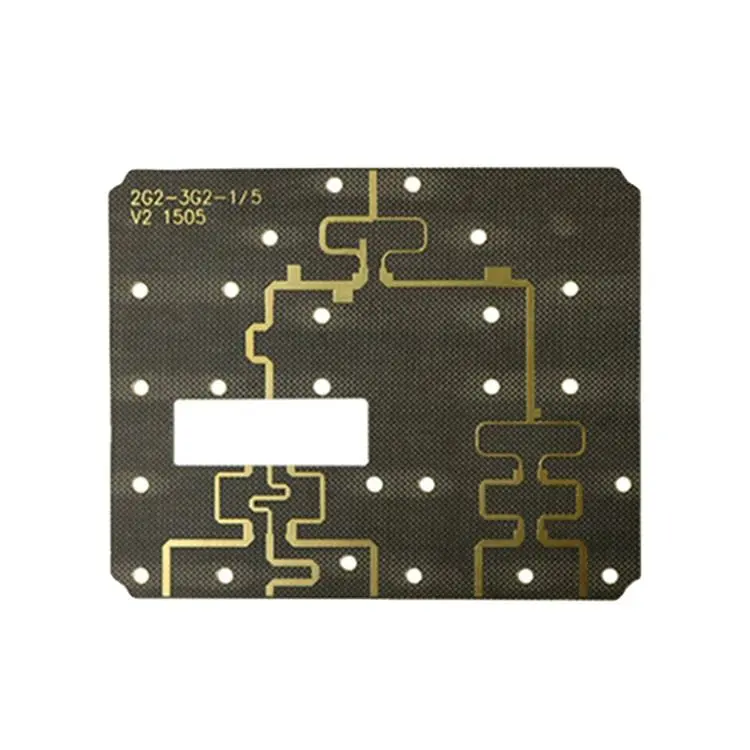
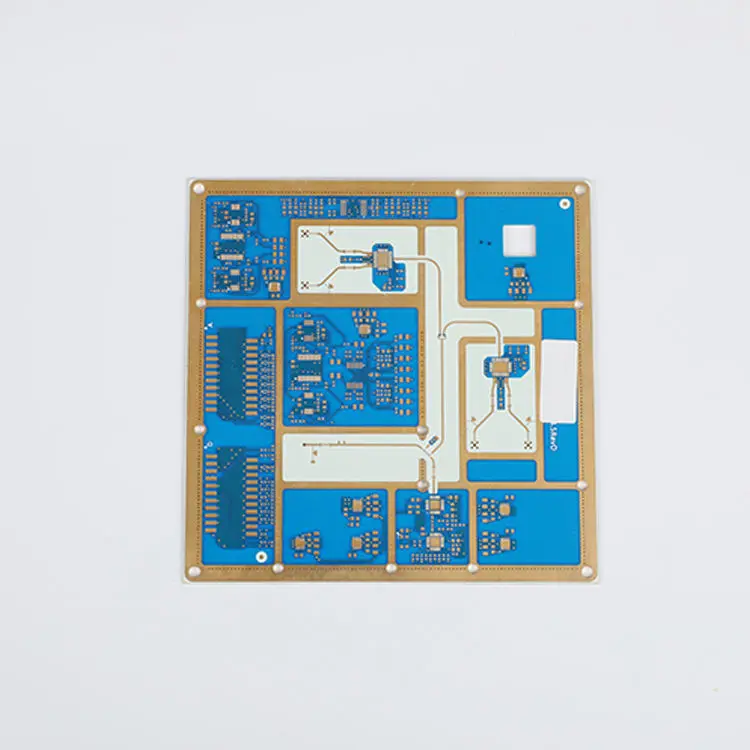
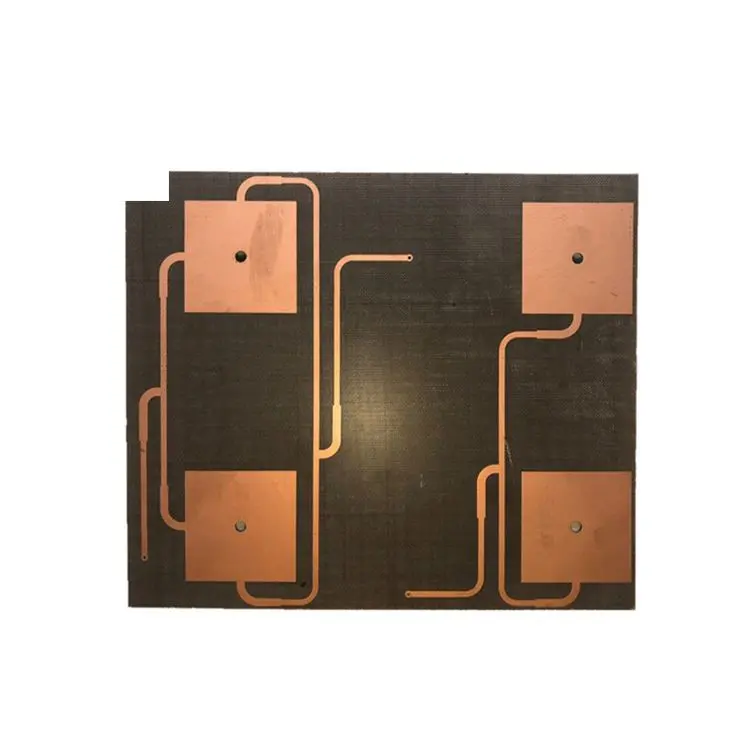
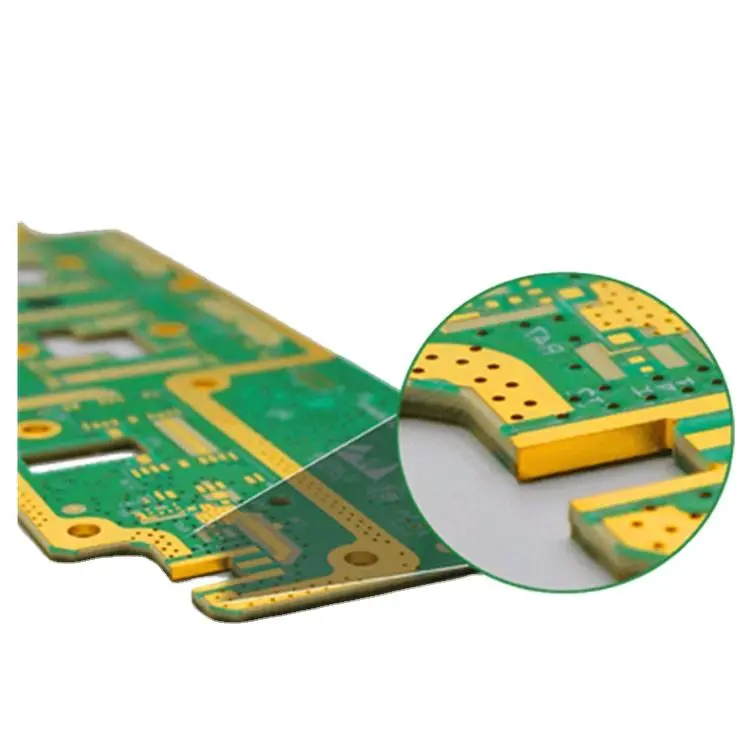
Rogers 4003 laminate is a cornerstone material for high-frequency printed circuit board (PCB) designs, offering a stable dielectric constant and excellent mechanical properties. This article provides a detailed breakdown of the key manufacturing specifications for a standard Rogers 4003-based multilayer board, essential for engineers and procurement specialists.
Core Material and Electrical Properties
The foundation of this PCB is the renowned Rogers 4003 laminate. This ceramic-filled PTFE composite delivers a stable dielectric constant (Dk) of 3.38, which is consistent across a wide frequency range—a critical parameter for impedance control in RF and microwave circuits. The layer build-up utilizes a Rogers 4003 core with a compatible 4450F prepreg, ensuring optimal layer-to-layer bonding and reliable performance.
Controlled Thickness and Impedance Management
Precise thickness control is paramount for signal integrity. The design specifies a Rogers 4003 core thickness of 0.508 mm (20 mil). The final finished board thickness is 2.0 mm, achieved through a controlled lamination process. This consistency is vital for achieving target characteristic impedances, such as 50-ohm transmission lines.
Copper Thickness and Circuit Fabrication
The substrate begins with a base copper thickness of 17 µm. After the plating processes, the final finished copper thickness is specified as 1 oz (approximately 35 µm). This ensures sufficient current-carrying capacity and allows for the fabrication of fine-line features. The specifications define a minimum trace width and spacing of 6 mil (0.15 mm), highlighting the board's capability for moderately dense circuit designs.
Surface Finish and Solder Mask Options
To ensure reliable soldering and protect the copper from oxidation, the board features Immersion Gold (ENIG) surface treatment. This provides a flat, solderable surface with a long shelf life. Solder mask options are available in standard Green or White, with white often being selected for LED-based applications or for enhanced contrast.
Key Performance Characteristics
A defining feature of this Rogers 4003 PCB is its high glass transition temperature (Tg) of 280°C. This makes it a high-temperature resistant PCB, suitable for demanding applications involving lead-free soldering processes and operation in elevated temperature environments. This combination of stable electrical properties, fine feature fabrication, and robust thermal performance makes it ideal for advanced telecommunications, aerospace, and defense systems.
Base Material: Rogers 4003 Laminate
Dielectric Constant (Dk): 3.38
Layer Build-up: Rogers 4003 core with 4450F prepreg
Core Thickness: 0.508 mm (20 mil)
Overall Finished Board Thickness: 2.0 mm
Base Copper Thickness (Substrate): 17 µm
Final Copper Thickness: 1 oz
Surface Finish: Immersion Gold (ENIG)
Solder Mask Color: Green / White
Minimum Trace Width / Spacing: 6 mil / 6 mil
Key Features: High-Temperature Rogers PCB, High Tg (280°C)