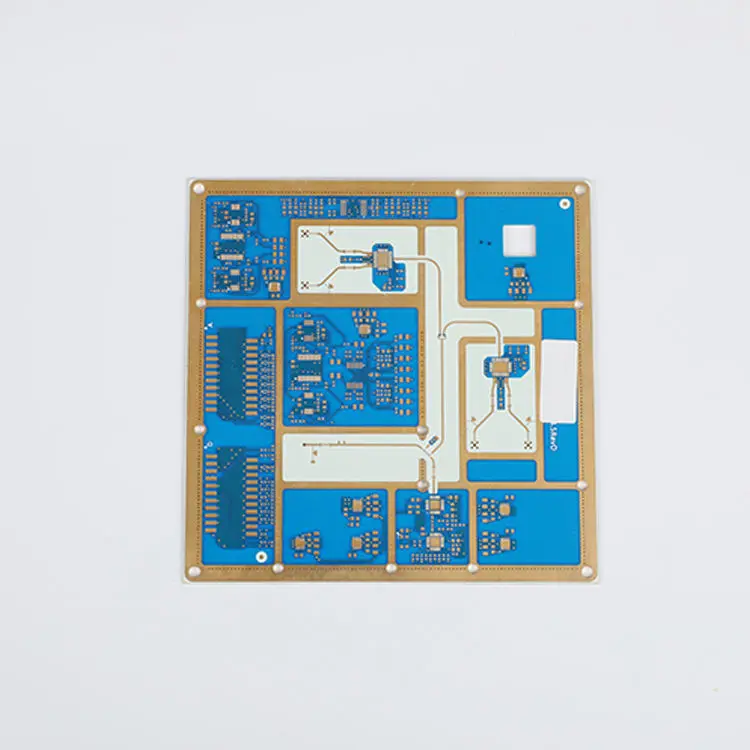
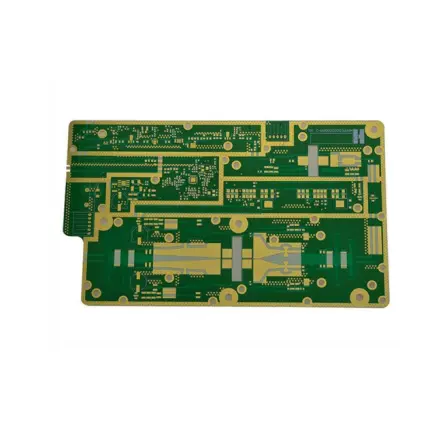
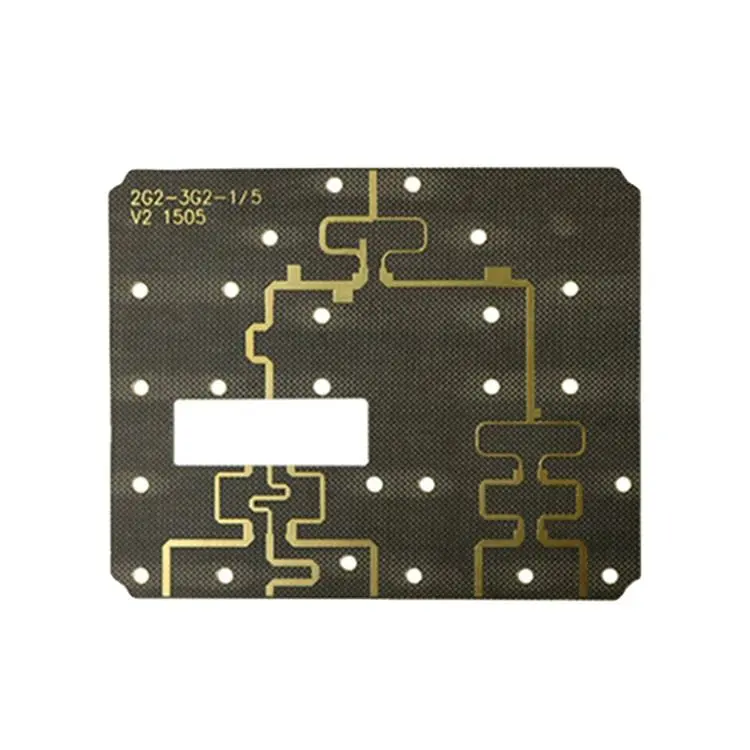
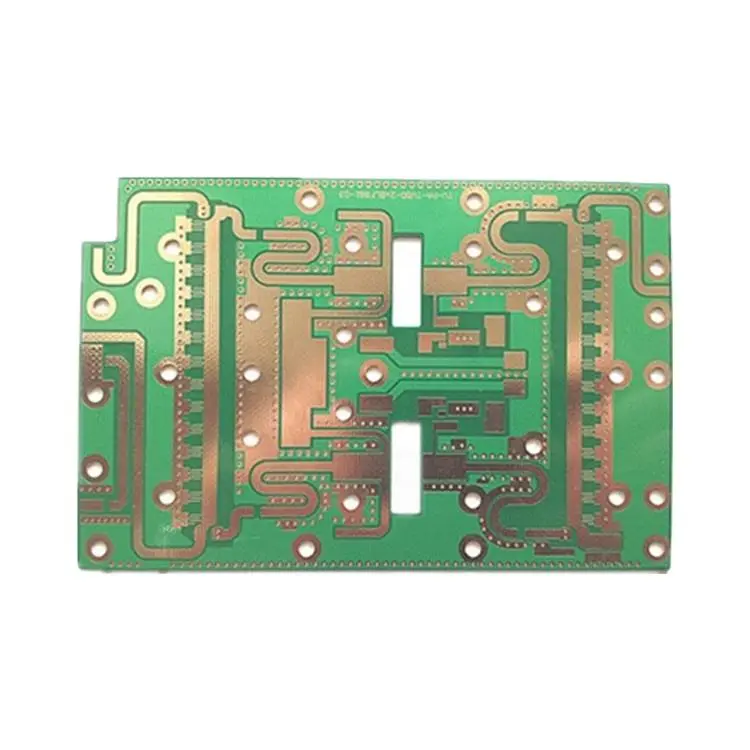
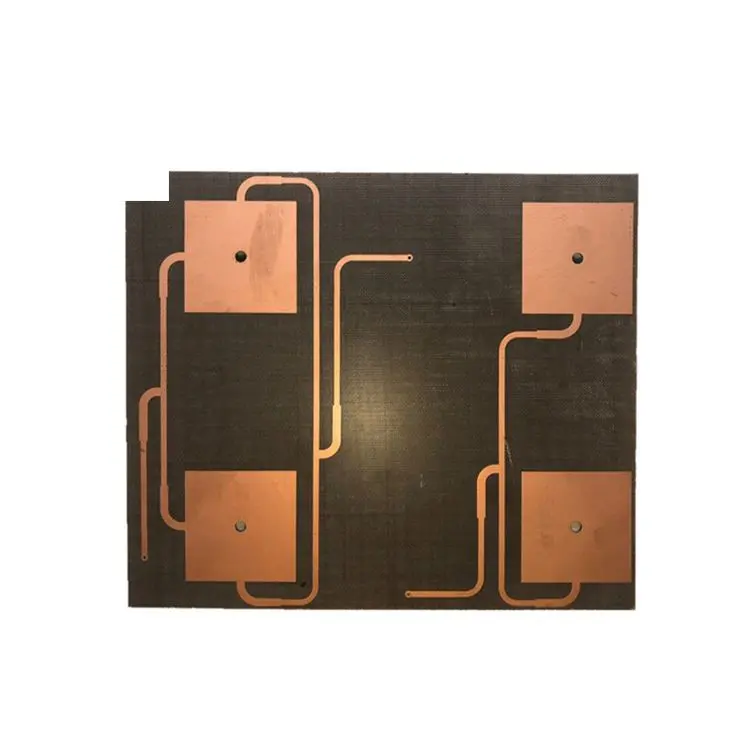
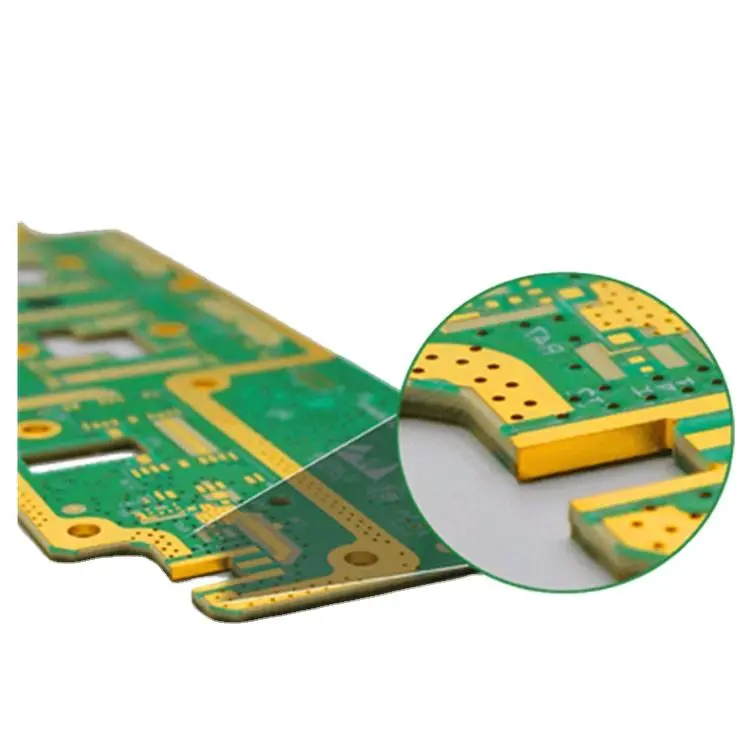
Rogers RO4350B is a cornerstone material in the world of high-frequency circuit design, bridging the gap between the exceptional radio frequency (RF) performance of traditional PTFE ceramics and the manufacturability of epoxy-based laminates. This hydrocarbon ceramic laminate is engineered for applications requiring stable electrical properties, reliable thermal management, and cost-effectiveness. This article provides a detailed technical examination of the key specifications for a standard 2-layer RO4350B PCB, offering valuable insights for design and manufacturing engineers.
Key Electrical and Thermal Properties
"The performance of RO4350B is defined by its core material properties, which are critical for signal integrity in RF and microwave circuits.
1、Stable Dielectric Constant (Dk): RO4350B features a dielectric constant of 3.48, which remains consistent over a wide frequency range. This stability is crucial for predictable impedance control and minimizing signal phase distortion.
2、Low Loss Tangent: While not explicitly listed in the provided data, a key characteristic of RO4350B is its low dissipation factor, which minimizes signal loss (attenuation) at high frequencies.
3、Enhanced Thermal Management: With a thermal conductivity of 0.69 W/m/K, RO4350B offers superior heat dissipation compared to standard FR-4 materials. This property helps in managing thermal loads, improving the reliability and longevity of active components."
Physical Construction and Layer Stack-up
"The physical build of a PCB directly impacts its mechanical robustness and electrical performance. The specifications outline a typical two-layer construction.
1、Laminate Material: The core substrate is composed of Rogers 4350B material, reinforced with woven glass.
2、Dielectric Thickness Variability: The laminate core is available in a range of thicknesses, from 0.254 mm to 1.524 mm (10 mils to 60 mils), allowing designers to select the appropriate thickness for target impedance and mechanical strength.
3、Copper Cladding: The standard construction uses a base copper foil of ½ ounce (0.5 oz) per side. The final finished copper weight after processing is typically 1 ounce (1 oz), which includes the addition of electroplated copper."
Critical Manufacturing Specifications
"Adherence to precise manufacturing tolerances is essential for realizing the designed performance of the high-frequency laminate.
1、Final Board Thickness: The overall thickness of the completed PCB, after lamination and plating, can range from 0.35 mm to 1.7 mm, depending on the core selection and plating time.
2、Fine-Line Fabrication: The capability to achieve a minimum trace width and spacing of 4 mil (approximately 0.1 mm) indicates a manufacturing process suitable for moderately complex RF circuits, including controlled impedance transmission lines like microstrips.
3、Surface Finish Options: The board supports high-performance surface finishes such as Electroless Nickel Immersion Gold (ENIG) and Immersion Silver. ENIG is the most common choice for RO4350B, providing a flat, solderable surface, excellent oxidation resistance, and is ideal for gold wire bonding."
Applications and Conclusion
"Rogers RO4350B PCBs are ideally suited for a wide array of wireless applications, including:
1、Cellular infrastructure antennas and power amplifiers
2、Automotive radar systems (77 GHz)
3、Point-to-point radio links
4、Satellite communication devices
5、High-speed digital circuits where signal loss is a concern"
In summary, the presented specifications highlight the RO4350B laminate as a high-performance yet practical solution for demanding RF environments. Its balanced combination of stable electrical properties, good thermal conductivity, and relative ease of manufacturing makes it a preferred material for engineers designing the next generation of wireless and high-speed digital products. When planning your next project, carefully considering these parameters will ensure optimal performance and manufacturability.
Material: Rogers 4350B Laminate
Construction: 2-Layer Board
Dielectric Thickness: 0.254 mm - 1.524 mm
Dielectric Constant (Dk): 3.48
Thermal Conductivity: 0.69 W/m·K
Copper Thickness: Base Copper 0.5 oz, Finished Copper 1 oz
Board Thickness: 0.35 mm - 1.7 mm
Surface Finish: ENIG (Electroless Nickel Immersion Gold) / Immersion Silver
Minimum Trace/Spacing: 4 mil / 4 mil