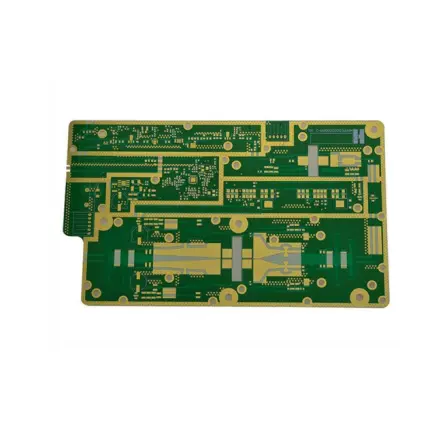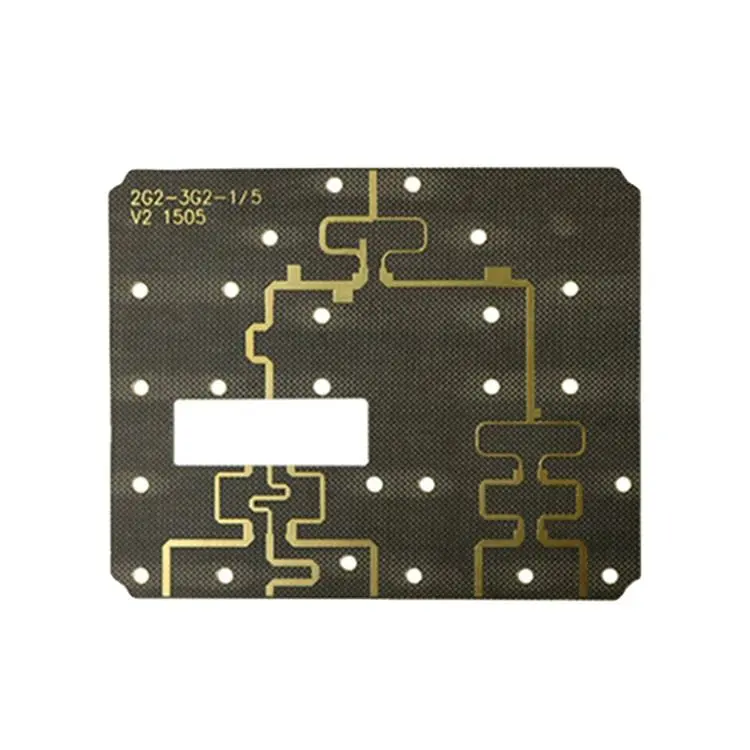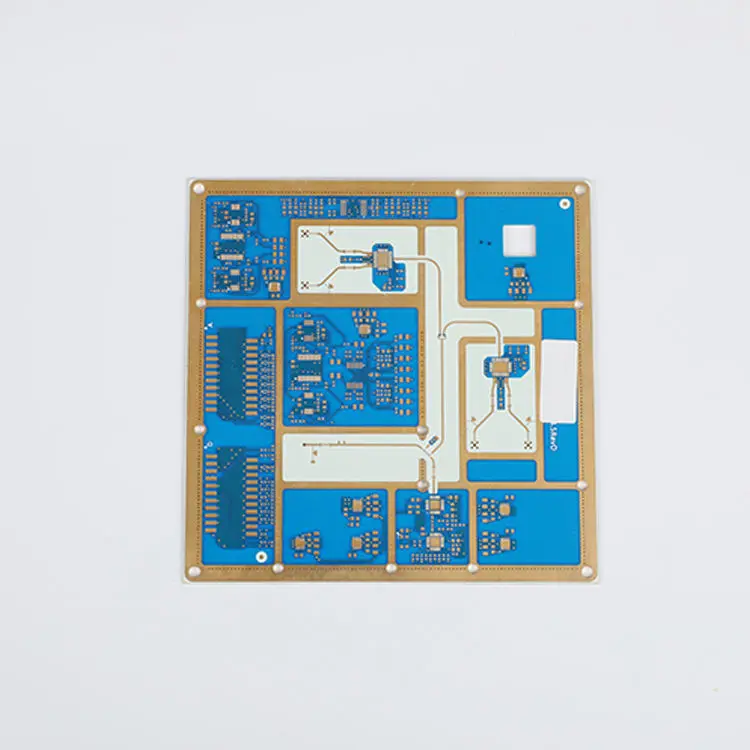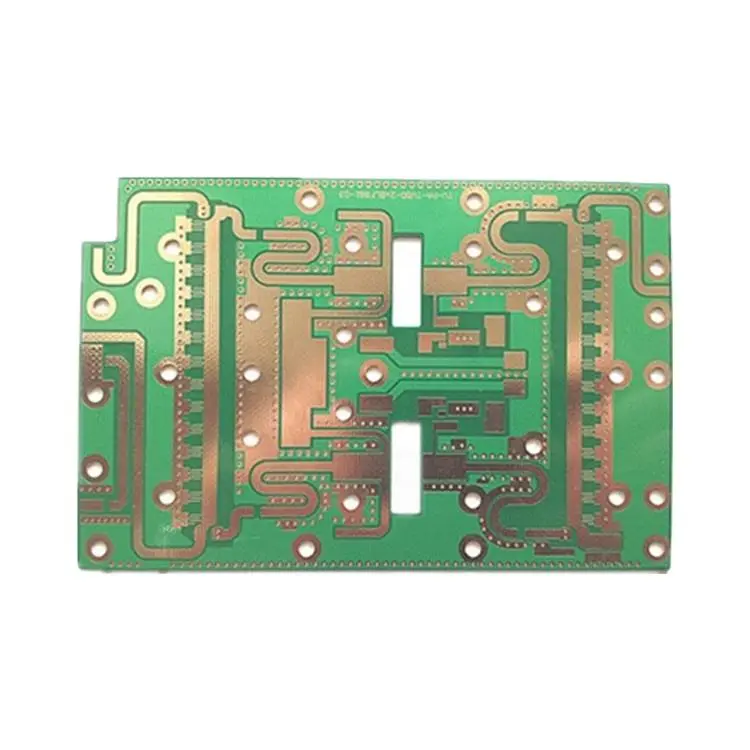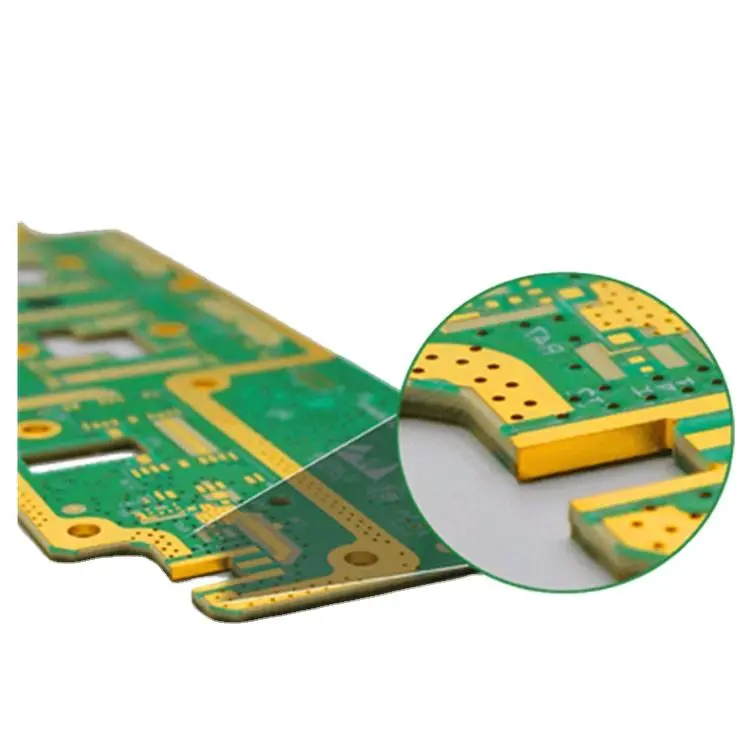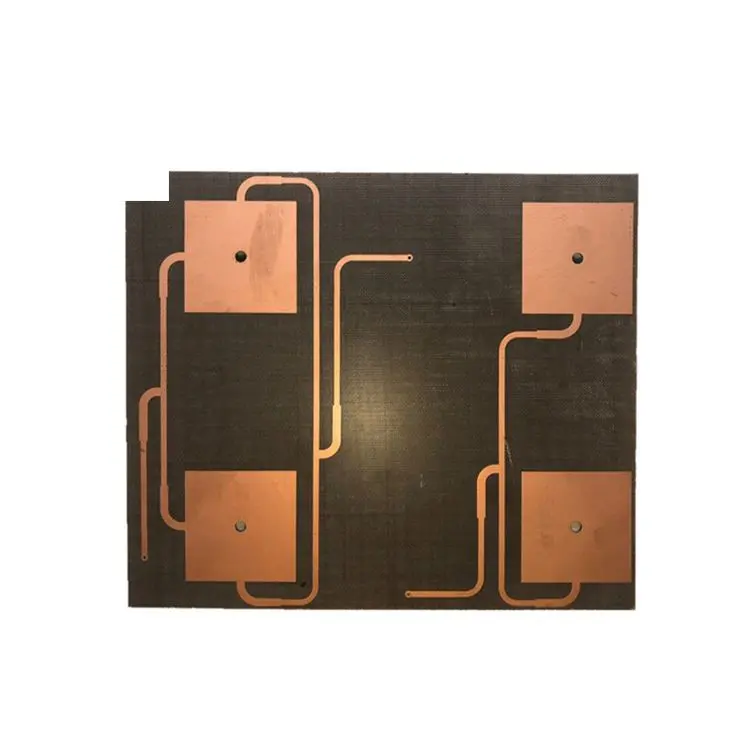
In the demanding fields of high‑frequency electronics, radar systems, and advanced communication infrastructure, the choice of printed circuit board (PCB) substrate is paramount. Rogers Corporation's RO4000® series, particularly the RT/duroid® 5880 material, has established itself as an industry standard for high‑performance applications. This PTFE‑based composite laminate offers a unique combination of electrical and mechanical properties that are critical for reliability and signal integrity. This article provides a detailed technical examination of Rogers 5880 PCB specifications, manufacturing considerations, and primary use cases.
The performance of Rogers 5880 stems from its core material properties, which are engineered for consistency and low loss at microwave frequencies.
Low Dielectric Constant (Dk): With a stable dielectric constant of 2.20 (±0.02) at 10 GHz, RT/duroid 5880 ensures minimal signal propagation delay. This low Dk is consistent across a wide frequency range, which is crucial for phase‑sensitive applications and impedance control in high‑speed digital circuits.
Ultra‑Low Dissipation Factor (Df): The material exhibits an exceptionally low dissipation factor of 0.0009 at 10 GHz. This translates to minimal signal loss (insertion loss) as electromagnetic waves travel through the substrate, making it ideal for power‑sensitive amplifiers and long‑distance signal transmission.
PTFE‑Based Composite: The polytetrafluoroethylene (PTFE) glass microfiber‑reinforced composition provides excellent chemical resistance and thermal stability, while also facilitating specialized manufacturing processes.
Translating the raw laminate into a functional PCB requires precise fabrication techniques. The specifications derived from the datasheet outline a robust manufacturing framework.
Layer Construction: Advanced PCB fabricators can produce Rogers 5880 boards ranging from simple single‑layer designs to complex, high‑density interconnect (HDI) multilayer boards up to 24 layers. This flexibility supports everything from basic antenna elements to sophisticated system‑on‑board (SoB) designs for instrumentation.
Thickness Control: Substrate thickness is a critical design parameter, directly affecting impedance. Manufacturers offer a wide thickness range from 0.2 mm (for ultra‑thin, flexible configurations) to 4.8 mm (for robust, heavy‑copper power applications). Standard copper cladding starts at 0.5 oz, with a finished thickness of 1 oz being common, though other weights are achievable.
Critical Surface Finish: Electroless Nickel Immersion Gold (ENIG) is the recommended surface treatment. This finish provides a flat, solderable surface, excellent for fine‑pitch components, and a robust gold surface that prevents oxidation of the underlying copper, ensuring long‑term reliability.
Specialized Fabrication Processes:
PTFE Multilayer Lamination: Bonding multiple layers of Rogers 5880 requires specialized lamination cycles and bonding films compatible with PTFE chemistry to ensure void‑free, delamination‑resistant structures.
Countersunk Holes: This mechanical process creates a conical recess at the hole's entrance, allowing flat‑head fasteners to sit flush with the PCB surface. This is essential for applications where aerodynamics or physical stacking is a concern.
The unique properties of this material make it the substrate of choice for several high‑performance sectors.
Microwave and RF Circuits: Its stable electrical properties are indispensable for components like low‑noise amplifiers (LNAs) , power amplifiers (PAs) , filters, and couplers operating in the GHz range.
Advanced Communication Systems: From automotive radar (77 GHz) to 5G/6G base station antennas and satellite communication payloads, Rogers 5880 ensures signal clarity and system efficiency.
High‑Precision Instrumentation: Test and measurement equipment, such as vector network analyzers (VNAs) , rely on the low‑loss characteristics of 5880 to provide calibration‑grade accuracy.
Rogers 5880 PCB laminate remains a cornerstone material for engineers designing next‑generation high‑frequency electronics. Its proven combination of a low dielectric constant, ultra‑low loss tangent, and manufacturability into complex multilayered structures makes it an indispensable solution for achieving peak performance in microwave, RF, and high‑speed digital applications.
When selecting a PCB manufacturer, it is critical to partner with a vendor possessing proven expertise in handling PTFE‑based materials like RT/duroid 5880 to fully leverage its capabilities.