Engineering High-Performance RF Circuits: A Technical Overview of Teflon PCBs
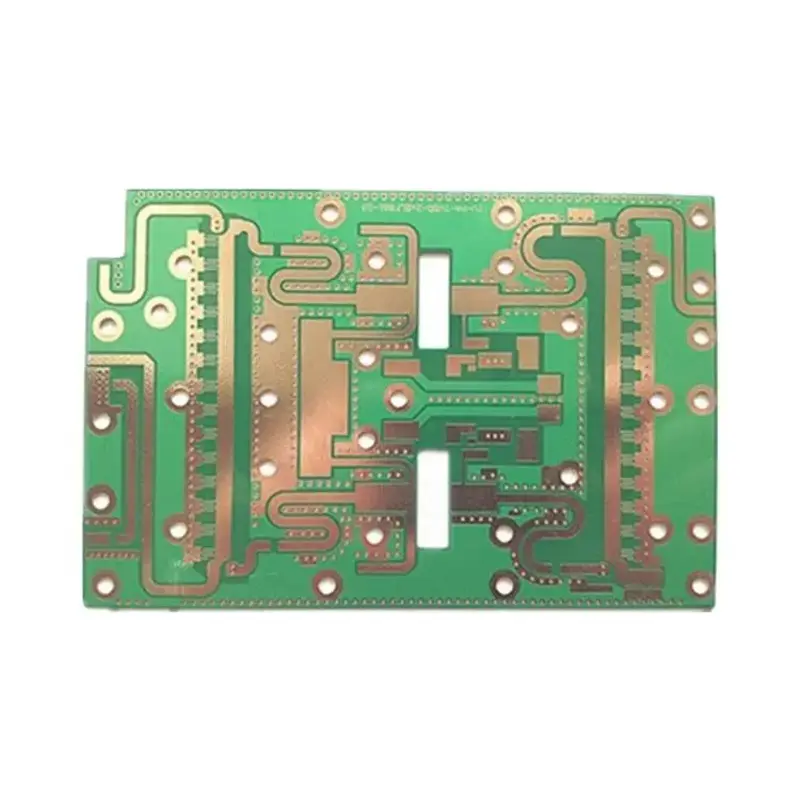
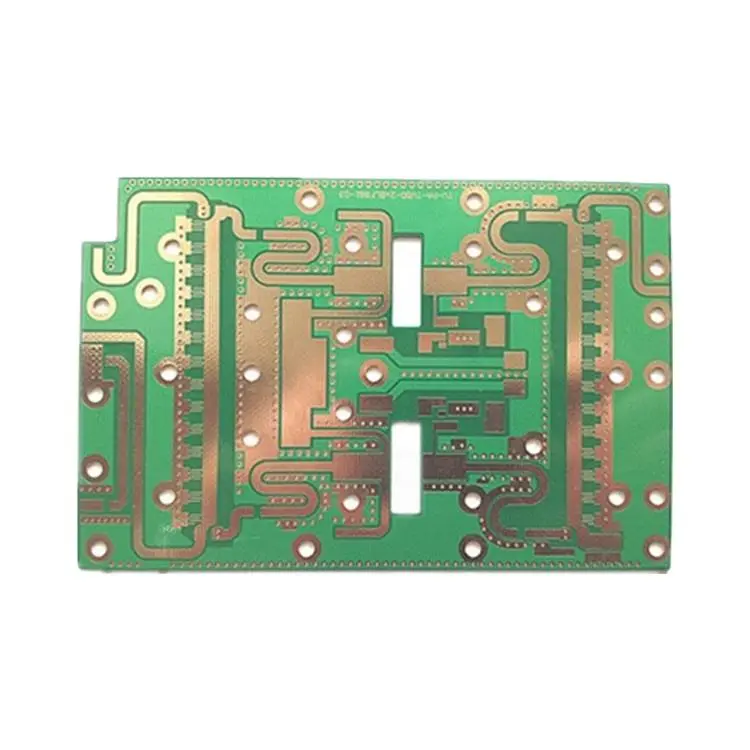
Teflon PCBs, more accurately known as Polytetrafluoroethylene (PTFE) based circuit boards, represent the gold standard in high-frequency electronics. These substrates are engineered to meet the rigorous demands of radio frequency (RF) and microwave applications where signal integrity is paramount. This article provides a detailed technical examination of the specifications that make Teflon PCBs the preferred choice for critical communications, aerospace, and radar systems.
Core Material and Quality Compliance
The foundation of these high-performance boards is a Teflon (PTFE) laminate. This material is selected for its exceptional electrical properties and stability across a wide range of frequencies and environmental conditions. Manufacturing and quality assurance strictly adhere to the IPC-6012 standard, with boards qualified for either Class II (dedicated service electronic products) or the more stringent Class III (high-reliability or performance-on-demand products).
Critical Electrical and Physical Parameters
The performance of a Teflon PCB is defined by several key parameters:
1、Dielectric Constant (Dk): Ranging from 2.0 to 3.5, the low and stable Dk of PTFE laminates is crucial for minimizing signal propagation delay and ensuring consistent impedance control.
2、Dissipation Factor (Df): These materials feature an ultra-low dissipation factor, which is meticulously controlled during manufacturing to minimize signal loss (insertion loss) at high frequencies.
3、Layer Configuration and Thickness: Design flexibility is offered with configurations from 2 to 34 layers, accommodating complex RF subsystems. Final board thickness can be precisely controlled within a range of 0.1mm to 12.0mm.
4、Copper Thickness: Standard construction begins with a 0.5 oz base copper cladding. The final finished copper thickness is typically 1.0 oz, achieved through precise plating processes to maintain the integrity of fine features and transmission lines.
Advanced Manufacturing and Surface Finishes
Achieving high performance requires advanced fabrication capabilities. A primary requirement is the high-precision etching of RF transmission lines to maintain strict characteristic impedance tolerances, such as 50 or 75 ohms. For surface finish, Electroless Nickel Immersion Gold (ENIG) is commonly specified, providing a flat, solderable surface with excellent oxidation resistance. Immersion Silver (ISIG) is another viable option for certain applications, offering superior RF performance due to its minimal skin effect loss at high frequencies.
Primary Application: Microwave High-Frequency Circuits
The combination of these specifications makes Teflon PCBs uniquely suited for microwave high-frequency PCB applications. They are indispensable in products where signal speed and fidelity cannot be compromised, including:
1、Radar and Satellite Communication Systems
2、5G Network Infrastructure (e.g., base station antennas)
3、Microwave Point-to-Point Radio Links
4、Advanced Avionics and Electronic Warfare Systems
Teflon PCBs are not merely a component but a critical engineering solution for high-frequency design. Their defined specifications—from the stable PTFE material and controlled dielectric properties to the precision manufacturing tolerances—ensure that they deliver the reliability and performance required by today's most advanced electronic systems. When designing for RF and microwave frequencies, specifying a Teflon-based PCB is a strategic decision for achieving optimal electrical performance.
Base Material: Polytetrafluoroethylene (PTFE) based laminate
Quality Compliance: Conforms to IPC-6012, Class II/III
Electrical Properties: Dielectric Constant (Dk): 2.0 - 3.5
Dissipation Factor (Df): Controlled (as per material requirements)
Construction: Layer Count: 2 to 34 layers
Board Thickness: 0.1 mm - 12.0 mm
Copper Thickness: Starting (Base) Copper: 0.5 oz
Final (Finished) Copper: 1.0 oz
Surface Finish: ENIG (Electroless Nickel Immersion Gold), Immersion Silver (ISIG)
Critical Requirements: High-precision RF transmission line fabrication
Tight control over material Dk/Df parameters
Primary Application: High-frequency microwave circuit boards