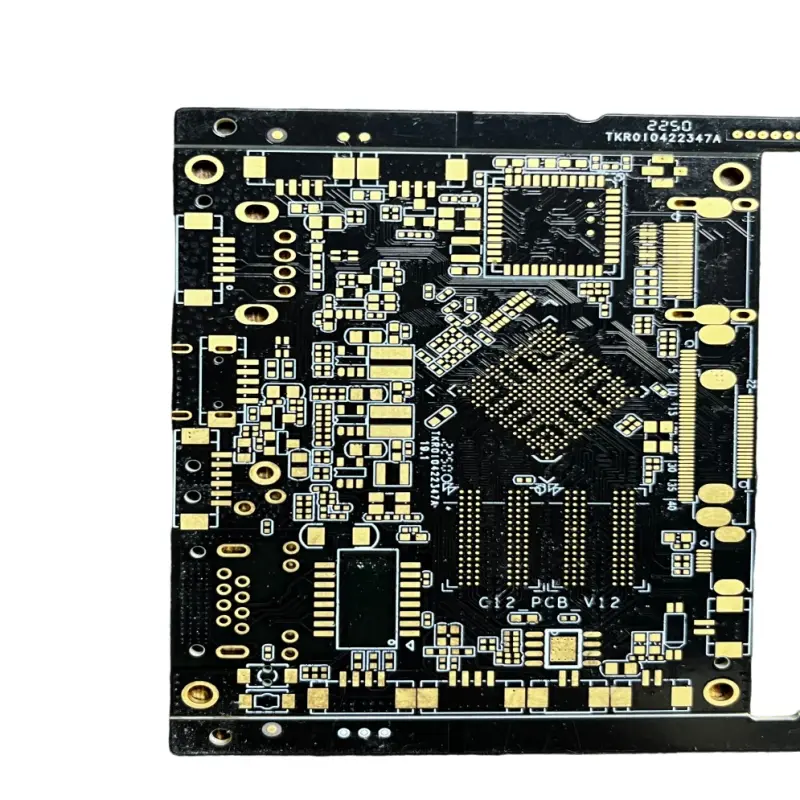
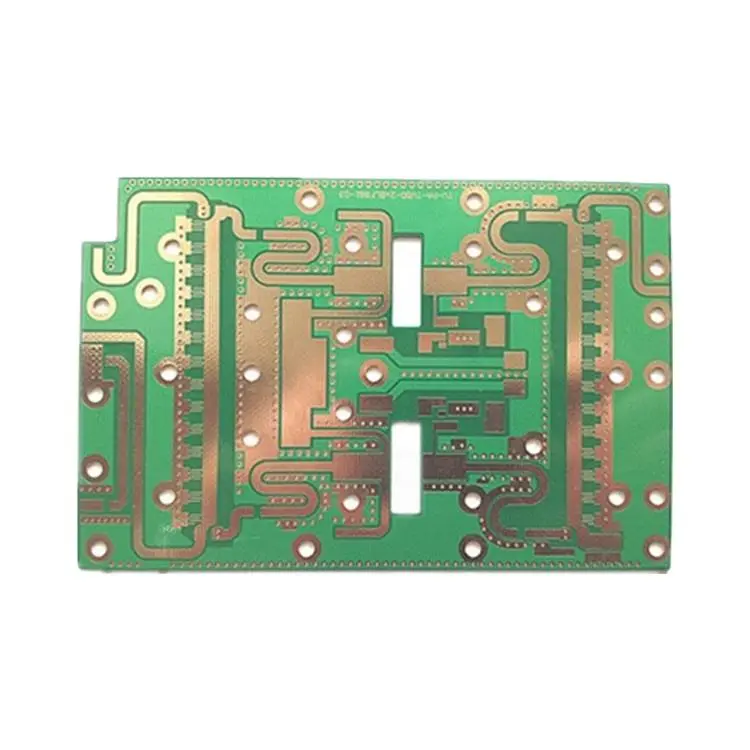
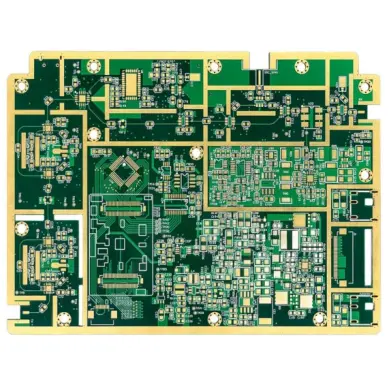
Precision Engineering PCBs for Demanding Automotive Networking and Communication Applications
The evolution of connected and autonomous vehicles hinges on the flawless performance of their electronic nervous system: the network of gateways, telematics control units (TCUs), routers, and V2X communication modules. At the heart of these systems lie sophisticated printed circuit boards (PCBs) manufactured to exceptionally high standards. These are not commodity PCBs; they are precision-engineered components where material science, signal integrity, and long-term reliability converge.
This article outlines the essential manufacturing technical parameters that define high-reliability PCBs for next-generation automotive communication equipment.
1. High-Frequency Materials: The Foundation for Signal Integrity
The demand for high-speed data transmission (5G, Ethernet) necessitates moving beyond standard FR-4 materials. Boards require laminates with carefully controlled dielectric properties.
Low-Loss Materials: Materials like Rogers, Taconic, or Panasonic's Megtron series are often specified for critical RF sections due to their stable Dielectric Constant (Dk) and ultra-low Dissipation Factor (Df). This minimizes signal attenuation and preserves data integrity.
High Thermal Reliability: A Glass Transition Temperature (Tg) of 170°C or higher is standard. This ensures the board's mechanical stability during high-temperature soldering processes and under-the-hood operational extremes, preventing delamination.
2. HDI Design and Controlled Impedance for High-Speed Data
The complexity of modern vehicle networks demands advanced PCB architectures.
High-Density Interconnect (HDI): Utilizing microvias, blind vias, and buried vias is essential for routing high-pin-count processors and memory. This allows for more interconnections in less space, which is critical for compact module designs. Minimum trace/space widths of 3/3 mil or less are common.
Strict Impedance Control: Maintaining consistent characteristic impedance (e.g., 50Ω single-ended, 100Ω differential) is non-negotiable. Impedance discontinuities cause signal reflections, leading to data errors. Tight tolerances of ±10% are achieved through precise control of dielectric thickness and trace geometry.
3. Surface Finishes for Fine-Pitch Components
The surface finish must ensure reliable solder joints and protect the copper circuitry, especially for components like fine-pitch BGAs.
ENEPIG (Electroless Nickel Electroless Palladium Immersion Gold) is a premium choice, offering a flat surface for excellent solderability and wire bonding capability. ENIG remains a robust and widely used alternative.
4. Thermal and Power Management
Communication modules integrate powerful processors that generate significant heat. Effective thermal management is built directly into the PCB.
Heavy Copper Planes: Using 2 oz. copper or thicker for power and ground planes helps distribute heat and carry higher currents without overheating.
Thermal Vias and Embedded Coins: Arrays of thermal vias are used under hot components to conduct heat to internal ground planes or heatsinks. For the most demanding applications, embedded solid copper coins are machined into the board to act as localized heatsinks.
5. Comprehensive Testing and Automotive Compliance
Robust quality assurance is what separates automotive-grade PCBs from commercial ones.
Automated Optical Inspection (AOI) and X-Ray inspection are mandatory for verifying solder paste quality and inspecting hidden connections like BGA balls.
Electrical Testing: 100% electrical testing, via flying probe or dedicated fixture, confirms circuit continuity and isolation.
Reliability Validation: Boards must pass stringent tests, including thermal cycling from -40°C to +125°C, to simulate years of field operation in a short time. CAF (Conductive Anodic Filament) resistance is also critical for long-term reliability in humid environments.
Quality Standards: Manufacturing must adhere to IPC-A-600G Class 2/3 acceptability standards and be performed within an IATF 16949 certified quality management system.
Designing and manufacturing PCBs for automotive networking and communication equipment requires a deep partnership between the OEM and the PCB fabricator. It is a discipline focused on managing signal integrity, power delivery, and thermal dissipation within a framework of uncompromising quality and reliability. By specifying and controlling these critical technical elements, manufacturers can deliver the robust electronic foundations required for the safe and reliable operation of connected vehicles.
Base material:
High-Frequency/High-Speed Laminates (e.g., Rogers, Taconic, Panasonic Megtron)
High Glass Transition Temperature (Tg) ≥ 170°C
Low Dielectric Constant (Dk) and Low Dissipation Factor (Df)
Design and Structure:
Multilayer Board, typically 8-20 layers or more
High-Density Interconnect (HDI) Structure: microvias, blind vias, buried vias
Controlled Impedance: Single-ended 50Ω, Differential 90Ω/100Ω, Tolerance ±10%
Minimum Trace Width/Space: 3/3 mil (0.075mm) or less
Surface treatment:
Electroless Nickel Immersion Gold (ENIG)
Thermal Management:
Heavy Copper (2 oz and above)
Thermal Vias
Coating and Protection:
Solder Mask conforming to IPC-CC-830B standard
Reliability & Standards:
Conforms to IPC-A-600G Class 2/3 Standard