Engineering a Robust PCBA Control System for Automotive Applications
The design and manufacturing of a Printed Circuit Board Assembly (PCBA) for vehicle control systems demand rigorous attention to detail and adherence to high-reliability standards. These systems are the central nervous system of modern vehicles, managing critical functions. Therefore, the underlying PCBA must be engineered for performance, durability, and longevity in challenging environments. The following technical specifications outline the capabilities for a production-ready, automotive-grade PCBA control system.Core PCB Construction and MaterialsThe foundation of any reliable PCBA is its substrate. This design utilizes a high-performance FR-4 material with a high glass transition temperature (Tg) of 170°C. High-Tg FR-4 is essential for automotive applications where operational temperatures can soar, as it prevents the board from softening, deforming, or losing electrical integrity under thermal stress.To accommodate complex circuitry and signal integrity requirements, this design supports a multi-layer stack-up of up to 12 layers. This allows for dedicated power and ground planes, improved EMI/RFI shielding, and a more compact form factor. The finished copper weight is variable, ranging from 0.5 oz to 6 oz, providing the current-carrying capacity necessary for power management components within the system.Surface Finishes and Critical Interface SpecificationsThe choice of surface finish impacts solderability, shelf life, and contact reliability. This PCBA offers two industry-standard finishes:
Lead-Free Hot Air Solder Leveling (HASL): A cost-effective option providing a robust, solderable surface.
Electroless Nickel Immersion Gold (ENIG): Recommended for high-reliability applications, ENIG offers a flat surface (critical for fine-pitch components), excellent oxidation resistance, and superior solder joint integrity.
For edge connectors or gold fingers, a specified gold contact plating thickness between 2 to 5 micro-inches (µ") ensures reliable, low-resistance electrical connections through thousands of mating cycles.Customization and Quality Assurance ProtocolsAesthetic and identification needs are met with a selection of solder mask colors, including Green, Black, White, Red, and Blue. The standard solder mask is green, but customization is available upon request.Quality assurance is non-negotiable. Each board undergoes a comprehensive testing regimen:
1. PCB Electrical Test (E-Test): A 100% electrical test verifies the integrity of the bare PCB, checking for opens, shorts, and continuity to ensure the board is manufactured to specification before components are assembled.
2. PCBA Functional Test (FCT): After assembly, the complete PCBA undergoes a functional circuit test. This simulated operational test validates that the assembled board performs its intended function correctly, catching any assembly or component faults.
Application This PCBA system is engineered specifically for the demanding requirements of automotive electronics and other high-performance electronic products, where failure is not an option.By leveraging these advanced manufacturing specifications—from the high-Tg substrate to the stringent testing protocols—this vehicle control PCBA design is positioned to deliver the reliability and performance expected in today's automotive industry.
PCB Layer Count: Up to 12 layers.
Substrate Material: High-TG FR-4, with a Glass Transition Temperature (Tg) of 170°C.
Surface Finish: Lead-Free Hot Air Solder Leveling (HASL) or Electroless Nickel Immersion Gold (ENIG).
Gold Finger/Contact Plating Thickness: 2 to 5 micro-inches (µ").
Solder Mask: Standard green; customizable upon request.
Copper Weight (Finished): Ranging from 0.5 to 6 oz.
PCB Base Substrate Copper Clad: 0.5 to 5 oz.
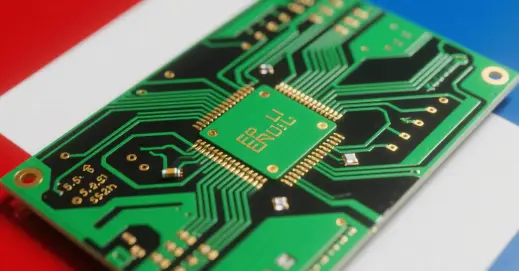
PCB Solder Mask Color Options: Green, Black, White, Red, Blue.
Testing & Validation: PCB Electrical Test (E-Test) and full PCBA Functional Test are included.
Target Application: Automotive Electronics and General Electronic Products.