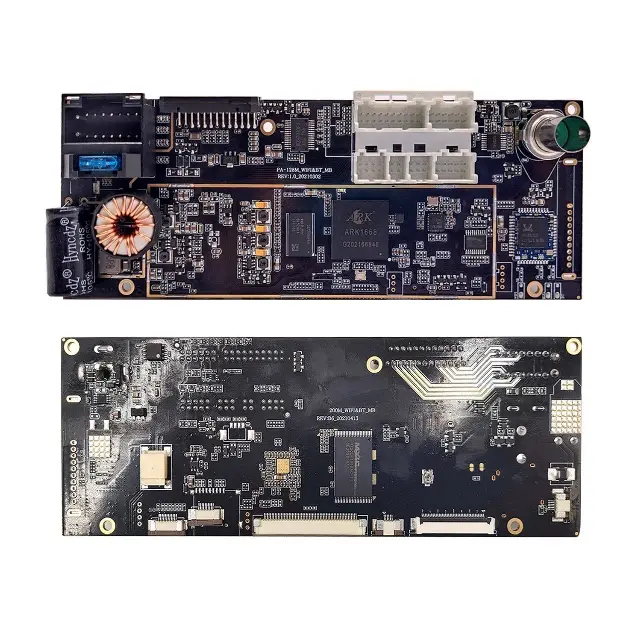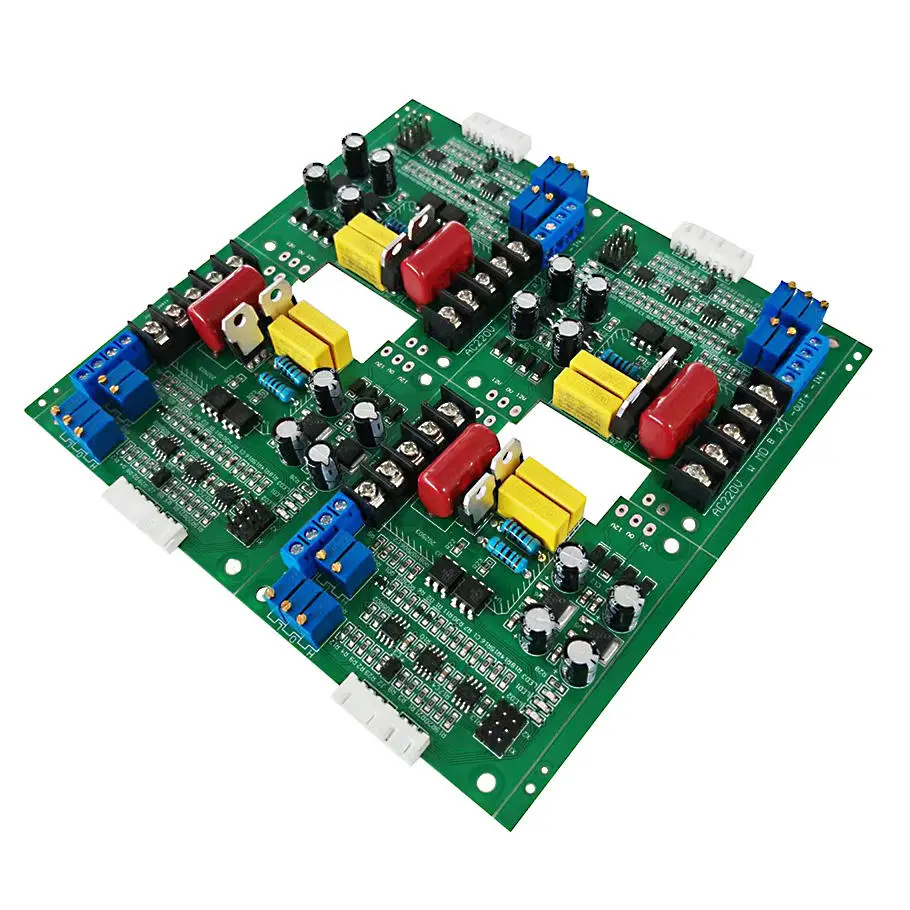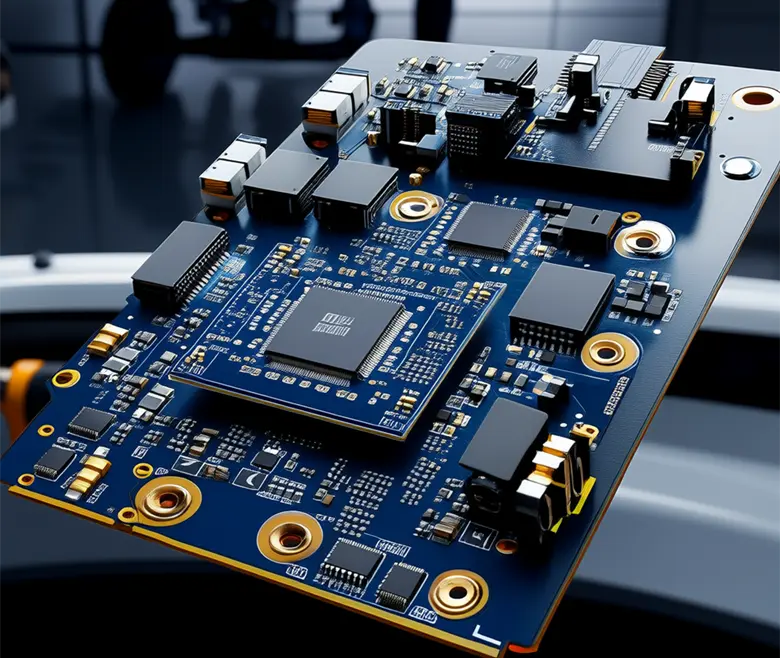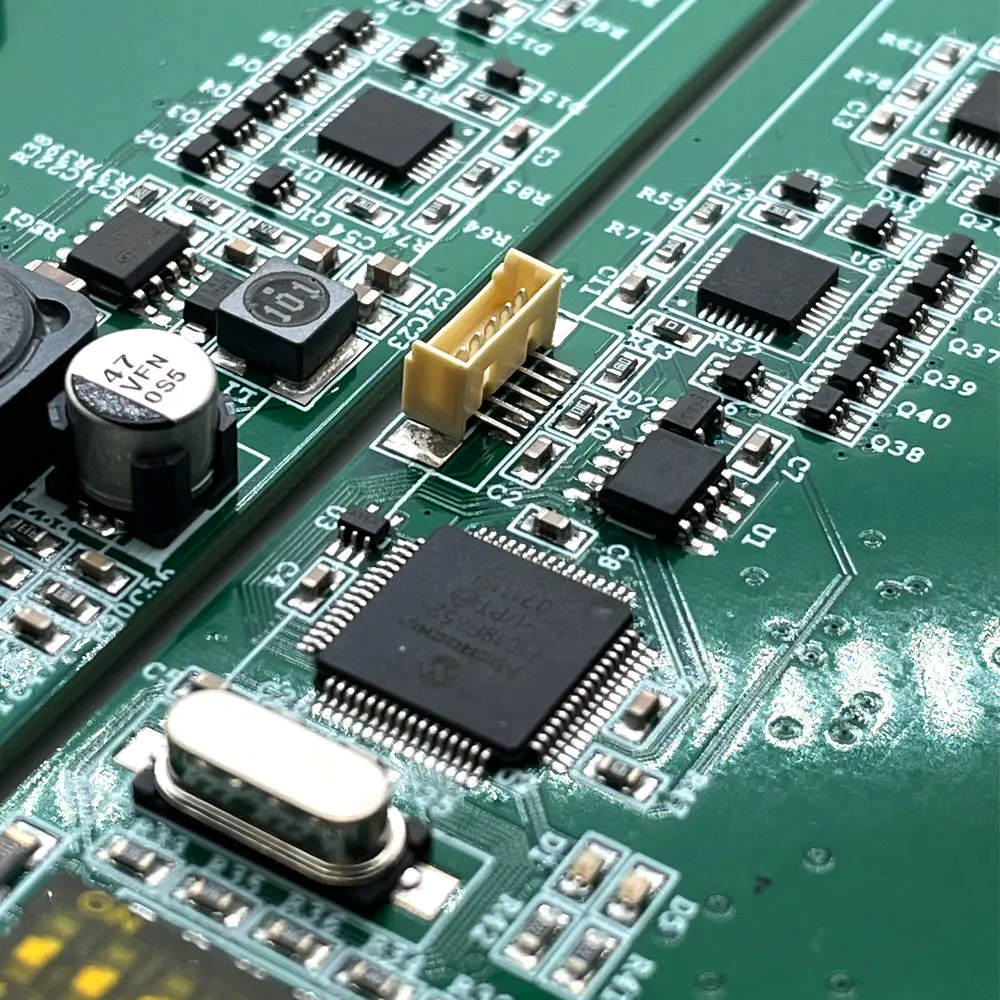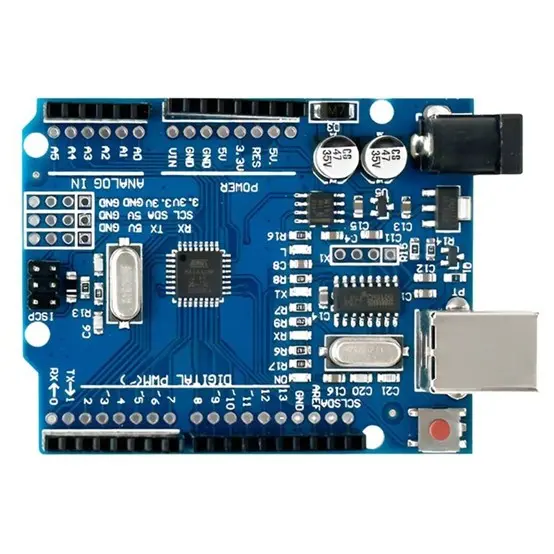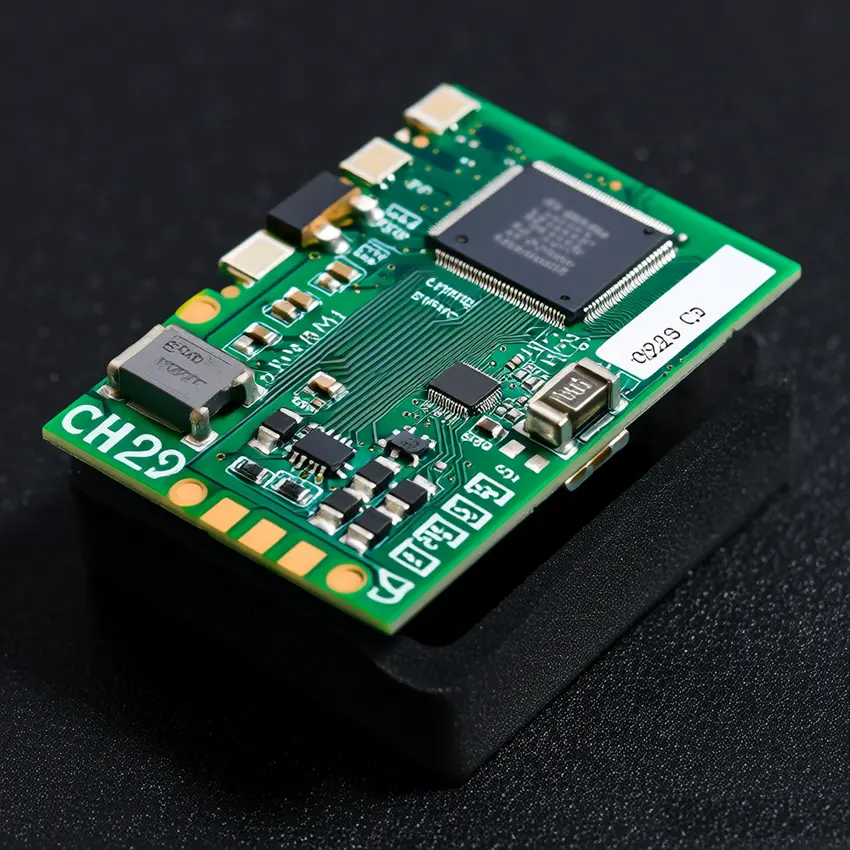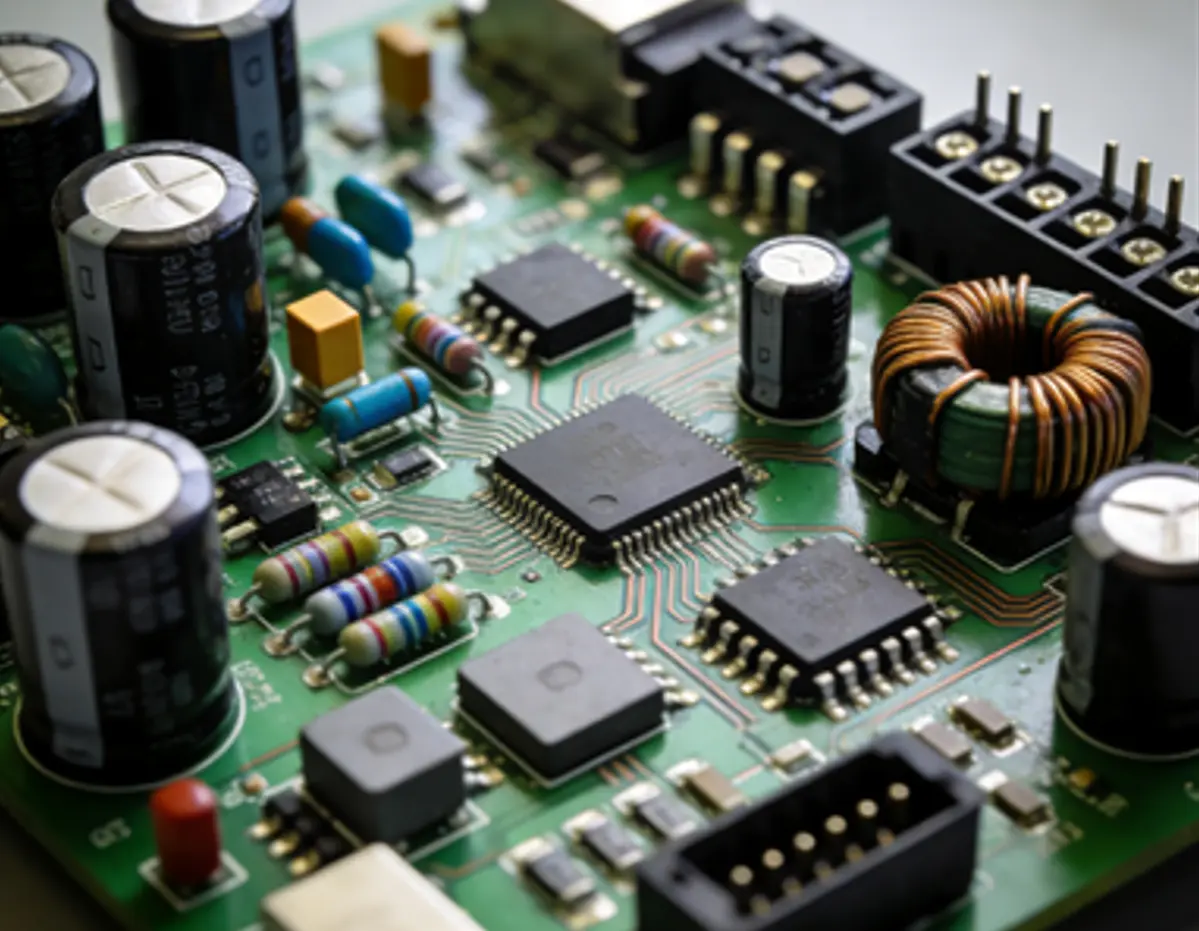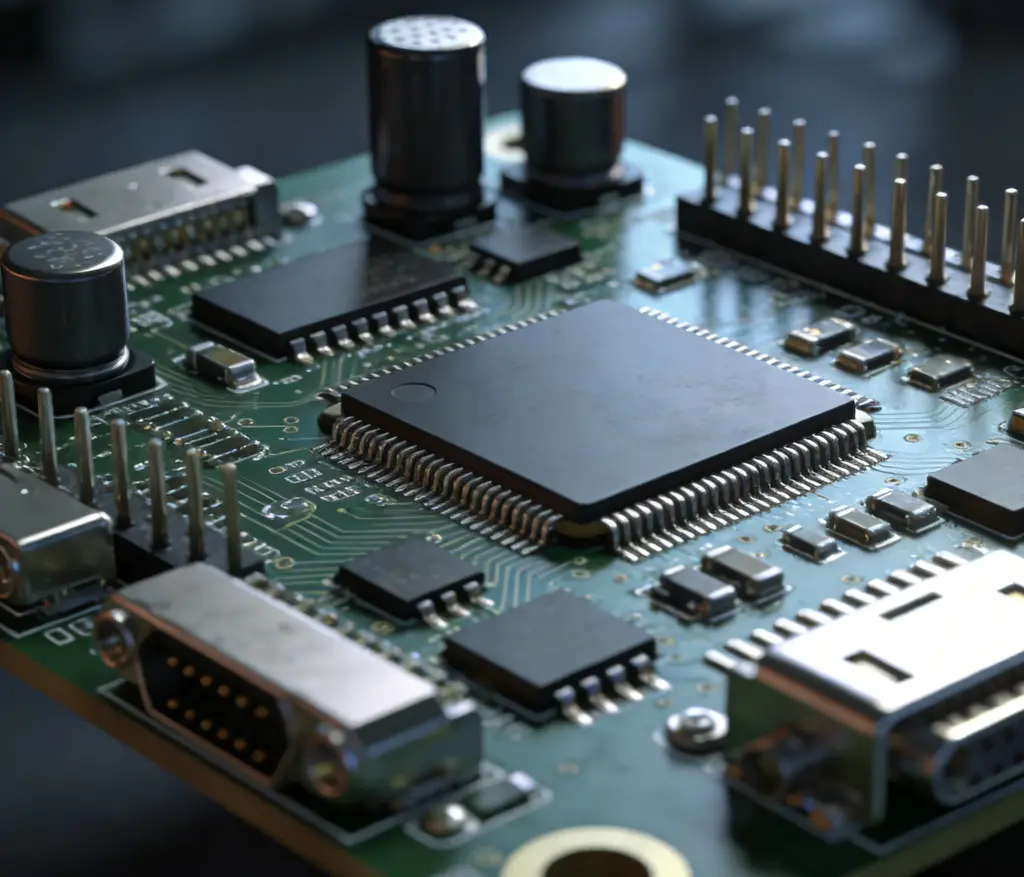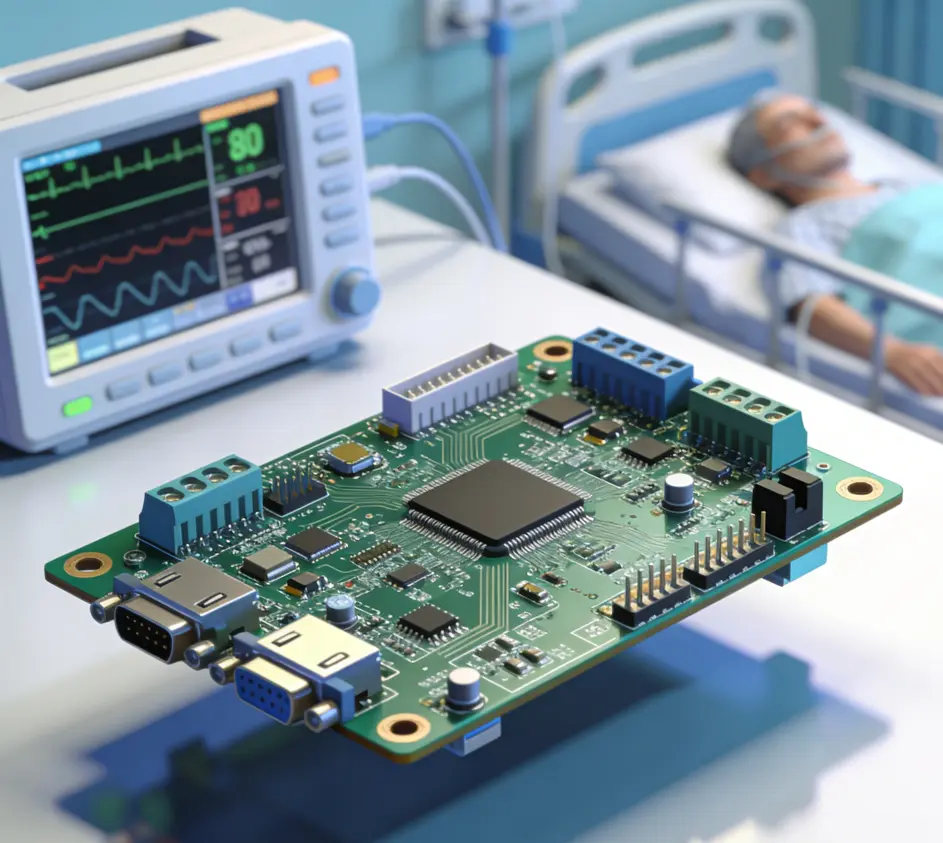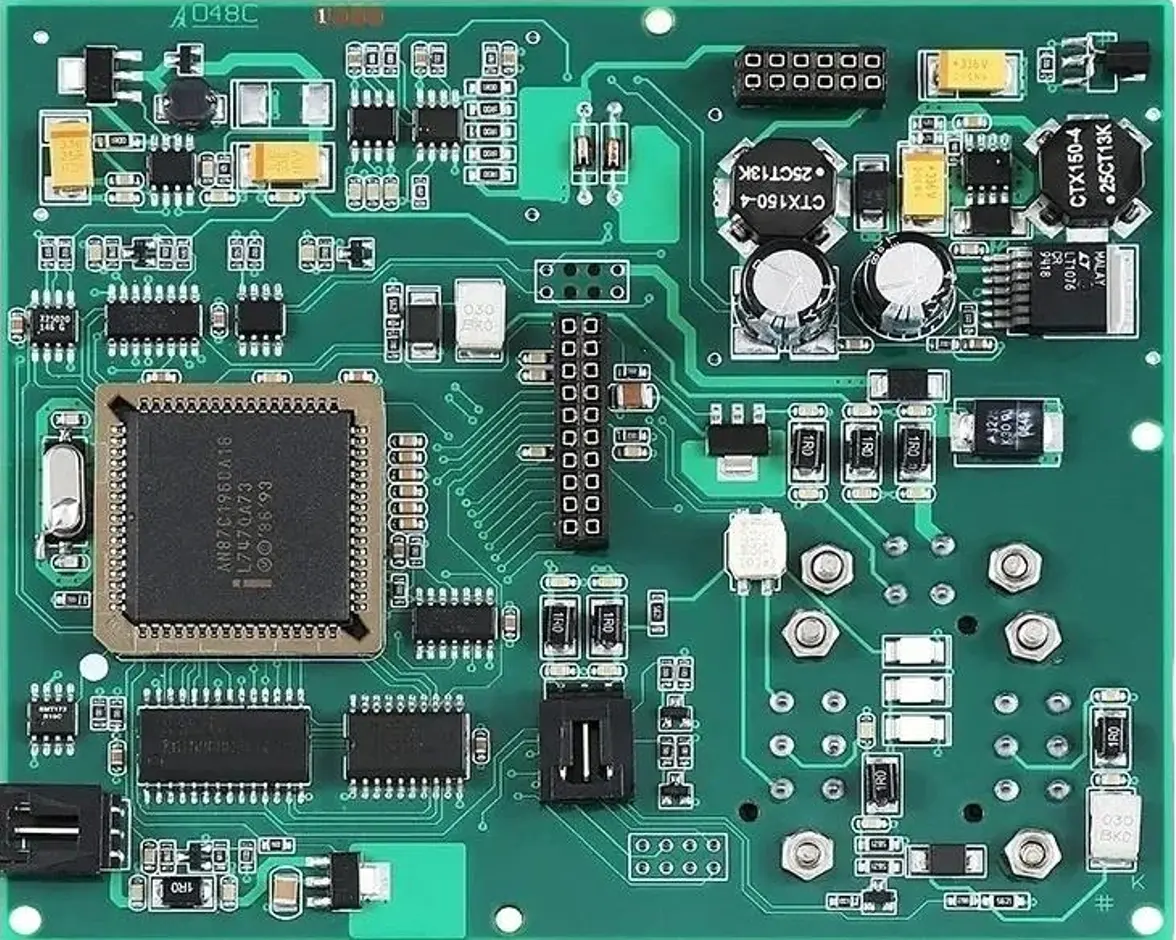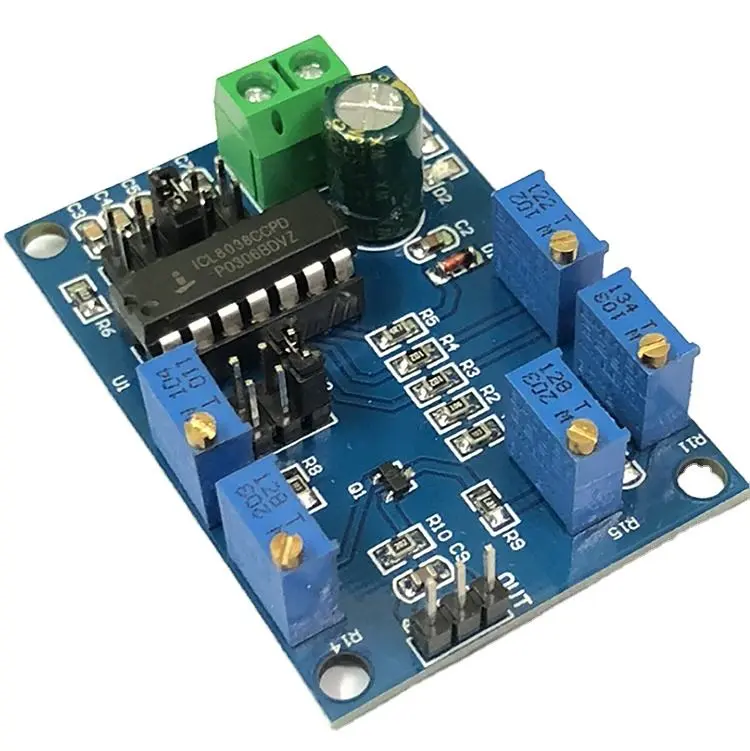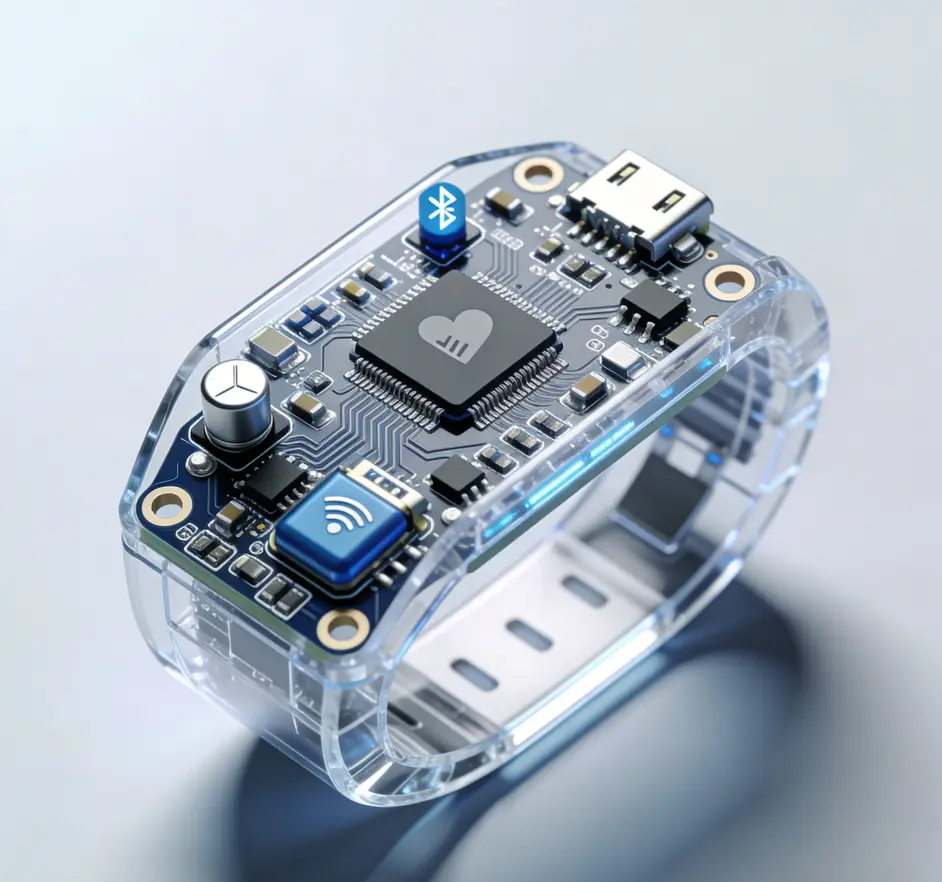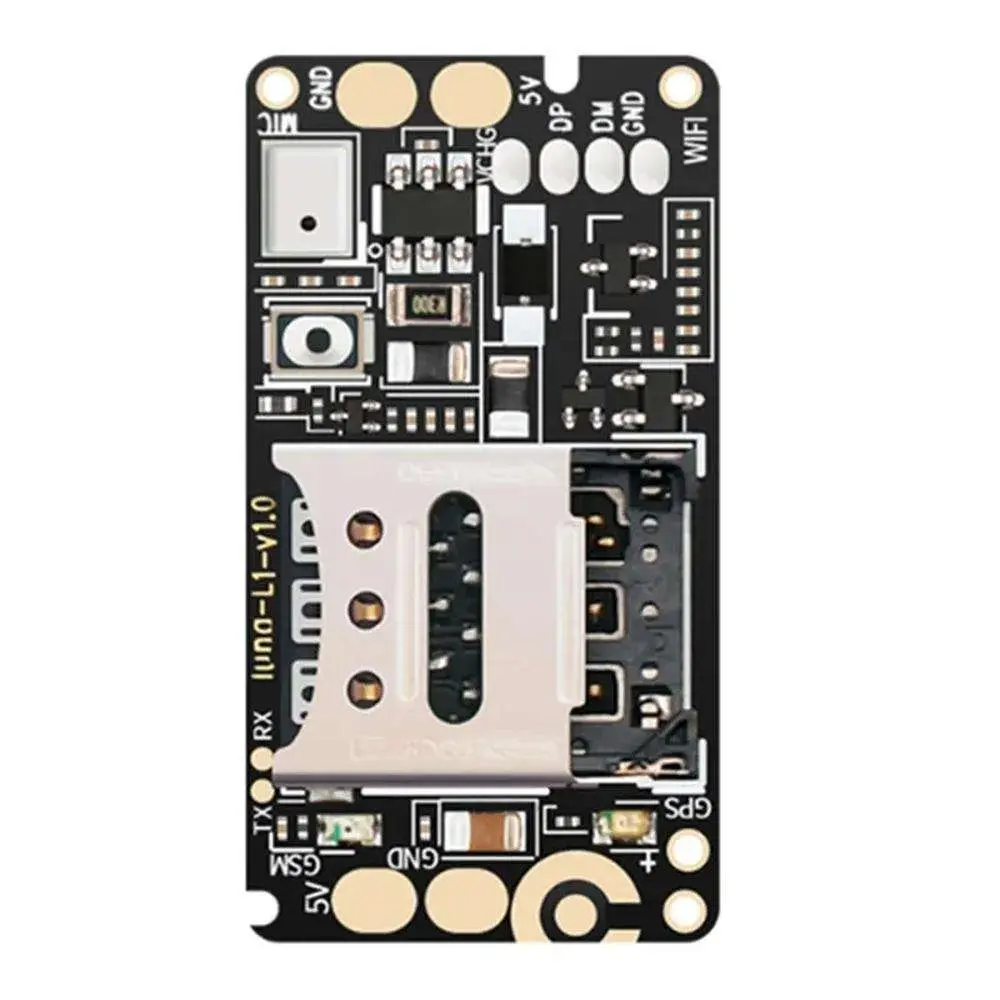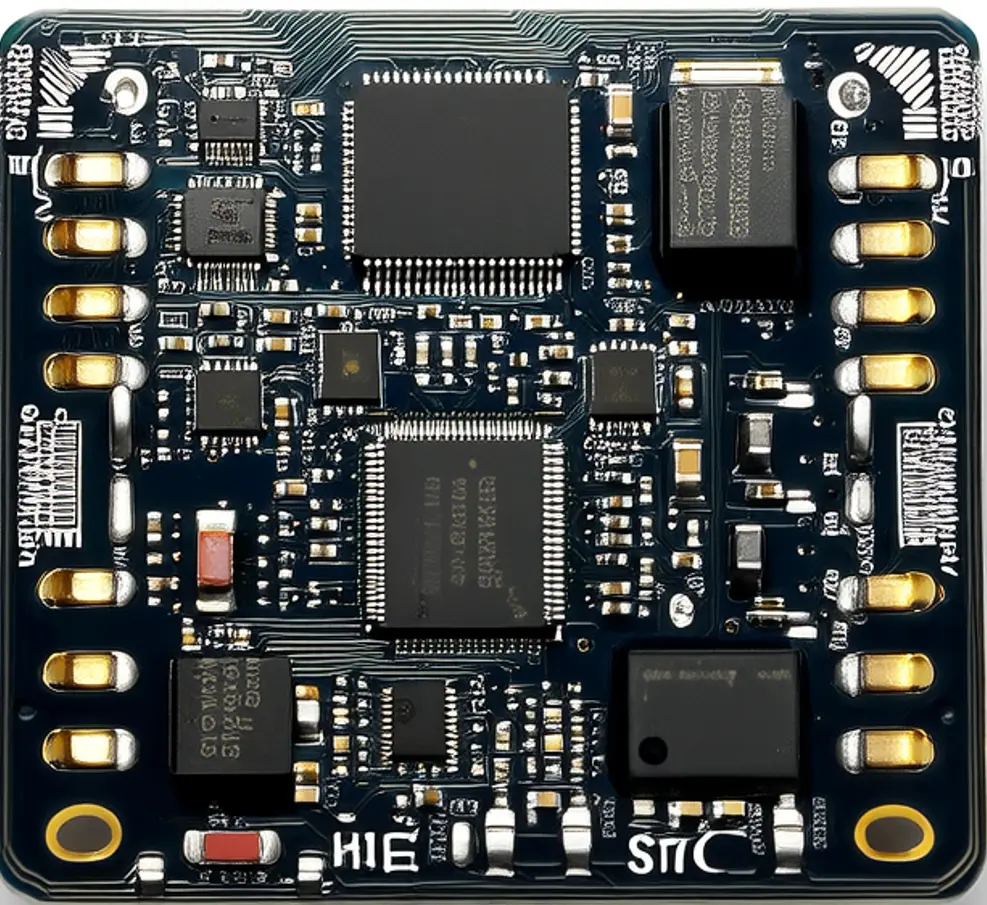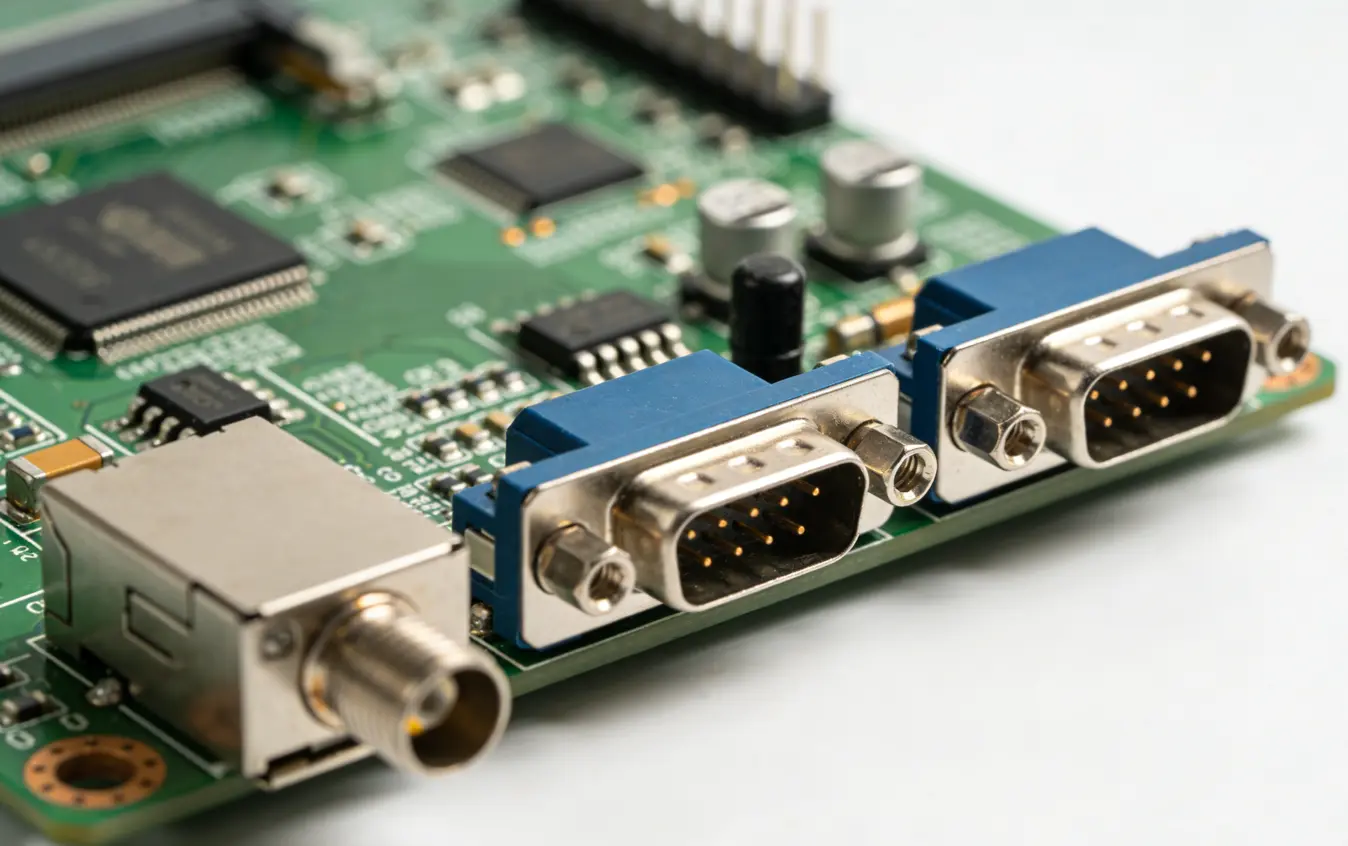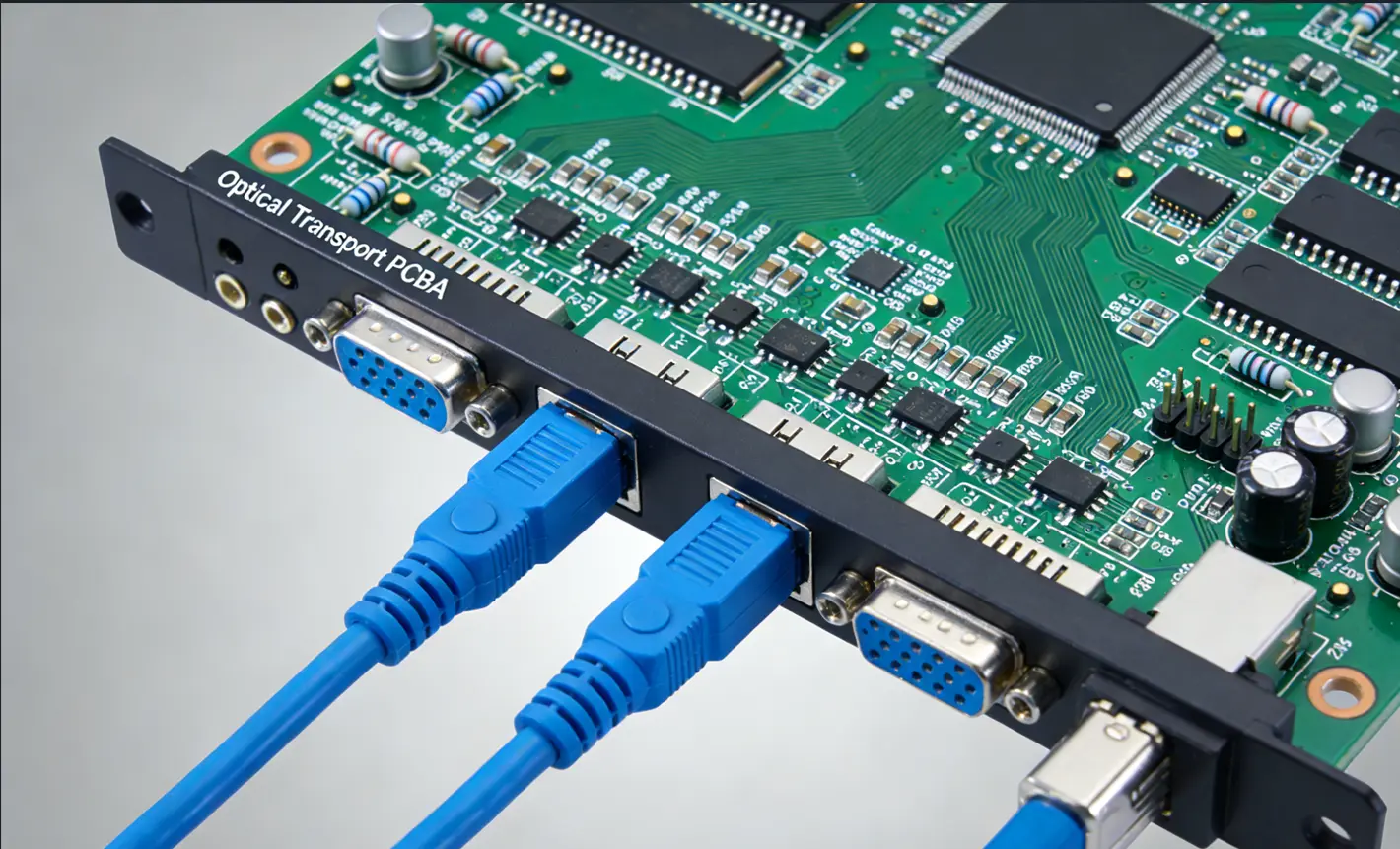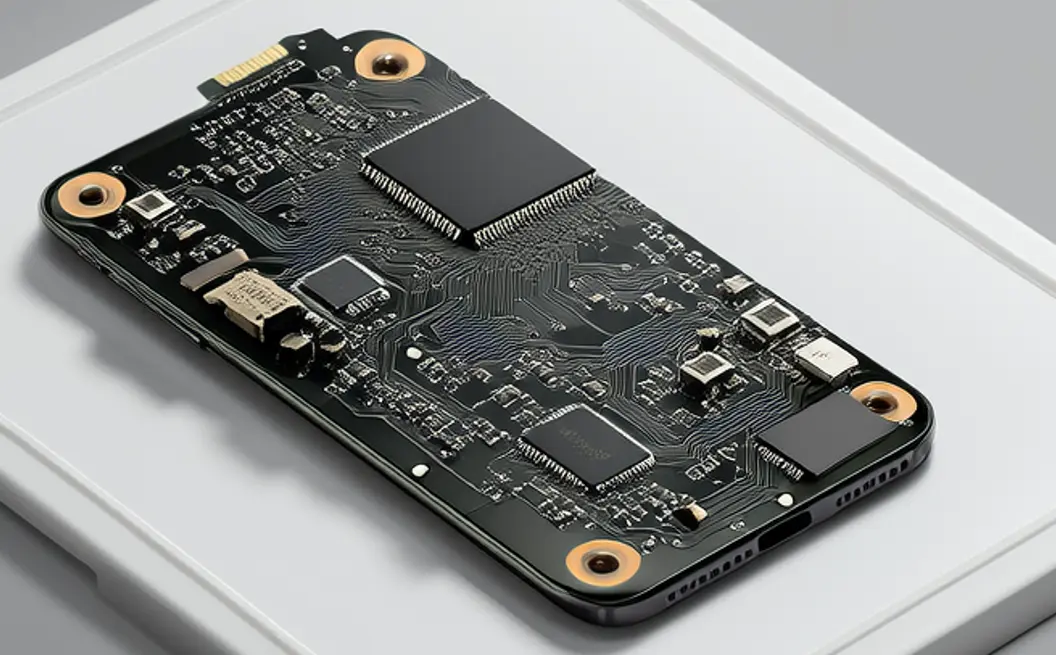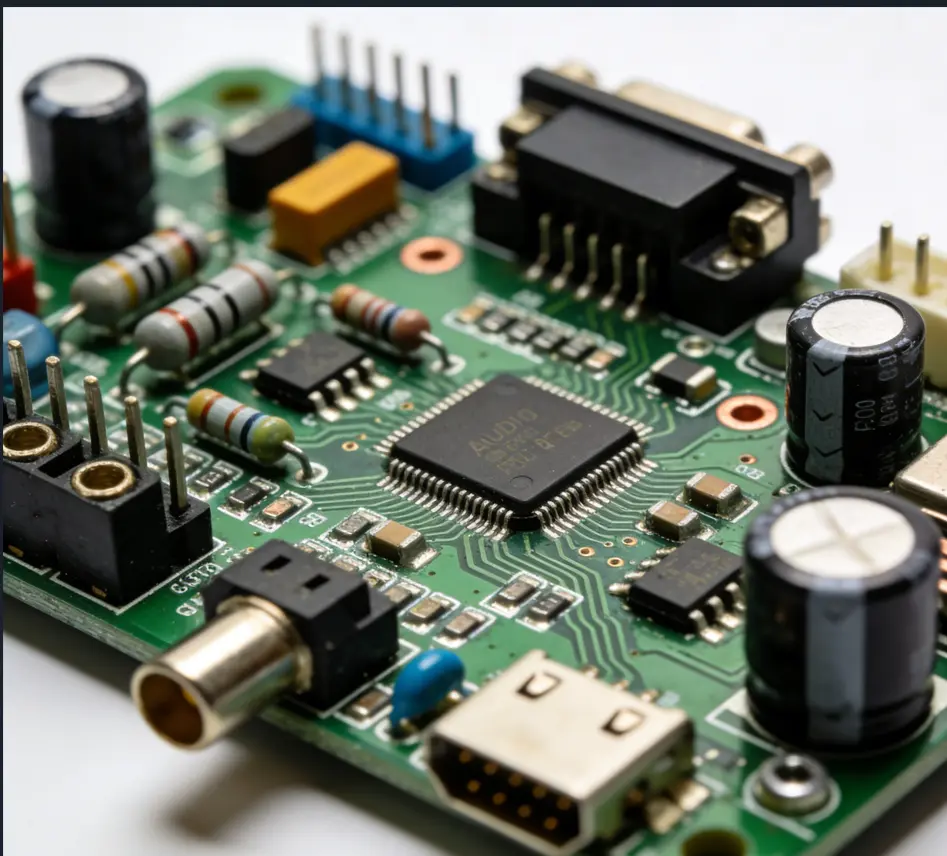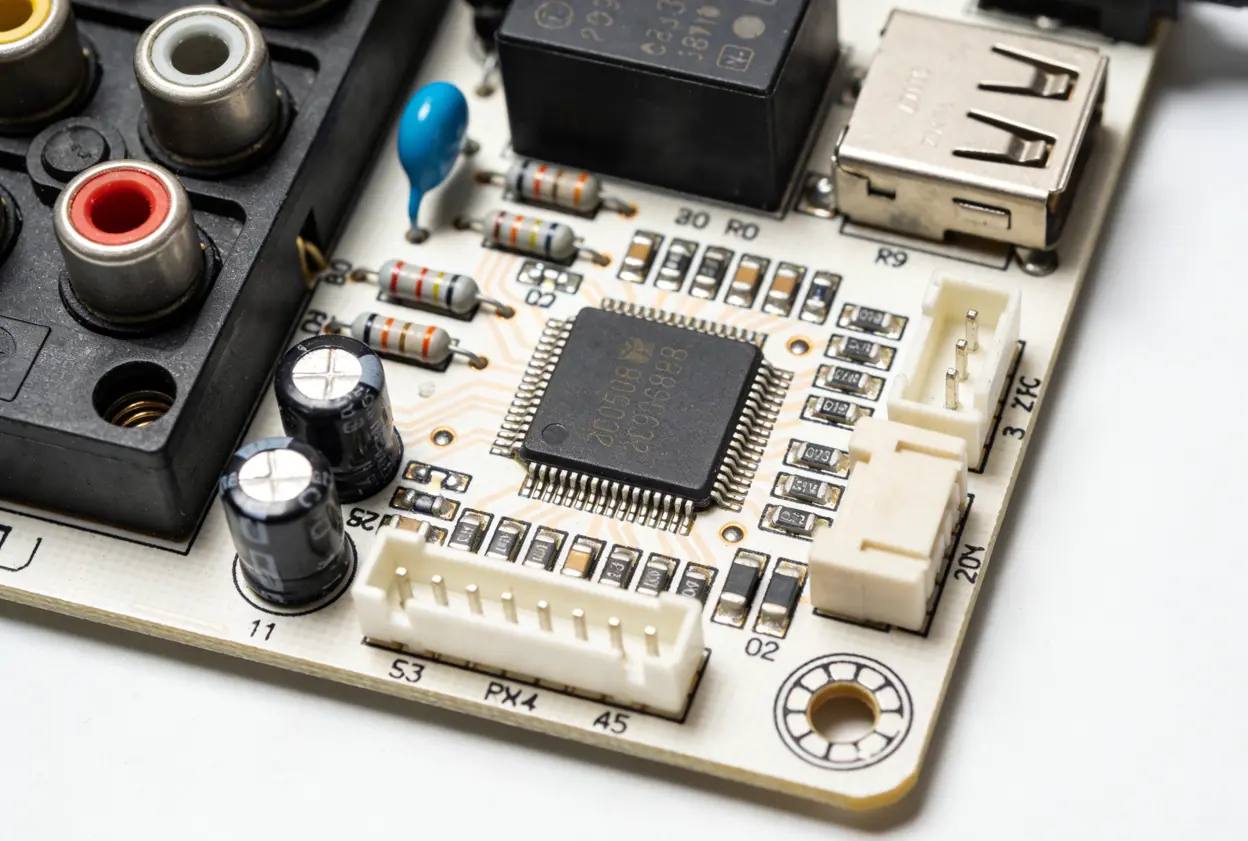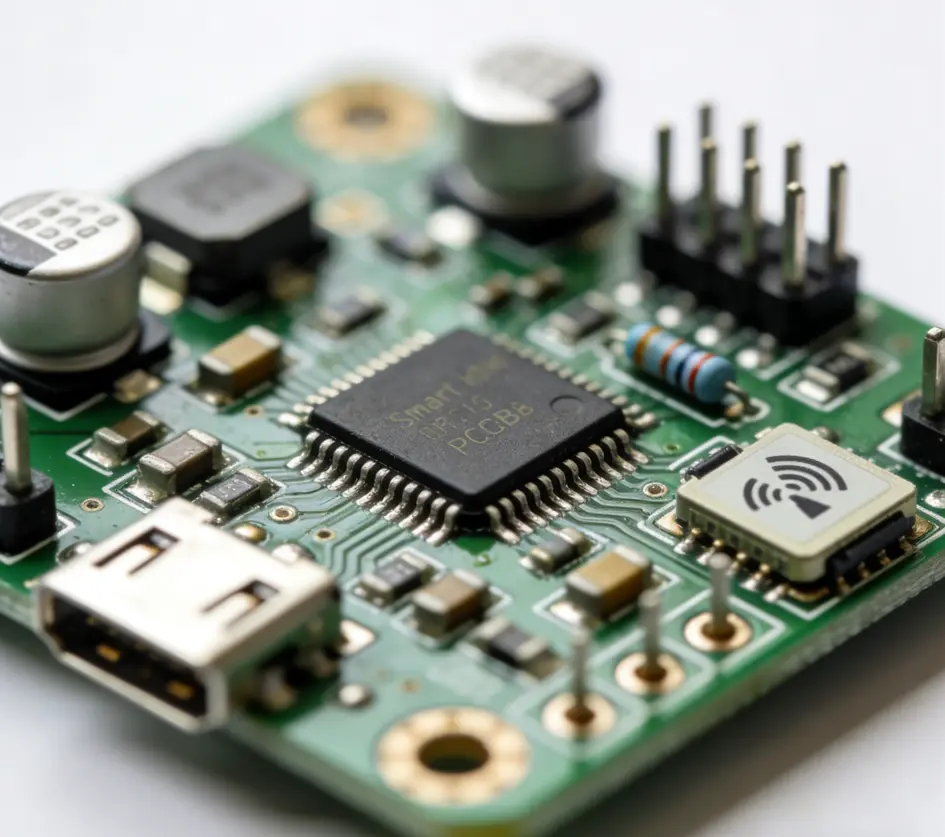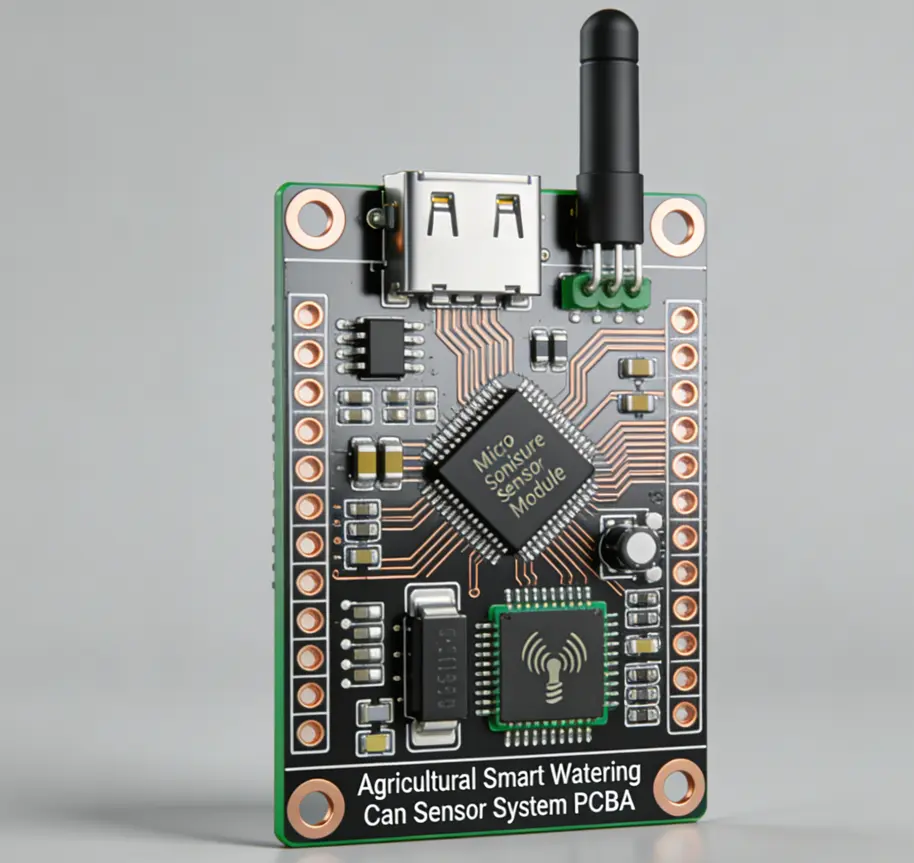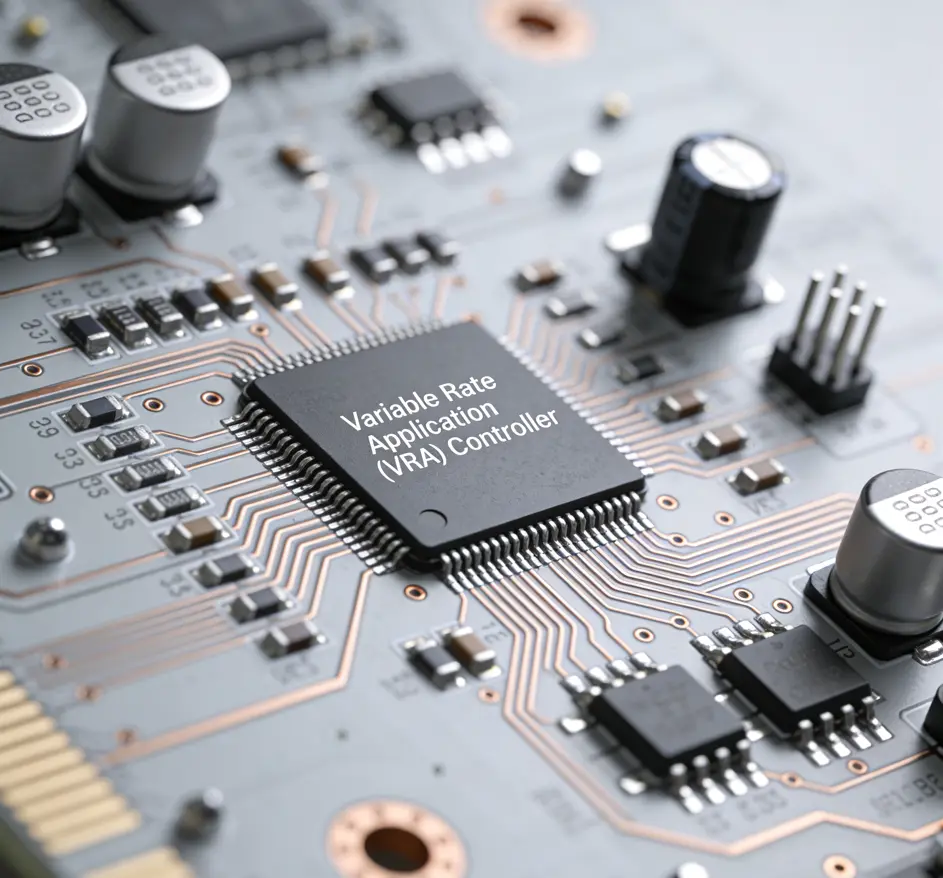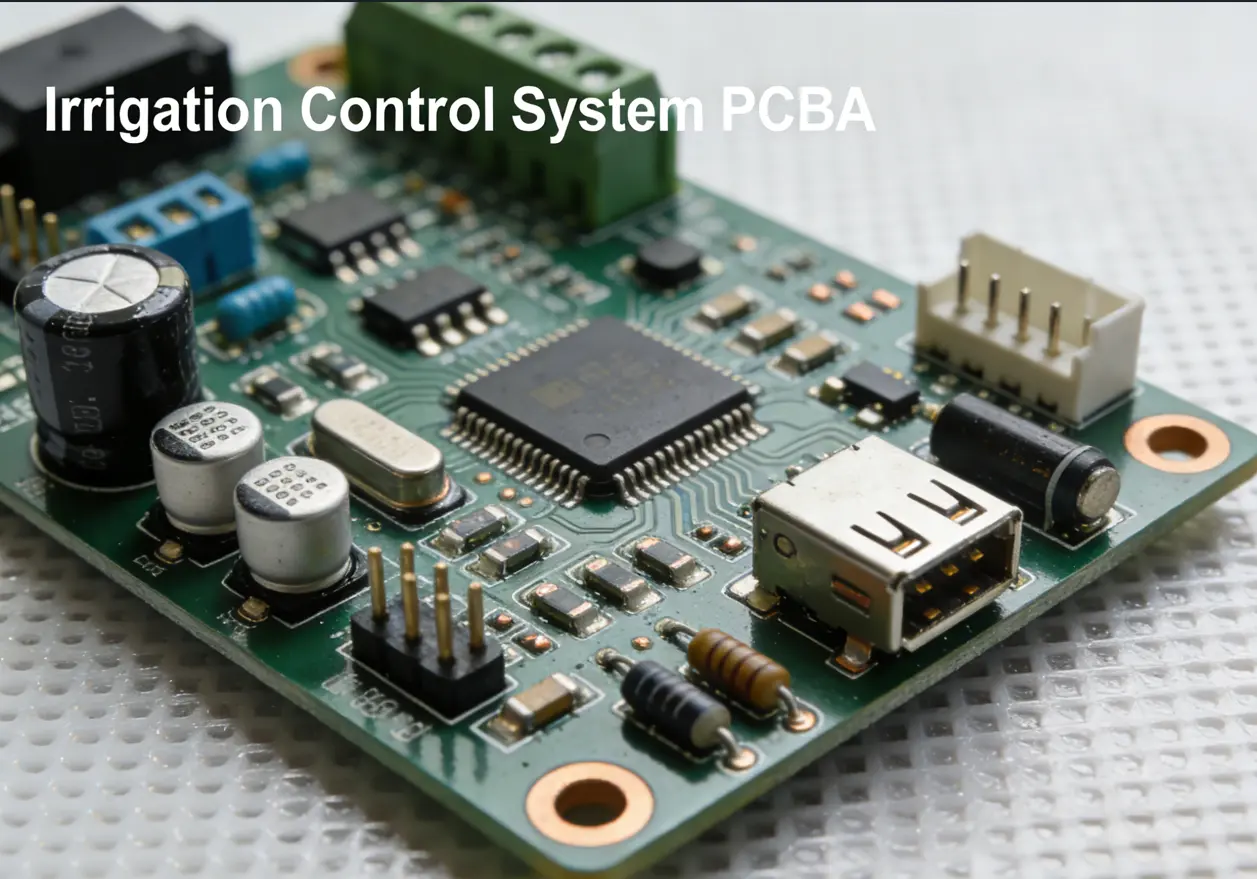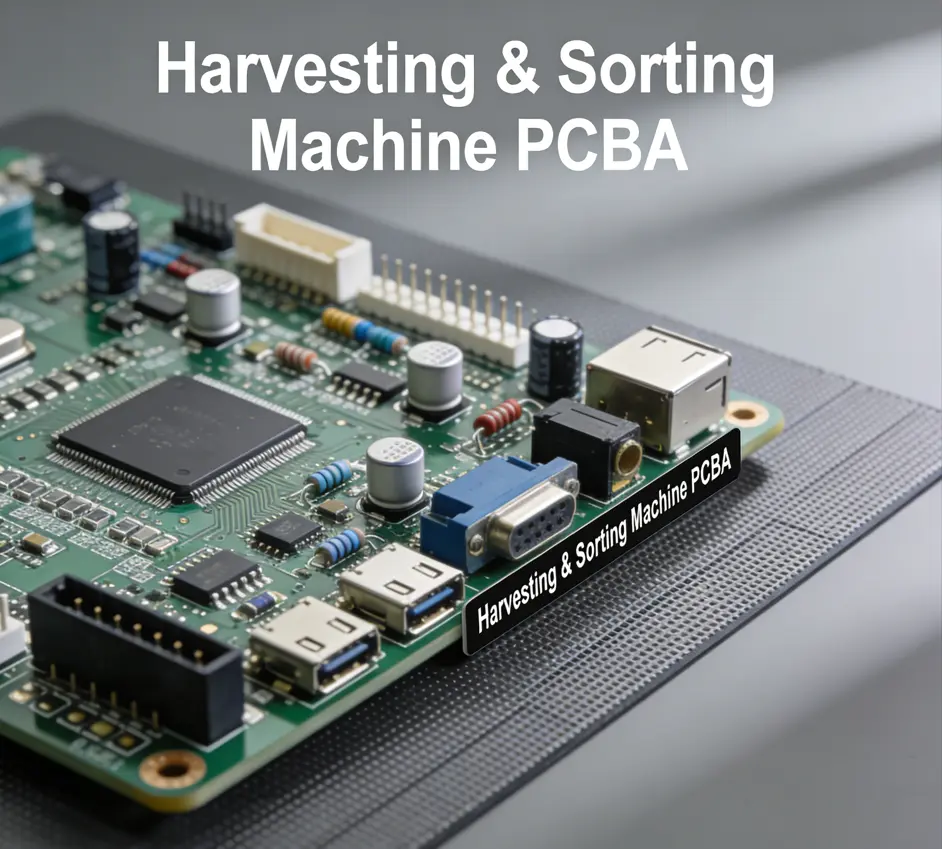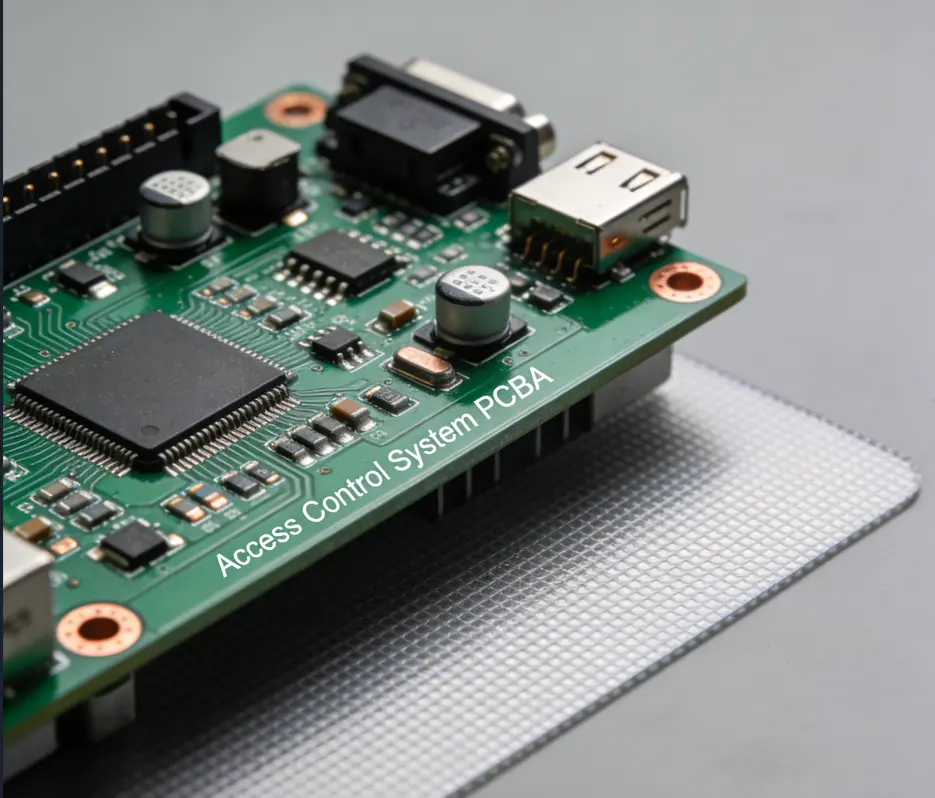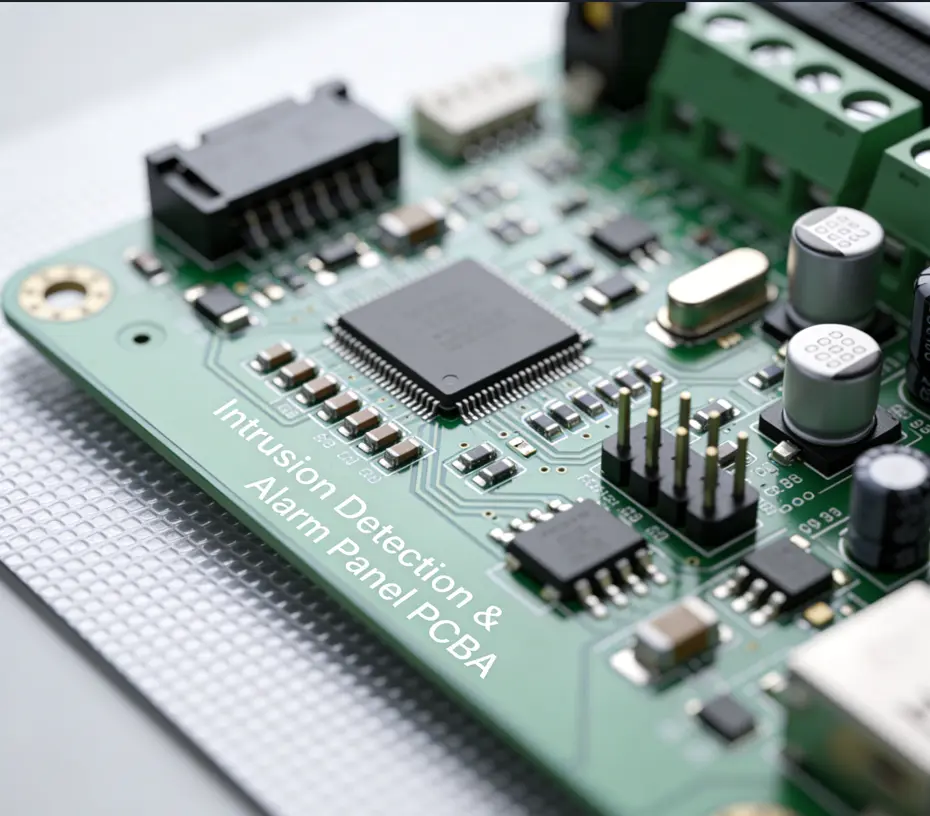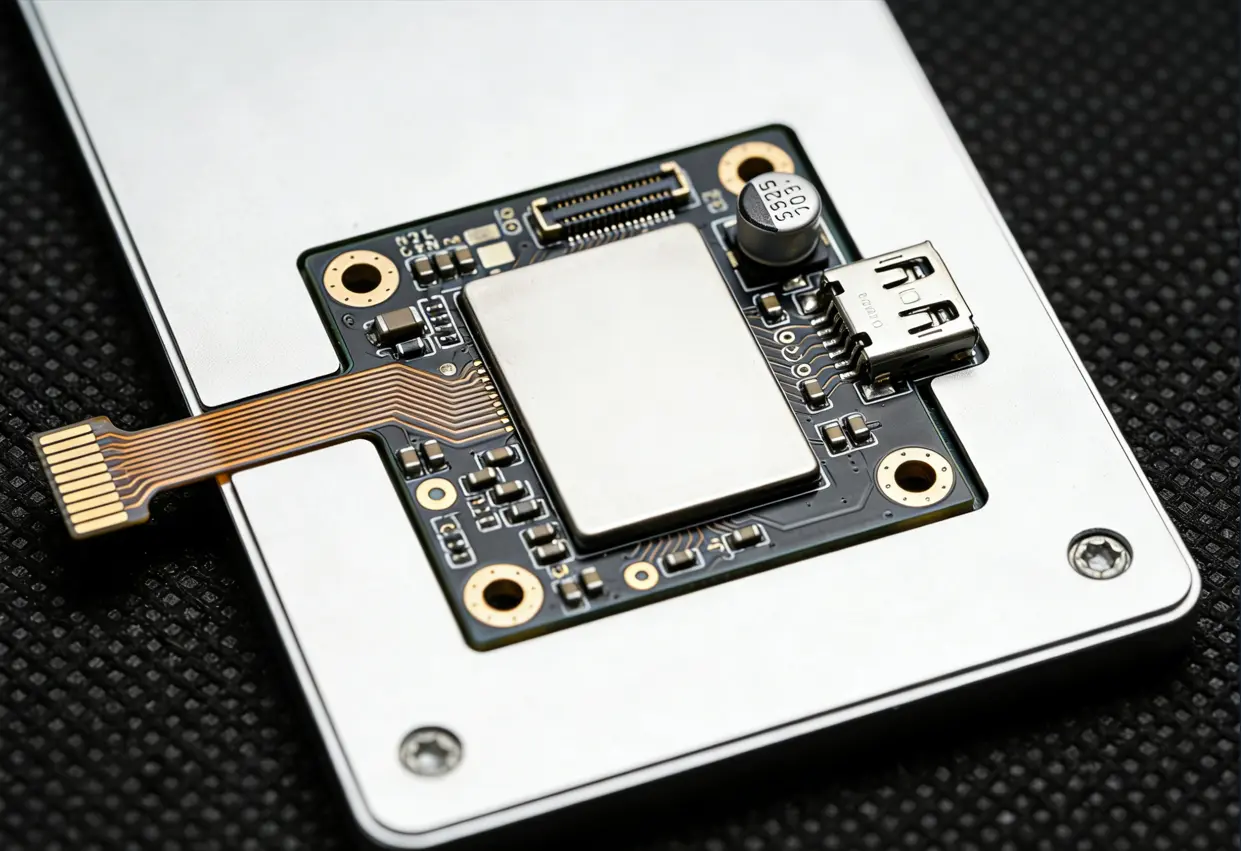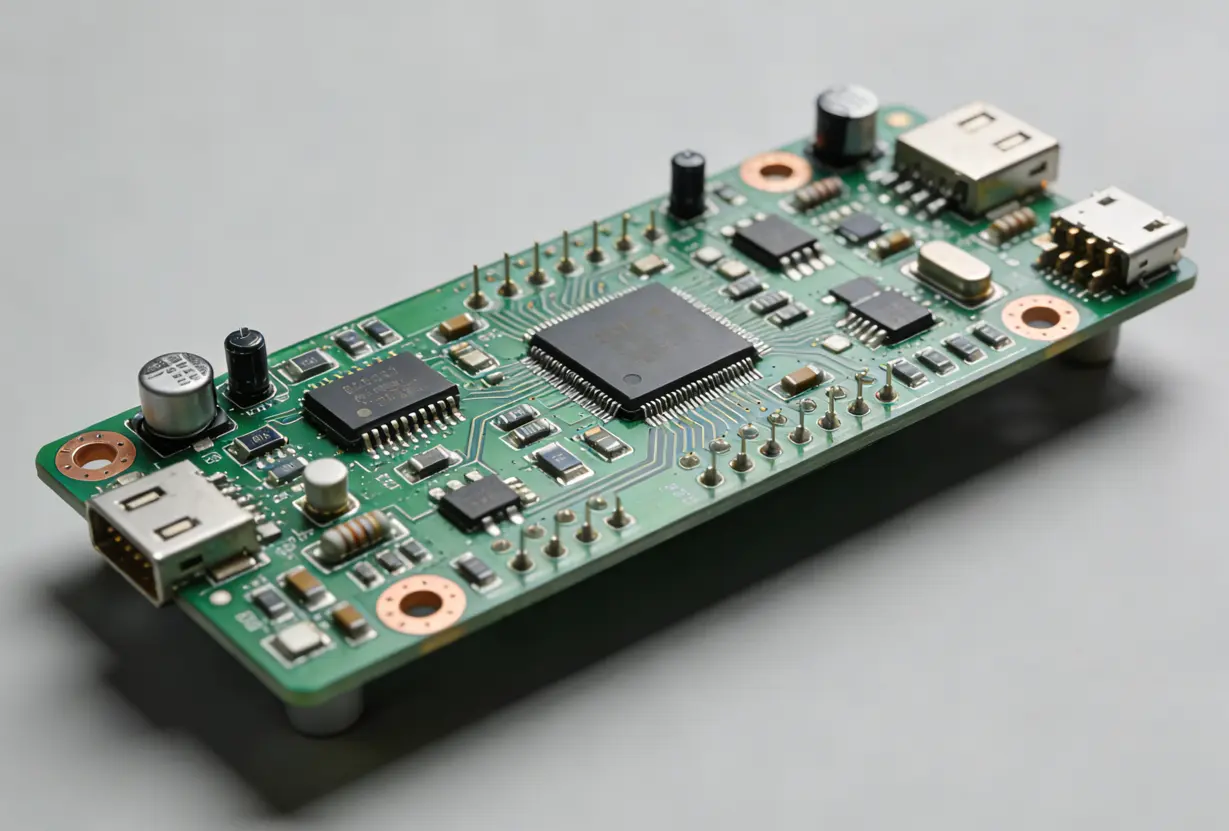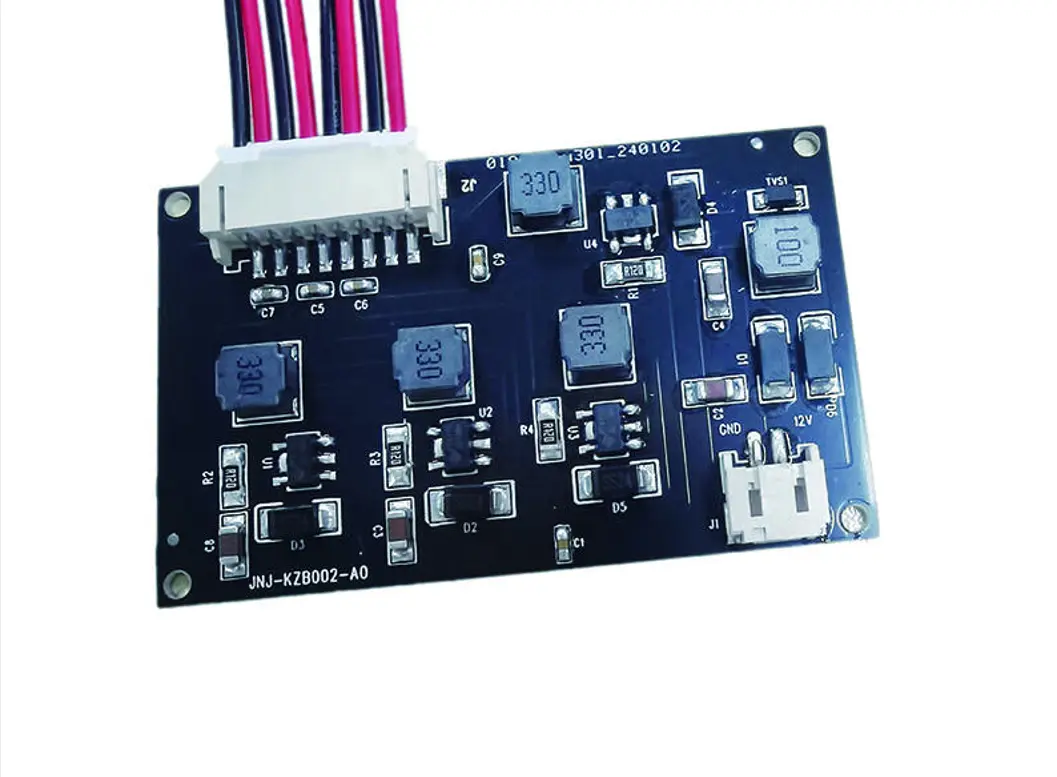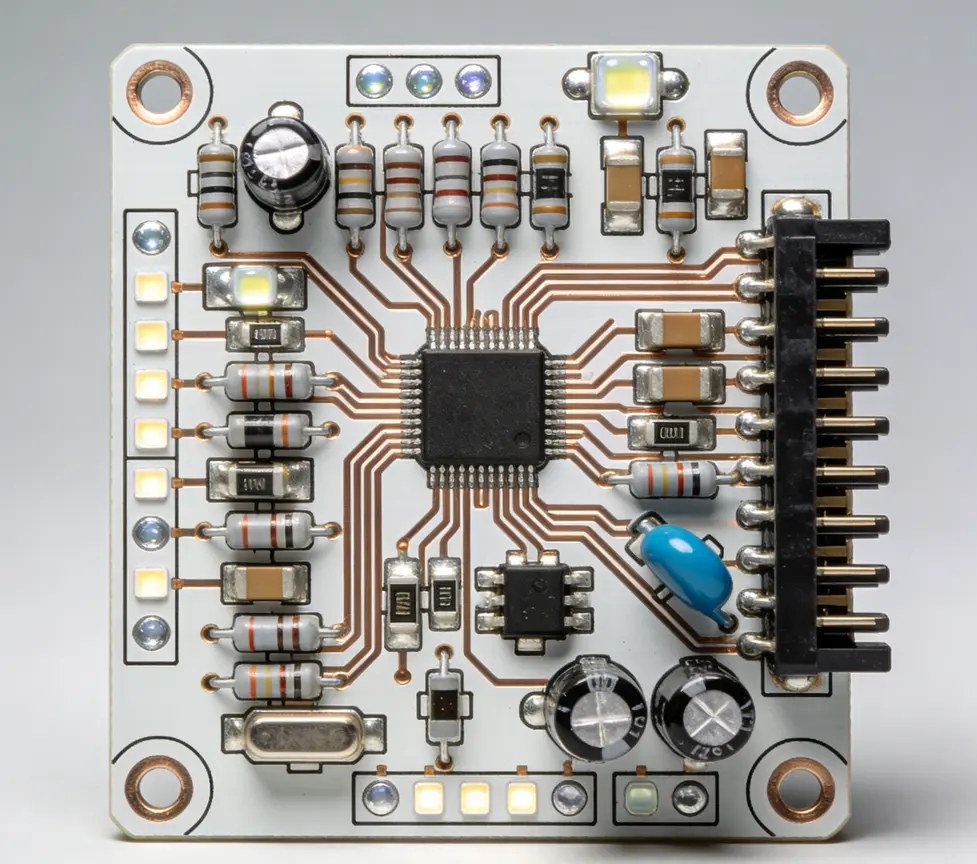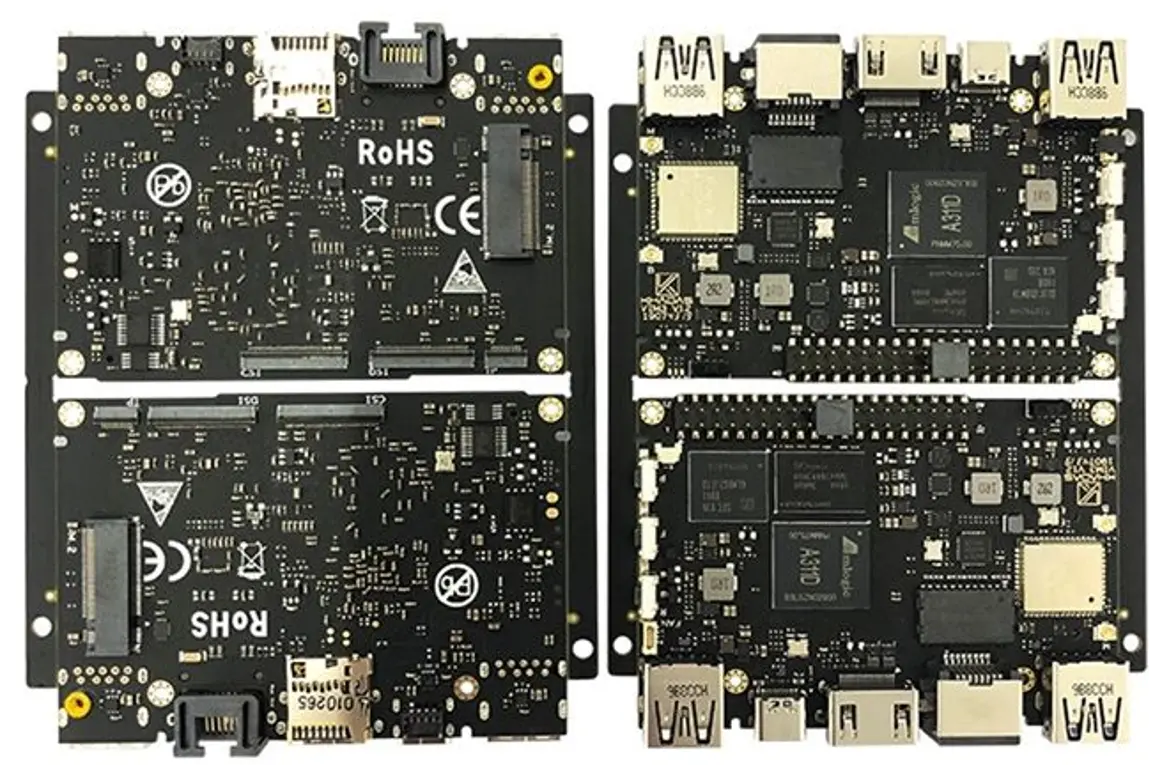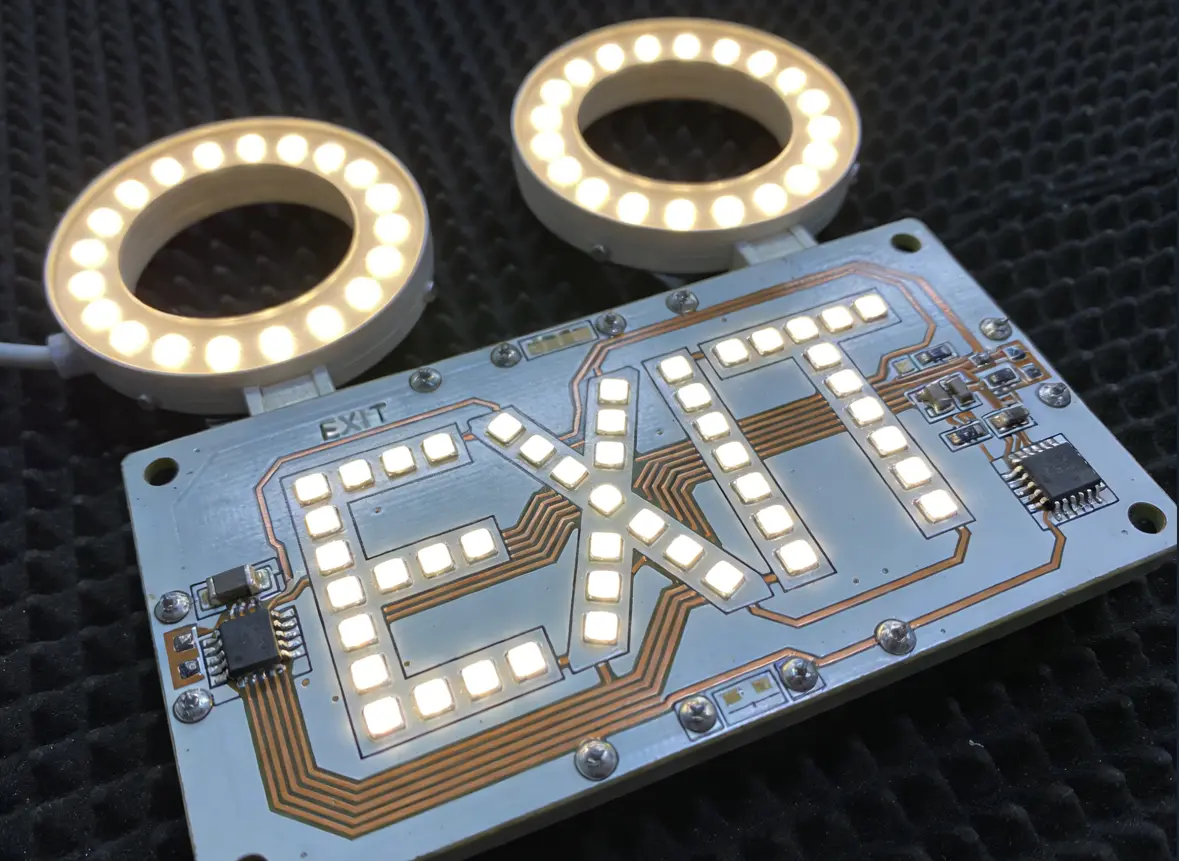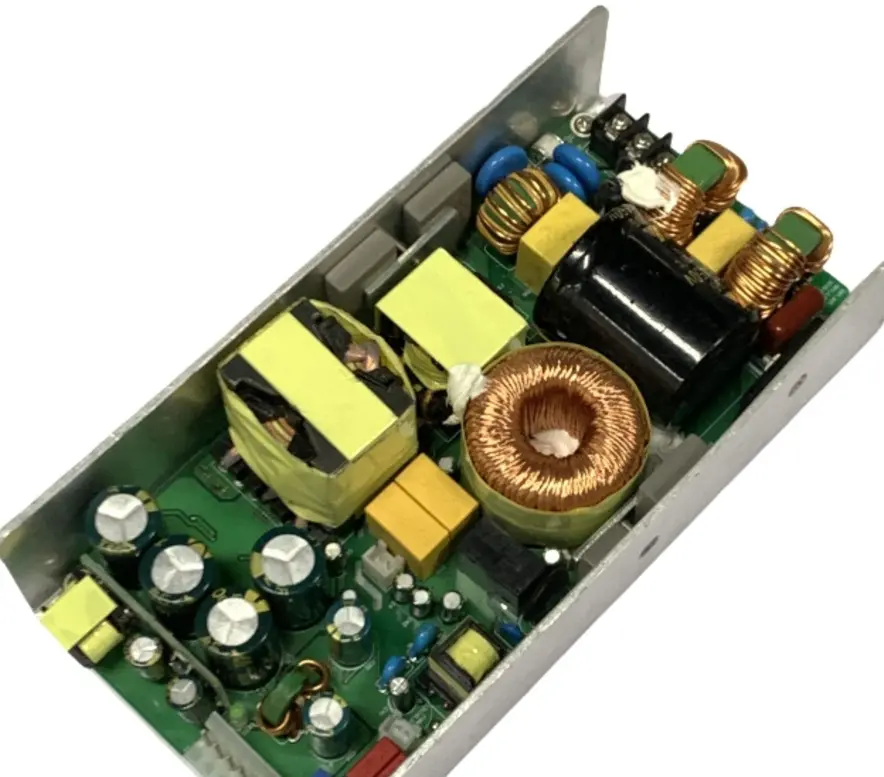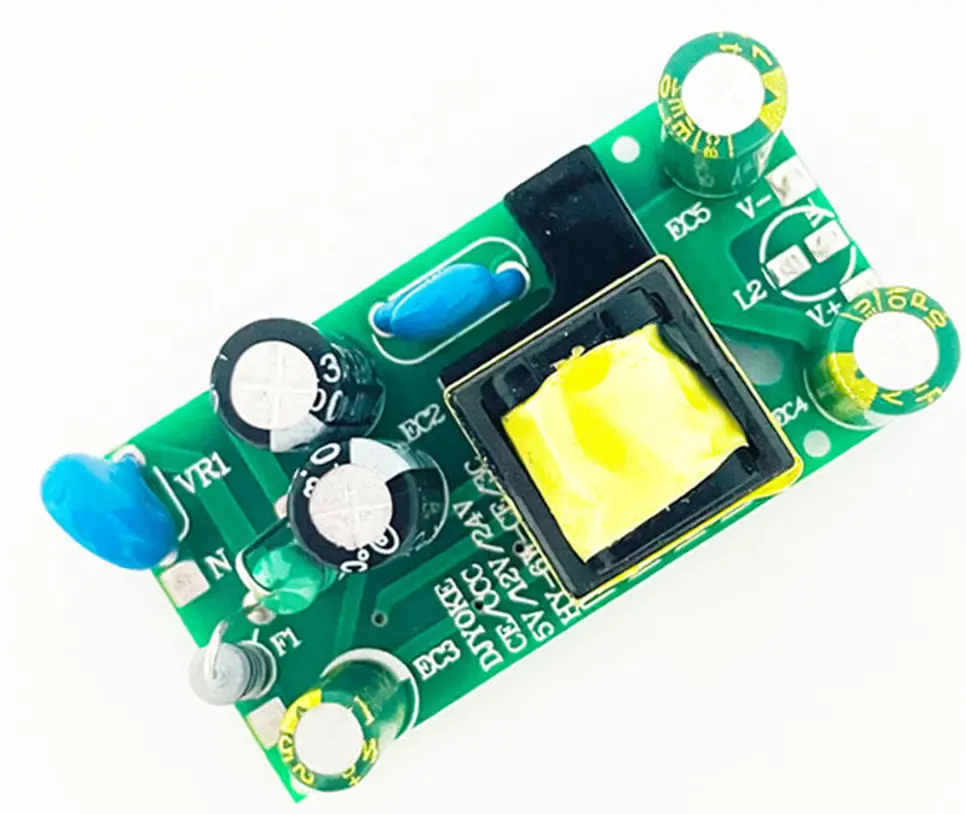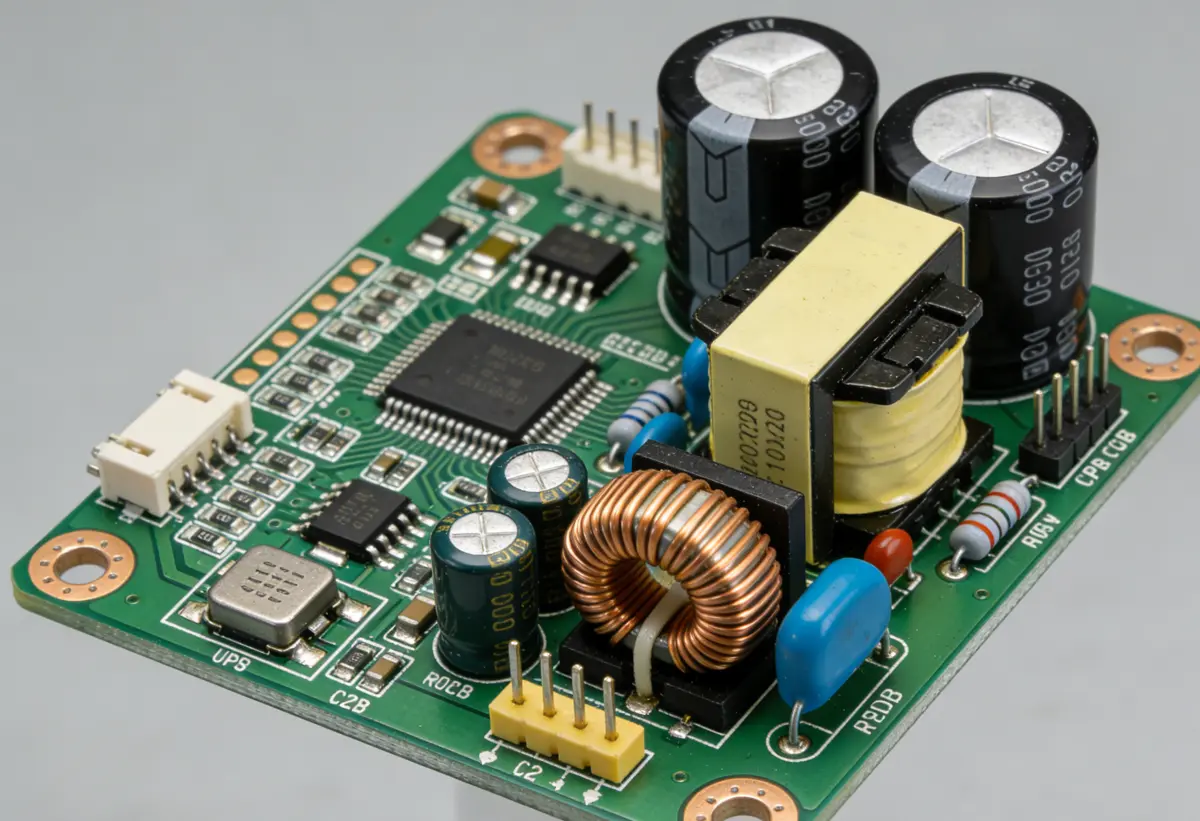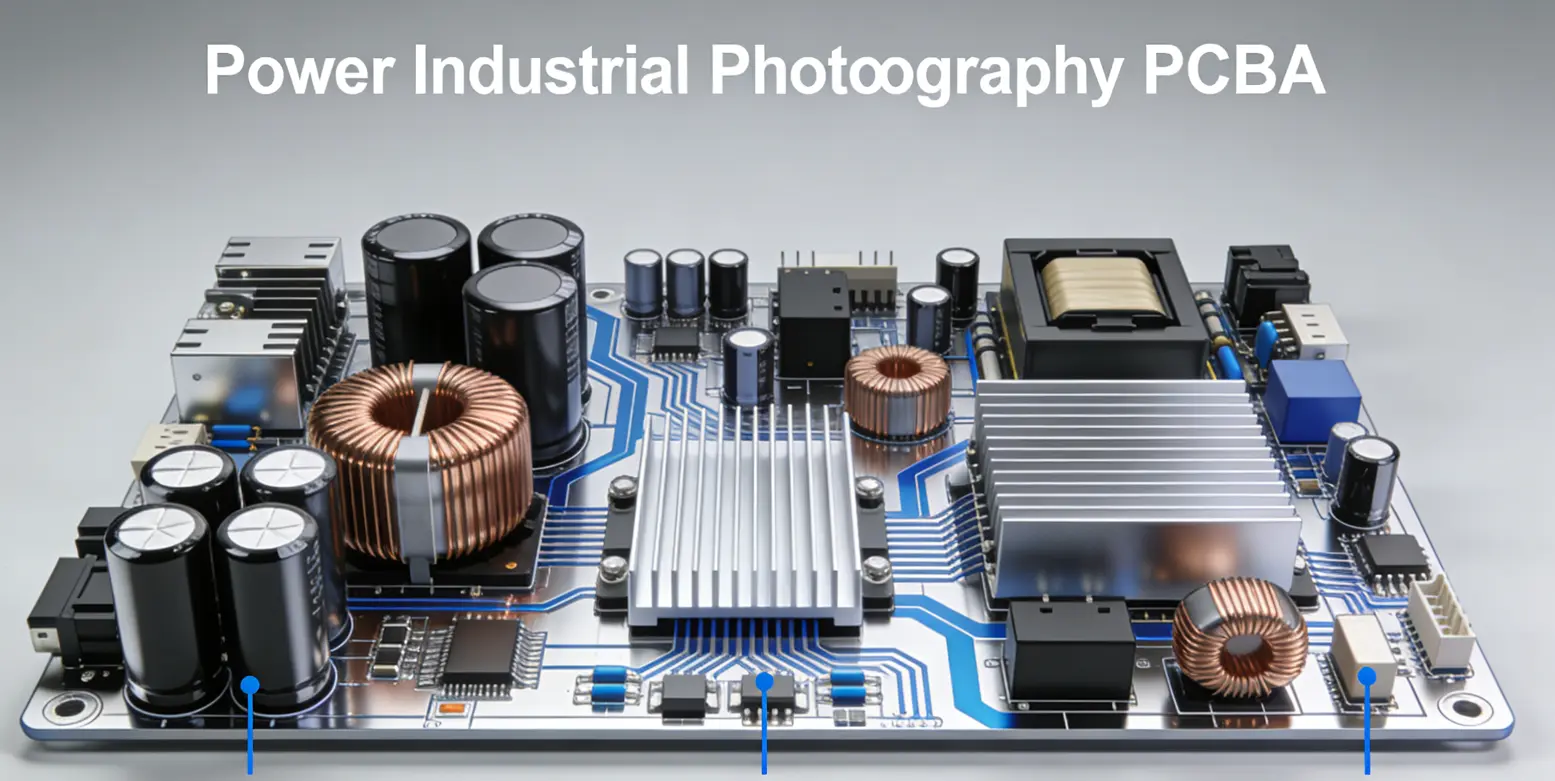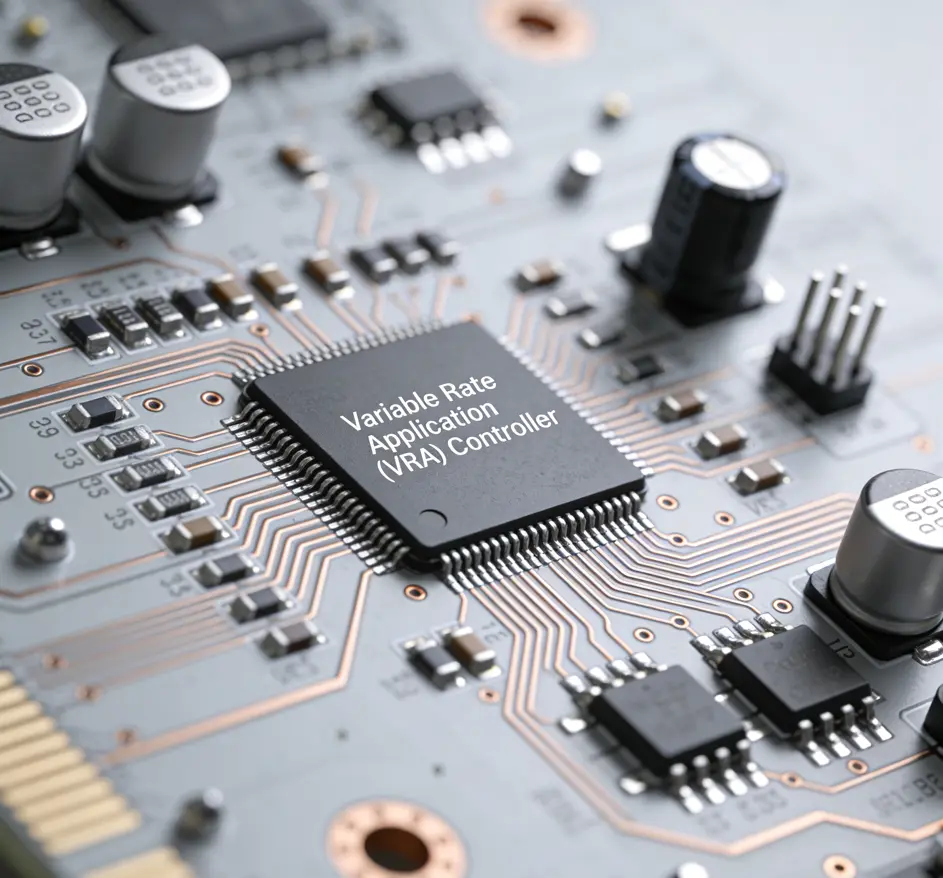
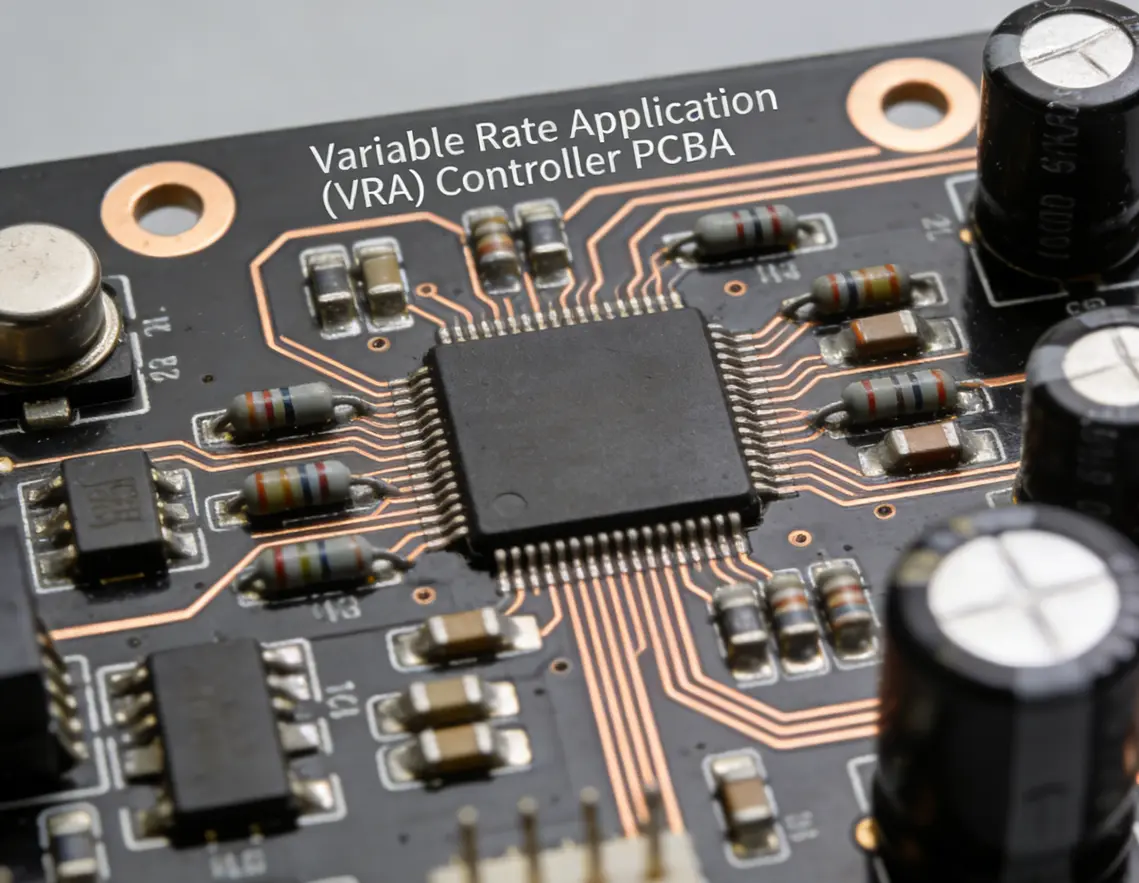
The foundational design of the VRA Controller PCBA is built on robust materials and precision manufacturing to support its complex functionalities.
Substrate Material: The PCB adopts FR‑4 with TG130/TG170 grades; high‑TG FR‑4 is available for high‑temperature operating environments, ensuring dimensional stability and thermal resistance.
Thickness & Copper Weight: Customizable thickness from 1.0 mm to 2.0 mm and copper weight from 1 oz to 3 oz provide enhanced current‑carrying capacity, critical for powering motor drivers and communication modules.
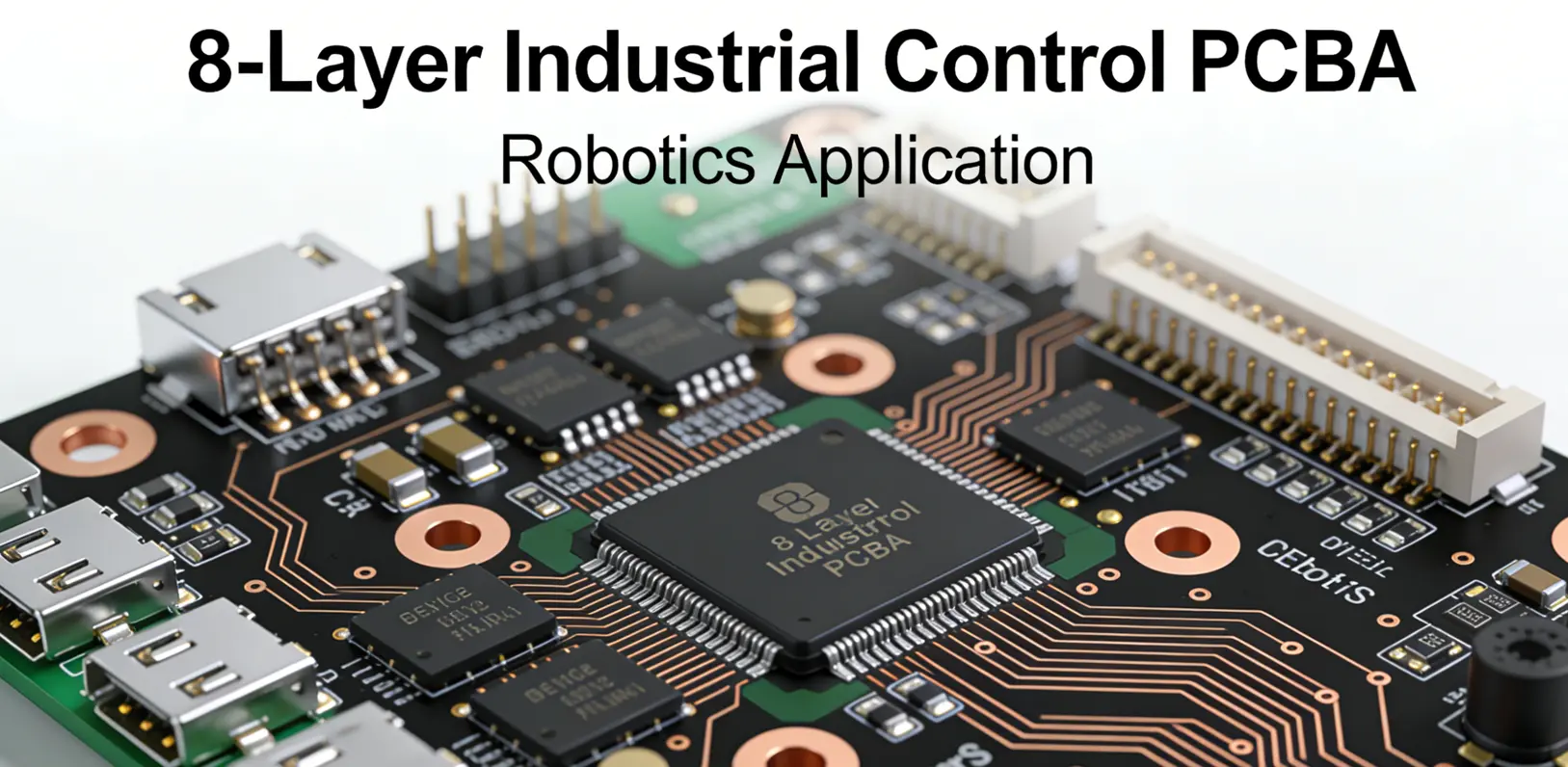
Layer Count: Featuring 4 to 8 layers, the PCBA enables high‑density signal routing, accommodating the intricate interplay between microcontrollers, sensors, and output devices.
Solder Mask & Silkscreen: Available in green, black, or red—lead‑free and RoHS compliant. A white silkscreen provides high contrast for component labeling, facilitating assembly and maintenance.
Surface Finish: Options include Electroless Nickel Immersion Gold (ENIG) and lead‑free HASL, ensuring excellent solderability and corrosion resistance.
Precision Tolerances: Minimum line width/spacing of 0.1 mm/0.1 mm (4 mil/4 mil) and minimum via size of 0.2 mm guarantee reliable signal transmission and component placement accuracy.
The performance of the VRA Controller PCBA is defined by its carefully selected components and rigorous assembly processes.
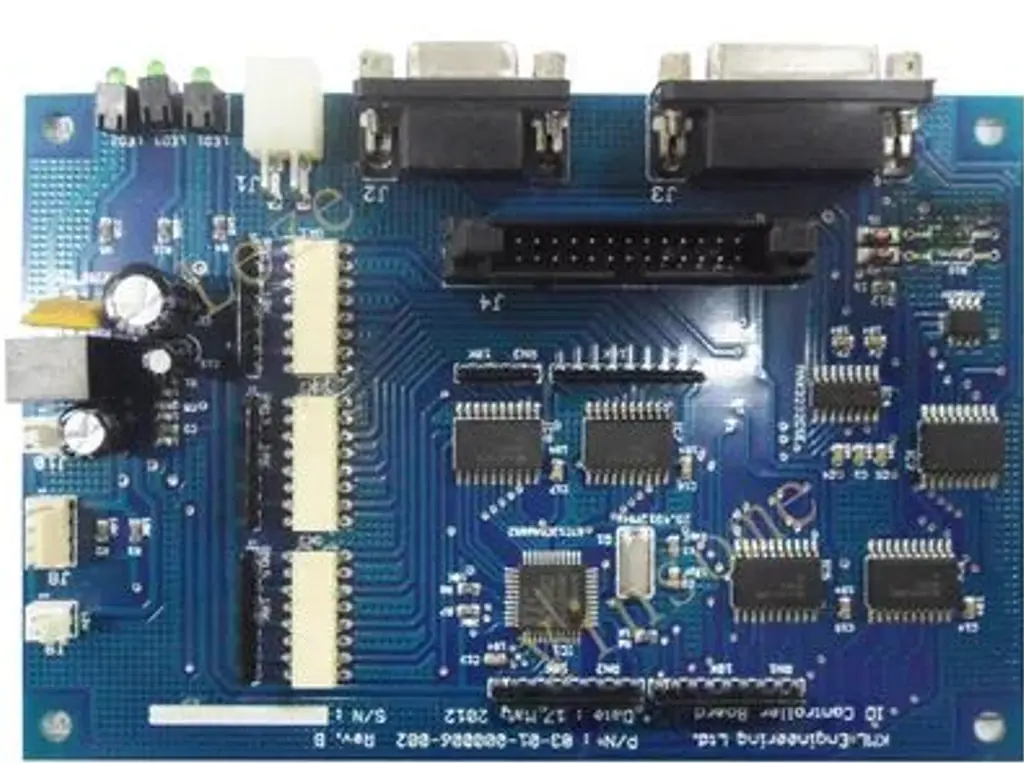
Component Mix: Integrates a mix of Surface Mount Device (SMD) components (sizes 0402 to 2512, QFP, BGA packages) and Through‑Hole Technology (THT) components for connectors and power devices, balancing miniaturization and durability.
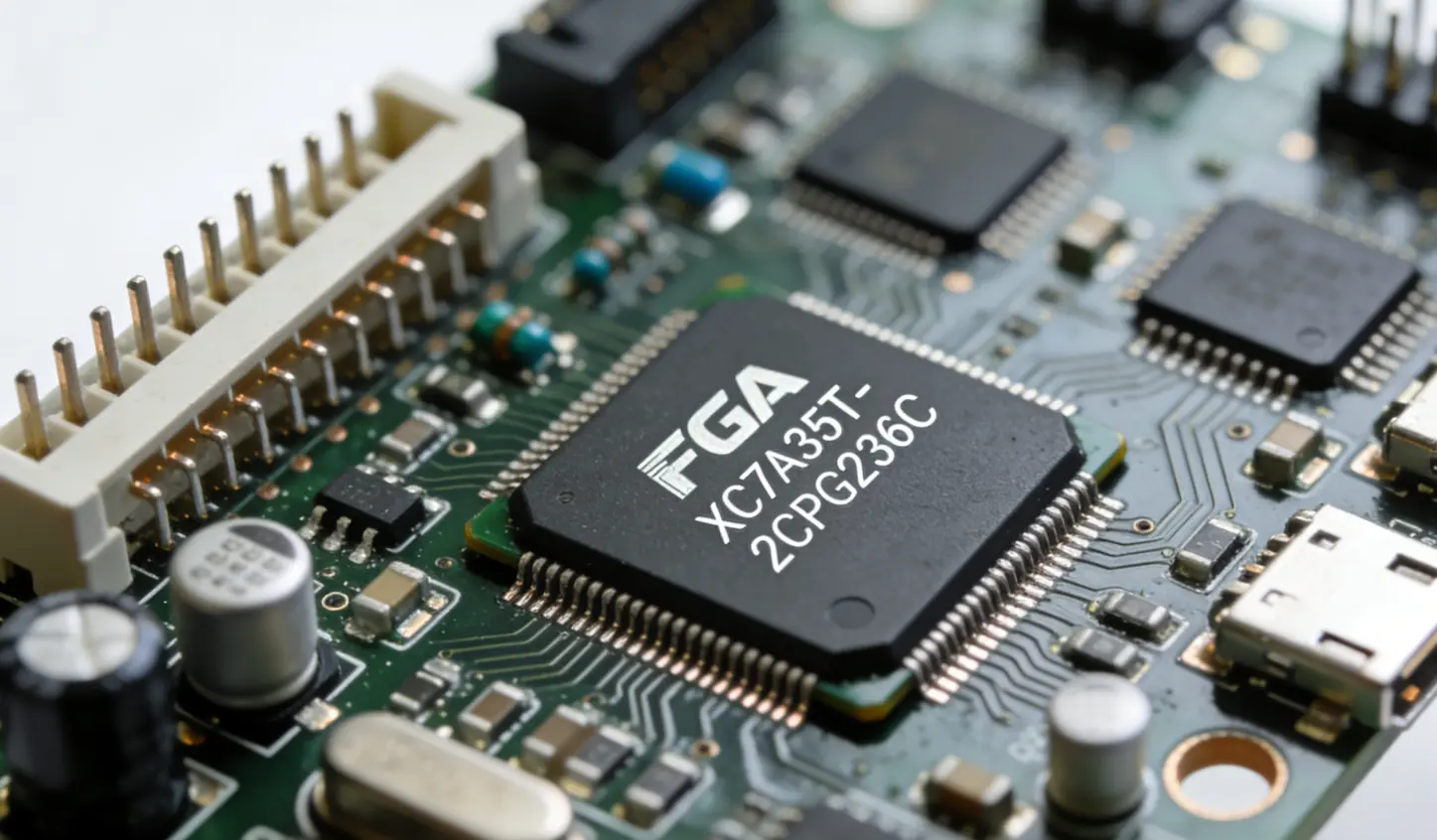
Microcontroller: A 32‑bit ARM Cortex‑M series MCU (e.g., STM32F4/F7) with integrated ADC/DAC modules enables high‑precision signal conversion—a critical capability for processing sensor data.
Communication Modules: Incorporates CAN bus, RS‑485, Ethernet, and LoRa/Wi‑Fi for IoT integration, ensuring reliable data exchange between the VRA controller, GPS positioning systems, and other on‑board or cloud‑based devices.
Sensor Interface: Supports both analog (0–5V, 4–20mA) and digital (I2C, SPI) signals, enabling compatibility with a wide range of agricultural sensors—from flow meters to speed sensors and soil condition monitors.
Power Management: A DC‑DC converter accepts a wide input voltage range of 9–36V DC (suited for vehicle power systems) and delivers stable 3.3V/5V outputs. Built‑in overvoltage and overcurrent protection safeguards the PCBA and connected components.
Actuator Control: H‑bridge motor drivers provide 5A–20A output current, enabling precise regulation of solenoid valves and motors.
Assembly Standards: Adheres to IPC‑A‑610 Class 2/3 (industrial/automotive grade), with lead‑free reflow soldering using Sn96.5Ag3.0Cu0.5 alloy, ensuring long‑term reliability and compliance with global standards.
The VRA Controller PCBA delivers exceptional electrical performance, tailored to the demands of precision agriculture.
Power Efficiency: Operates with standby current <500 mA and full‑load current <2 A, optimizing power efficiency for battery‑powered or vehicle‑mounted systems.
Precision Conversion: 12–16 bit ADC resolution ensures high‑precision acquisition of sensor signals.
Responsive Control: 1 µs PWM output resolution enables ultra‑responsive regulation of valves and motors—critical for maintaining application rate accuracy.
Communication Performance:
CAN bus: 250 kbps – 1 Mbps (ideal for in‑vehicle networking)
RS‑485: 9600 – 115200 bps (long‑distance sensor connections)
Signal Integrity: Signal‑to‑noise ratio (SNR) ≥60 dB ensures clear analog signal processing, even in noisy electrical environments.
Electrical Safety: Meets insulation resistance ≥100 MΩ (at 500V DC) and dielectric strength of 1500V AC (1 min, no breakdown) , preventing failures in wet or dusty conditions.
Functional Capabilities:
VRA Control Accuracy: ±2% for fertilizer and pesticide flow rates—minimizing waste and maximizing efficacy.
Response Time: <100 ms (from signal input to actuator output) enables real‑time adjustments based on GPS location, sensor data, or pre‑programmed field maps.
Multi‑Zone Support: 8–16 control channels manage multi‑zone application systems, accommodating complex field layouts.
Data Logging: Up to 1 GB capacity stores application rates, GPS coordinates, and sensor data for post‑operation analysis and compliance reporting.
Calibration: Automatic and manual calibration options for flow and speed sensors ensure ongoing accuracy.
Agricultural environments pose unique challenges to electronic components, and the VRA Controller PCBA is engineered to withstand these harsh conditions.
Temperature Range: Operates from -40°C to +85°C (industrial grade); storage from -55°C to +125°C.
Humidity Resistance: Withstands 95% relative humidity (non‑condensing, 40°C, 1000 h), preventing moisture‑induced damage.
Vibration & Shock: Meets IEC 60068‑2‑6 (10–2000 Hz, 1g acceleration) and IEC 60068‑2‑27 (50g peak acceleration, 11 ms duration), ensuring durability during transportation and field operation.
Conformal Coating: Optional acrylic or urethane coating provides additional protection against moisture, dust, and chemical exposure, enabling an IP65 rating when paired with a suitable enclosure—making it suitable for outdoor use in all weather conditions.
The Variable Rate Application (VRA) Controller PCBA is more than just an electronic component—it is the brain of precision agriculture systems, enabling farmers to transition from uniform input application to data‑driven, site‑specific management. Its robust circuit design, high‑performance component integration, and industrial‑grade reliability make it capable of withstanding the harshest agricultural environments while delivering the precision and responsiveness required for optimal resource utilization.
As the agricultural industry continues to embrace automation and sustainability, the VRA Controller PCBA will play an increasingly vital role in reducing environmental impact, lowering operational costs, and boosting crop yields. By bridging the gap between sensor data, communication networks, and actuation systems, this advanced PCBA empowers farmers to make smarter decisions, drive efficiency, and build more resilient agricultural systems for the future.
1. Core Circuit Board Specifications
|
Parameter |
Value Range |
|
PCB Material |
FR-4 (TG130/TG170), High TG FR-4 for high-temperature environments |
|
PCB Thickness |
1.0mm–2.0mm (customizable) |
|
Copper Thickness |
1oz–3oz (enhanced current carrying capacity) |
|
Number of Layers |
4–8 layers (high-density signal routing) |
|
Solder Mask |
Green/Black/Red (lead-free, RoHS compliant) |
|
Silkscreen |
White (high contrast for component labeling) |
|
Surface Finish |
ENIG (Electroless Nickel Immersion Gold), HASL (Lead-Free) |
|
Minimum Line Width/Spacing |
0.1mm/0.1mm (10mil/10mil) |
|
Minimum Via Size |
0.2mm (drill diameter) |
|
Board Dimension Tolerance |
±0.1mm |
2. Component & Assembly Parameters
|
Parameter |
Technical Details |
|
Component Type |
SMD (0402–2512, QFP, BGA), THT (connectors, power components) |
|
Microcontroller (MCU) |
32-bit ARM Cortex-M series (e.g., STM32F4/F7), integrated ADC/DAC modules |
|
Communication Modules |
CAN bus, RS-485, Ethernet, LoRa/Wi-Fi (for IoT connectivity) |
|
Sensor Interface |
Analog (0–5V, 4–20mA), Digital (I2C, SPI), GPS positioning module |
|
Power Management IC |
DC-DC converters (5V/12V/24V input, 3.3V/5V output), overvoltage/overcurrent protection |
|
Motor Driver IC |
H-bridge drivers (for solenoid valve/motor control, 5A–20A output current) |
|
Assembly Standard |
IPC-A-610 Class 2/3 (industrial/automotive grade) |
|
Soldering Process |
Reflow soldering (lead-free, Sn96.5Ag3.0Cu0.5 alloy) |
|
Component Placement Tolerance |
±0.05mm (for SMD components) |
3. Electrical Performance Parameters
|
Parameter |
Performance Index |
|
Operating Voltage |
9–36V DC (wide voltage input for vehicle power systems) |
|
Operating Current |
<500mA (standby mode), <2A (full load mode) |
|
ADC Resolution |
12–16 bits (high-precision sensor signal acquisition) |
|
PWM Output Resolution |
1µs (for precise valve/motor speed control) |
|
Communication Baud Rate |
CAN bus: 250kbps–1Mbps; RS-485: 9600–115200 bps |
|
Signal-to-Noise Ratio (SNR) |
≥60dB (analog signal processing) |
|
Insulation Resistance |
≥100MΩ (at 500V DC) |
|
Dielectric Strength |
1500V AC (1min, no breakdown) |
4. Environmental & Reliability Parameters
|
Parameter |
Test Standard & Result |
|
Operating Temperature |
-40°C to +85°C (industrial temperature grade) |
|
Storage Temperature |
-55°C to +125°C |
|
Humidity Resistance |
95% RH (non-condensing, 40°C, 1000h) |
|
Vibration Resistance |
10–2000Hz, 1g acceleration (compliant with IEC 60068-2-6) |
|
Shock Resistance |
50g peak acceleration, 11ms duration (IEC 60068-2-27) |
|
IP Rating |
IP65 (with conformal coating and enclosure) |
|
Conformal Coating |
Acrylic/urethane coating (optional, for moisture/dust protection) |
5. Functional Performance Parameters
|
Parameter |
Specification |
|
VRA Control Accuracy |
±2% (fertilizer/pesticide flow rate control) |
|
Response Time |
<100ms (signal input to actuator output) |
|
Maximum Number of Control Channels |
8–16 channels (supports multi-zone application) |
|
Data Logging Capacity |
Up to 1GB (for storing application rate, GPS, and sensor data) |
|
Calibration Support |
Automatic/manual calibration for flow/speed sensors |