Custom PCBA for Server & Domain Controller Hardware
In today’s hyper-connected digital landscape, data centers, enterprise networks, and edge computing infrastructures demand hardware that performs flawlessly—24/7, under extreme thermal and electrical loads. At the heart of these systems lies a critical yet often overlooked component: the printed circuit board assembly (PCBA). While software defines functionality, it’s the physical reliability of the PCBA that determines uptime, service life, and total cost of ownership.
For OEMs developing server platforms, network appliances, or on-premise domain controller hardware, off-the-shelf electronics manufacturing simply won’t suffice. What you need is a custom PCBA partner with deep expertise in high-reliability, industrial-grade assembly tailored to IT infrastructure.
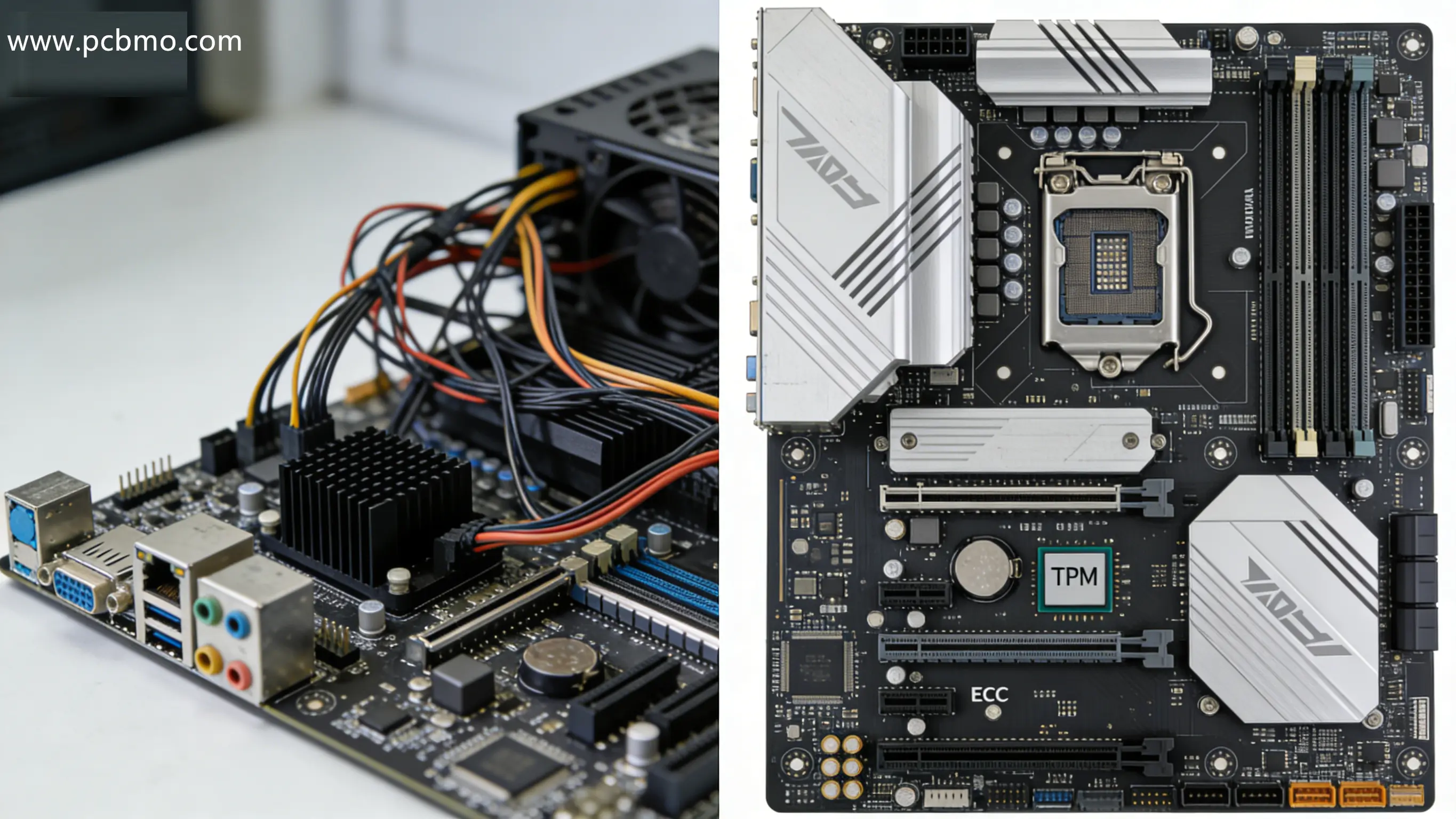
Why Standard PCBA Services Aren’t Enough for Server Applications
Most general-purpose PCBA providers excel at consumer electronics or low-complexity industrial boards. But servers—and the hardware that powers domain controllers, firewalls, and storage arrays—operate in a different universe.
Consider these unique challenges:
-
Thermal Stress: Servers run continuously at high temperatures. Poor solder joint integrity can lead to early fatigue failure.
-
Power Delivery Complexity: Multi-phase VRMs for dual/quad CPU configurations require precision in layout and component placement.
-
Signal Integrity: DDR5, PCIe Gen5, and 100G+ Ethernet demand controlled impedance and minimal crosstalk.
-
Long Lifecycle Requirements: Enterprise hardware must remain in service for 10–15 years, requiring robust supply chain planning.
This is where server-grade PCBA contract manufacturing becomes an engineering partnership—not just an assembly task.
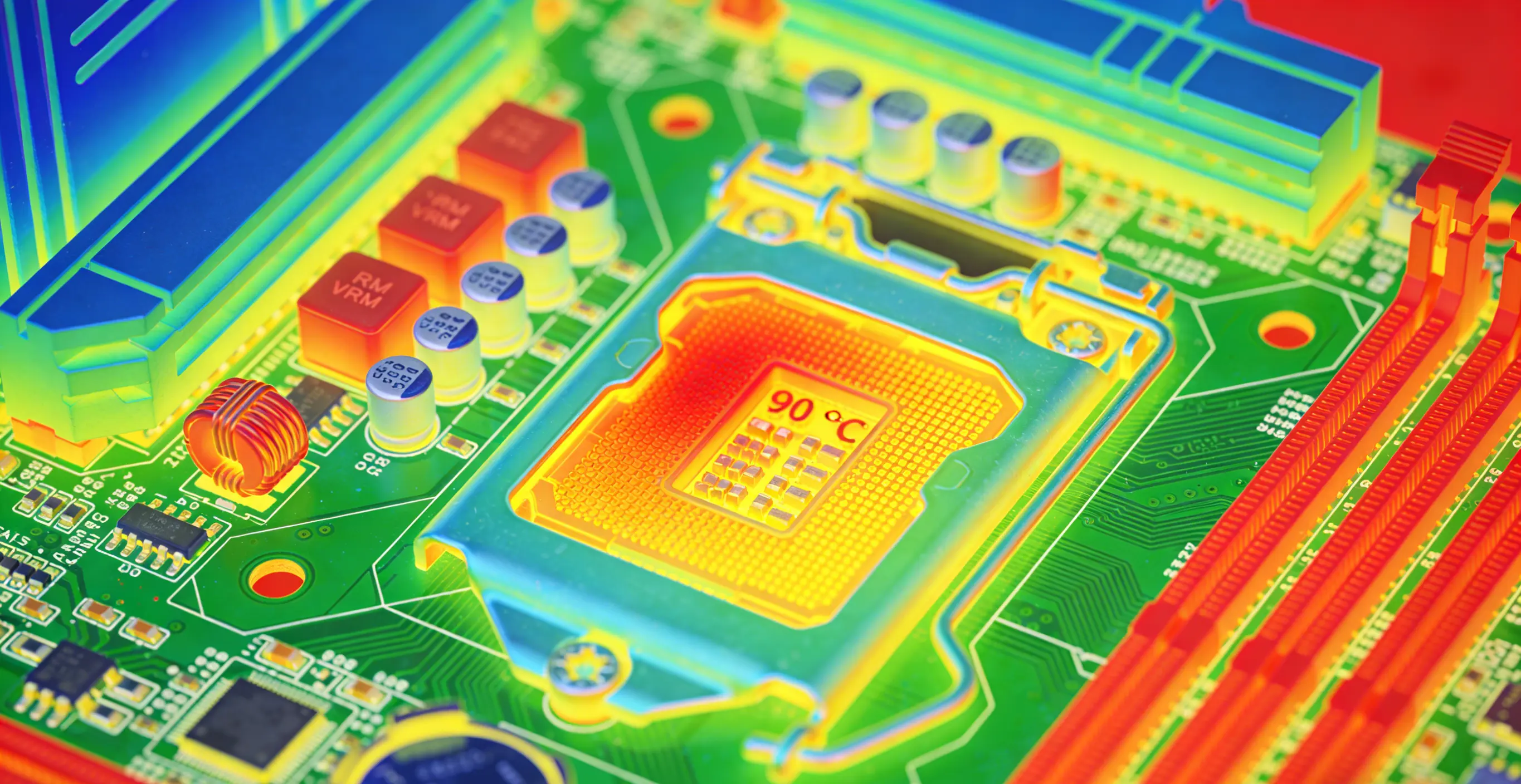
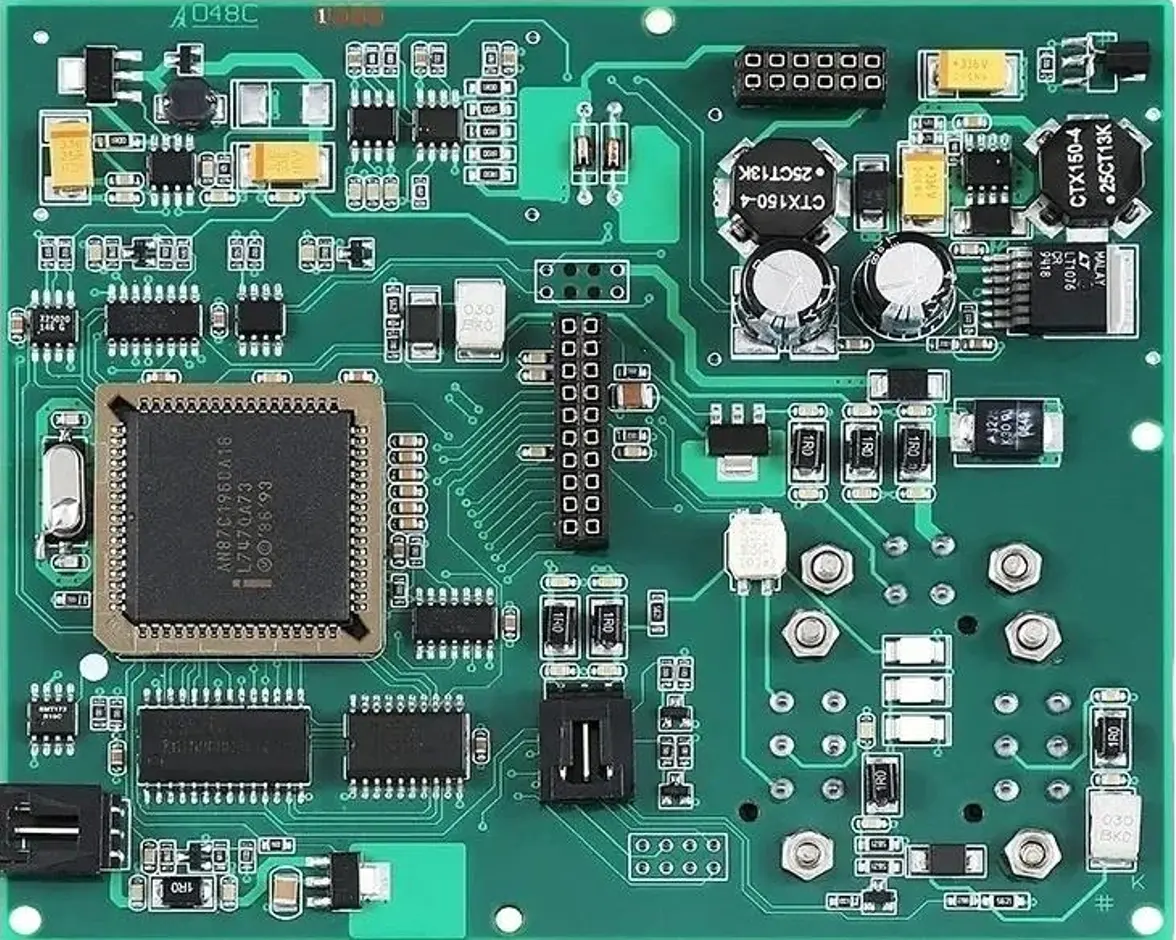
Server VRM Thermal Image: High Temperature (>90°C) Under Full Load
Key Technical Requirements for Server & Domain Controller PCBA
When evaluating a PCBA provider for mission-critical infrastructure, ensure they support:
-
High-Layer Count & HDI: 8–20+ layers, blind/buried vias, low-loss laminates (e.g., Isola FR408HR).
-
IPC Class 3 Certification: Zero-defect soldering per IPC-A-610 standards.
-
Advanced Testing: In-circuit test (ICT), flying probe, full functional test (FCT), and burn-in validation.
-
Environmental Protection: Conformal coating, thermal interface materials, and potting for harsh deployments.
-
Embedded Software Integration: BIOS customization, TPM 2.0, secure boot, and pre-flashed OS images.
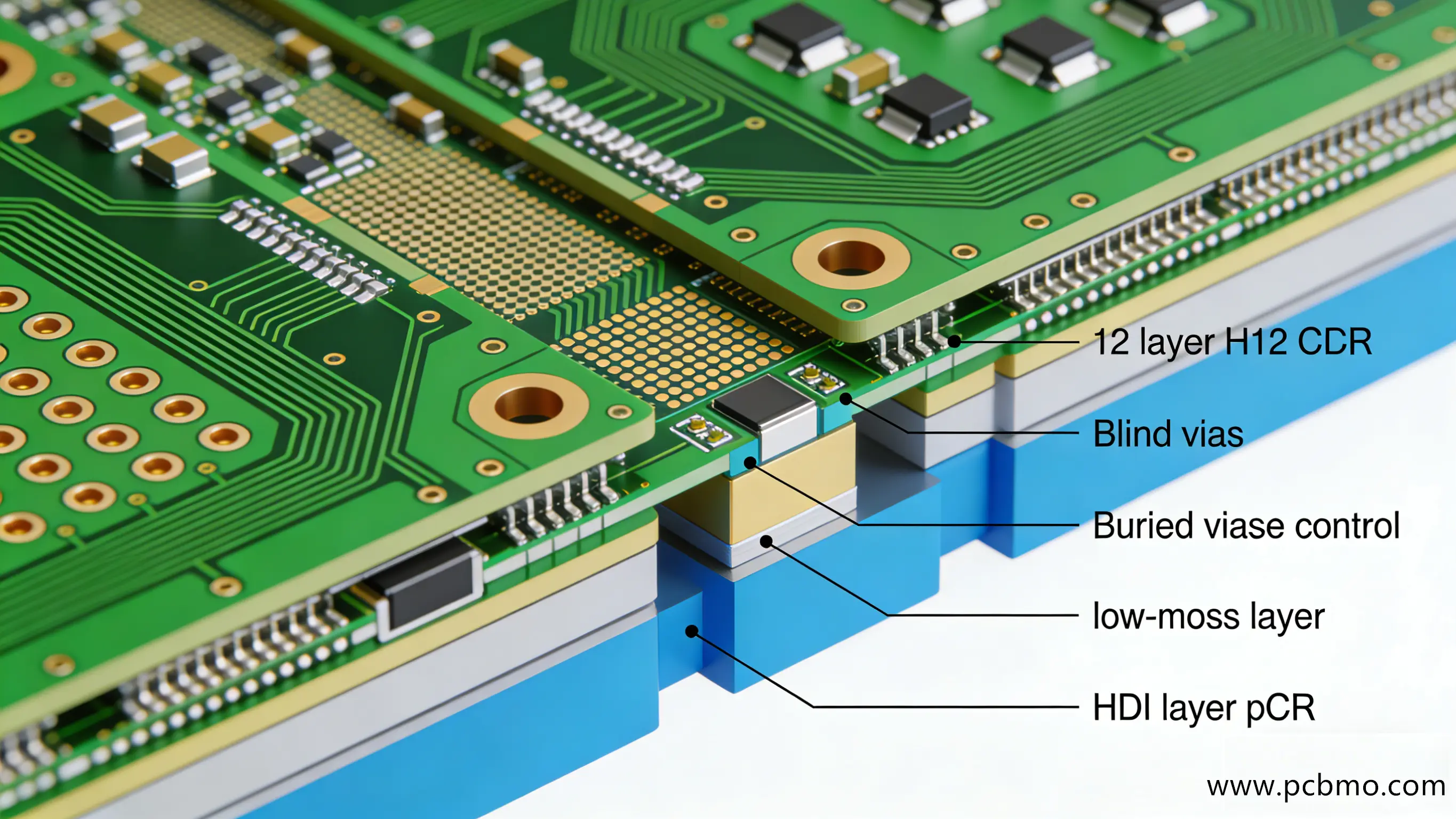
Our Turnkey PCBA Solution for IT Infrastructure OEMs
We specialize in custom PCBA for server hardware, offering end-to-end support from design review to global logistics:
-
Engineering Collaboration: DFM feedback during schematic/layout phase to optimize manufacturability.
-
Flexible Scale: From 5 prototypes to 50,000+ units/year—no punitive MOQs.
-
Full Compliance: ISO 9001, IATF 16949, RoHS, REACH, and full component traceability.
-
Real-World Validation: We’ve delivered ruggedized domain controller appliances with 99.999% uptime across 200+ sites.
How to Choose the Right PCBA Partner
Ask these critical questions before committing:
1.Do you have proven experience with server motherboards or network appliances?
2.Can you handle high-mix, low-volume production?
3.What’s your EOL (End-of-Life) component strategy?
4.Is functional testing performed in-house?
5.Can you support secure firmware provisioning for domain controllers?
Your PCBA vendor should act as an extension of your R&D team—not just a factory.
Frequently Asked Questions
Can you assemble PCBA for custom domain controller appliances?
Yes. We build embedded x86 and ARM-based systems running Windows Server, FreeIPA, or Samba AD—with ECC memory, TPM 2.0, and redundant power inputs.
Do you support long-term component sourcing?
Absolutely. We monitor obsolescence alerts, maintain buffer stock, and redesign PCBs when necessary to ensure 10+ year availability.
What certifications do your assemblies carry?
All PCBA meets IPC-A-610 Class 3. Optional safety certifications include UL, CE, FCC, and IEC 62368-1.
Conclusion
When your domain controller fails, business stops—email halts, authentication breaks, file shares vanish. Often, the root cause isn’t software, but a PCBA-level defect: a cracked via, counterfeit capacitor, or cold solder joint.
By partnering with a specialized industrial PCBA manufacturer for data center and network infrastructure, you shift from reactive firefighting to proactive resilience. Invest in quality at the board level—because in enterprise hardware, “good enough” is never enough.
© 2026 PCBMO . All rights reserved. | High-Reliability PCBA for Mission-Critical Infrastructure